Prime Minister Andy Burnham said he is planning on travelling to the US in September to join European leaders in lobbying President Donald Trump on support for Ukraine’s defence.
In an interview with Bloomberg, Mr Burnham said he was “looking forward to going to New York” next month, which is when the UN General Assembly will meet. He said details of the trip are not yet “fully confirmed” but it is “likely” to go ahead. The trip would mark Mr Burnham’s first US visit since becoming Prime Minister in July.
First trip to Kyiv as Prime Minister
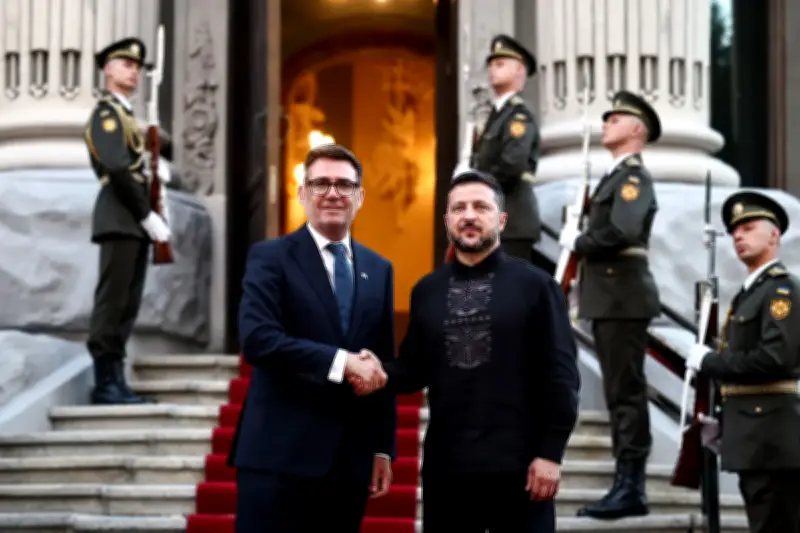
The comments come amid Mr Burnham’s first trip to Kyiv as Prime Minister, where the UK reiterated its “unwavering” support for Ukraine. Ukraine in turn handed over what officials have called a “goldmine” of battlefield data to help bolster British security.

During a meeting with Ukrainian President Volodymyr Zelensky, Mr Burnham reiterated there would be “no change in the UK’s steadfast support” for Kyiv. He also urged Ukraine’s allies to send more interceptor missiles to Kyiv as Ukraine struggles under continued Russian bombardment and co-chaired his first coalition of the willing meeting, where he said the group was doing “everything we can” to “dig into our own stocks and help others dig into their stocks”.
Missile shortages and Russian strikes
Mr Zelensky has repeatedly pleaded for more US-made Patriot interceptor missiles in recent months as Kyiv’s stocks have diminished. Supplies of Patriots have been diverted to the Middle East since the outbreak of war with Iran, with Ukraine receiving significantly fewer missiles this year than in previous years.
During the interview with Bloomberg, Mr Burnham said he felt “really confident” the issue was “fixable”, but added: “There are other players who could help in the mix who we have influence with. It’s probably going to be a solution that involves a lot of layers and a lot of negotiation.”
Russia has sought to capitalise on the shortage by stepping up its ballistic missile strikes, killing at least 23 people and wounding more than 100 in the past three days alone.
Coalition unity and new agreements
During his bilateral talks with Mr Zelensky, Downing Street said Mr Burnham stressed the “strength of unity” among coalition of the willing countries. A No 10 spokeswoman said: “It had been an honest and productive conversation during the coalition of the willing, the leaders agreed, and it was clear the international community needed to step up and ensure Ukraine got the support it needed to defend itself from Russia’s barbaric attacks going into the winter. The Prime Minister emphasised the strength of unity among coalition members and reiterated that there would be no change in the UK’s steadfast support. That was further symbolised by the announcement that the UK had agreed that defence firm MBDA could release classified information on UK components for the long-range missile, Scalp, the Prime Minister said.”
Mr Burnham and Mr Zelensky have also signed an agreement to give the Ministry of Defence, working with selected British companies, access to Ukraine’s “Avengers” AI database, Downing Street said. The deal is expected to help the UK learn from Ukraine’s experience on the battlefield and develop AI-powered solutions to national security challenges in both countries.
Kremlin adviser warns of possible attacks
Meanwhile, a Kremlin adviser has suggested UK factories producing drones for Ukraine could come under attack from “unknown sources” after Britain agreed to share long-range missile blueprints with the war-torn country. Former deputy foreign minister for Russia Andrei Fedorov told BBC Newsnight he could not “100% exclude” the prospect of “semi-military” action against Britain.

Mr Fedorov said “sooner or later, there might be not only verbal, but maybe some visible reaction from Russia towards the UK”. Asked to elaborate, he said: “There are different discussions how it should look like – it might be so-called technical reaction, maybe some hackers attack from unknown source, not from official level of course. There might be different political steps and I cannot exclude 100% that there might be some semi-military, for example.” Pressed to define “semi-military” he said: “For example, something might happen with enterprises, with the factories which are producing drones for Ukraine, etc etc.” Asked whether this meant British factories in Britain being attacked militarily by Russia, the adviser said: “They could be attacked, not by Russia, but by… from unknown sources.”
During his visit Mr Burnham played Rusholme Ruffians by The Smiths after being handed a guitar by a Ukrainian soldier, a moment he later shared on social media. The Prime Minister, who explained it was a Manchester band and strummed a few chords but declined to sing, said music can help “lift spirits” on the front line. Soldiers sang him an Oasis song. He later went to a shopping centre that was destroyed in a Russian attack, where he mingled and took selfies with residents.