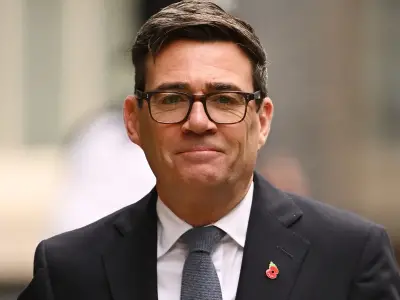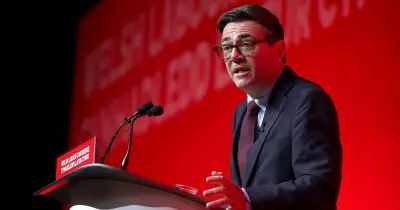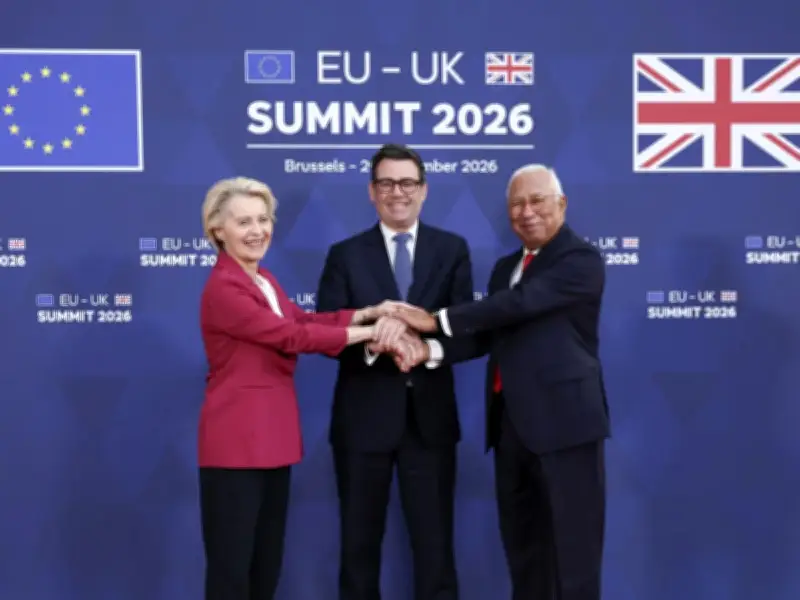
Andy Burnham has insisted his agreement with the European Union would benefit "ordinary people", as the Conservatives claimed it would drive up household bills and university chiefs warned of a looming financial black hole.
Conservative warnings on emissions trading
The Conservatives cautioned that aligning with the EU's emissions trading system (ETS) would lead to "significant increases" in already-stretched gas and fuel bills. Kemi Badenoch's party estimates that higher diesel and petrol prices would add an average of £6 to the cost of filling up a car like a Volkswagen Polo – around £156 a year. A household consuming 15,000 kWh of gas – typical of a larger property – would see around £125 added to their bills, the Conservatives claimed.
Shadow energy secretary Andrew Bowie said: "Labour are signing us up to a deal that lets Brussels drive up household bills, and making us pay for the privilege. Cheap energy must come first, yet these exorbitant carbon taxes and levies dictated by the EU will only drive bills higher. We do not want Britain tied into the EU's carbon trading scheme and would scrap it when in government."
University concerns over tuition fees
Universities fear they will take a financial hit should Mr Burnham bow to EU pressure to reduce fees for students from the bloc to the same level as home undergraduates. The urgency to legislate follows hints from the EU side that the rollout of the package could be thrown into jeopardy unless a deal is reached to slash tuition fees from as much as £38,000 for overseas students down to domestic levels – currently £9,970 in England and Wales, £4,985 in Northern Ireland and free for Scottish students.
Professor Dame Sally Mapstone, vice-chancellor of St Andrews, cautioned that "unless we sort out the important financial practicalities of this, the unintended consequences for higher education in the UK could be considerable". She told the Sunday Times: "I would urge the Government to use these six months to act practically and pragmatically and not just politically. It's good to see a welcome being extended to EU students and we would endorse that. But what is not being explicitly addressed is the cost of educating those students, which we estimate is about £15,000 a year."
The University of Manchester's vice-chancellor Professor Duncan Ivison said it was a "good thing" to have close UK-EU relations but warned that "the issue of tuition fees is something we do have to figure out because there is a cost". He told the BBC: "If nothing was done to compensate or provide additional funding, it would take £500 million, we estimate, out of the higher education sector at a time where there's a lot of pressure on the sector." Hinting at potential rivalry between EU and British students for places, he said it was "not clear we'd be able to increase the number of places".
Government response and next steps
The Government maintains that the package struck with Brussels on Friday will reduce costs for businesses and consumers by cutting red tape on food products and eliminating the prospect of industries facing carbon taxes on exports to the EU. The legislation underpinning the package – dubbed the Cutting Costs Bill – will be formally brought before Parliament on Thursday.
The UK and EU have agreed a six-month deadline to settle the fees dispute, and Mr Burnham's Government has insisted the matter is not connected to the agreement the Prime Minister reached in Brussels. European relations minister Hamish Falconer said: "Now that we've delivered the deal, I want to start delivering the benefits to every postcode in the UK. British businesses have been crying out for us to remove Brexit paperwork and help ease pressure on food prices. Our Cutting Costs Bill will enable us to align with EU standards and remove the checks, paperwork and bureaucracy holding back growth."
A Government spokesman hit back at the Conservative claims, saying: "These figures are completely wrong. Without our emissions deal – a deal that industry wanted – £6.5 billion of UK exports would be hit by EU taxes. Leading British businesses have welcomed our deal saying it will cut costs and benefit consumers. This is clearly a massive boost to businesses and the British people."
The Government stated that the ETS agreement, set to take effect in 2028, will strengthen the economy by approximately £3.8 billion annually by 2040 by shielding exports to the EU from carbon levies. Meanwhile, Mr Burnham continued his diplomatic push across Europe by holding discussions with Dutch prime minister Rob Jetten.
A Downing Street spokeswoman said: "Reflecting on yesterday's UK-EU Summit, the Prime Minister... thanked Prime Minister Jetten for the Netherlands' support in securing a win-win deal for Britain and the EU. He noted how the collaborative approach taken in negotiations delivered an agreement that will bring benefits to ordinary people across every part of the UK and Europe."
Writing in The Mail on Sunday, Reform leader Nigel Farage said: "(Mr Burnham's) big reveal was a series of unsigned, yet to be finalised technical documents that even his own Treasury admitted contained mass migration pledges that would impact GDP per capita by 0.0 per cent. So Andy, take this as notice: one of the first priorities of a Reform UK government will be to repeal this pernicious deal."