

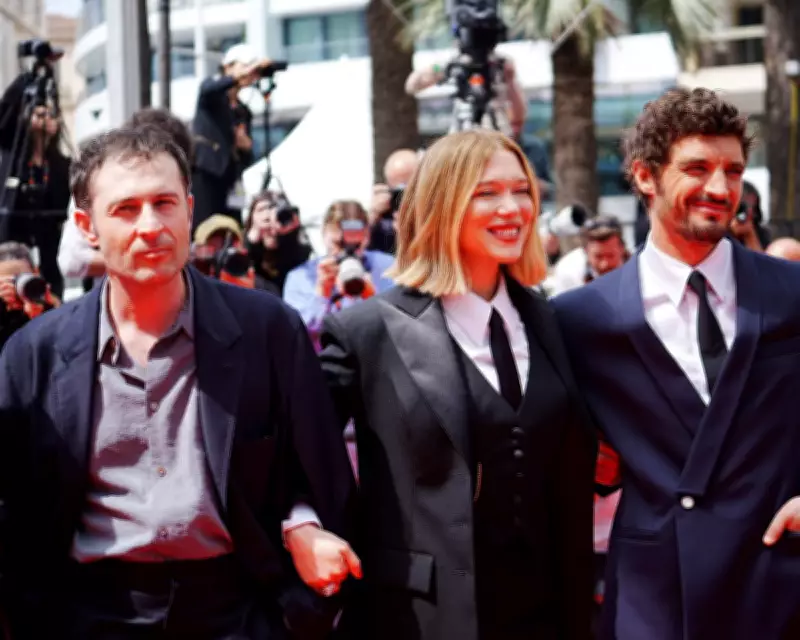
French stars are rightly concerned by the growing influence of conservative billionaire Vincent Bolloré over the country's media and cinema landscape. The recent decision by Canal+, a major French media group, to effectively blacklist over 600 cinema professionals has sparked widespread alarm. Among those affected are prominent actors such as Juliette Binoche and directors like Jean-Pascal Zadi and Arthur Harari. Their transgression? Signing an open letter that denounced Bolloré's increasing control over French media and cinema, which they argue threatens artistic freedom and democratic values.
The Canal+ Blacklist and Its Implications
The blacklist, announced during the Cannes Film Festival, echoes the McCarthy-era red scare in Hollywood. Canal+ CEO Maxime Saada justified the ban by claiming the signatories' criticism was an "injustice" against staff who are committed to the organization's independence. However, critics argue that Bolloré's consolidation of media assets—including CNews, Journal du Dimanche, Europe 1 radio, and publisher Fayard—has shifted editorial lines to the right, akin to Rupert Murdoch's influence. His firing of Grasset's CEO led to a walkout by over 100 authors, spanning political divides from Bernard-Henri Lévy to Virginie Despentes.
The petition, now backed by international figures like Javier Bardem and Mark Ruffalo, warns: "By leaving French cinema in the hands of a far-right owner, we risk not only the standardisation of films but a fascist takeover of the collective imagination." Canal+ provides over 40% of private funding for French broadcasting, streaming, and cinema, making its influence critical. The ban could have severe consequences for the industry, especially given the co-financing nature of French productions.

Should the Government Intervene?
The question arises: should one person be able to impact a nation's cultural output based on a desire to control political speech? And should the government step in? Canal+ was launched in 1984 as France's first subscription channel, with legal obligations to fund French and European cinema. However, legislating against this blacklist is risky, as the far right is closer to power than ever, and government censorship could be equally dangerous.
Public funding for journalism and the arts is part of the solution. In 2025, Reporters Sans Frontières (RSF) found strong confidence in public service media across Europe, with 69% of French people believing public media functions well. However, the method of funding matters; confidence falls in places where the far right has used discretionary funding to exert editorial influence.
An EU Fund as a Counterweight
Bolloré denies ideological intervention, claiming his interests are financial and aimed at promoting French soft power. Yet his influence underscores that Europe is not immune to ideologically driven media consolidation. To counter this, an EU-wide public media endowment fund could provide independence from both billionaires and censorious governments. Such a fund, answerable only to its governing board with nominations spanning multiple electoral cycles, could supplement funding for national, regional, and local public service media across Europe.
While critics may balk at the cost, the fund would not necessarily represent additional spending but front-load part of the €35bn EU member states spent on public service media in 2023. Following a 4% spend rule, it could provide inflation-adjusted grants in perpetuity. In the context of defence budgets—which increased by €495bn in Europe and Canada from 2024 to 2025—this investment seems modest. As Alexander Hurst writes, "Democracy runs on information; what is the point of spending money to defend the territorial integrity of a democracy, but not its cultural and intellectual integrity?"






