
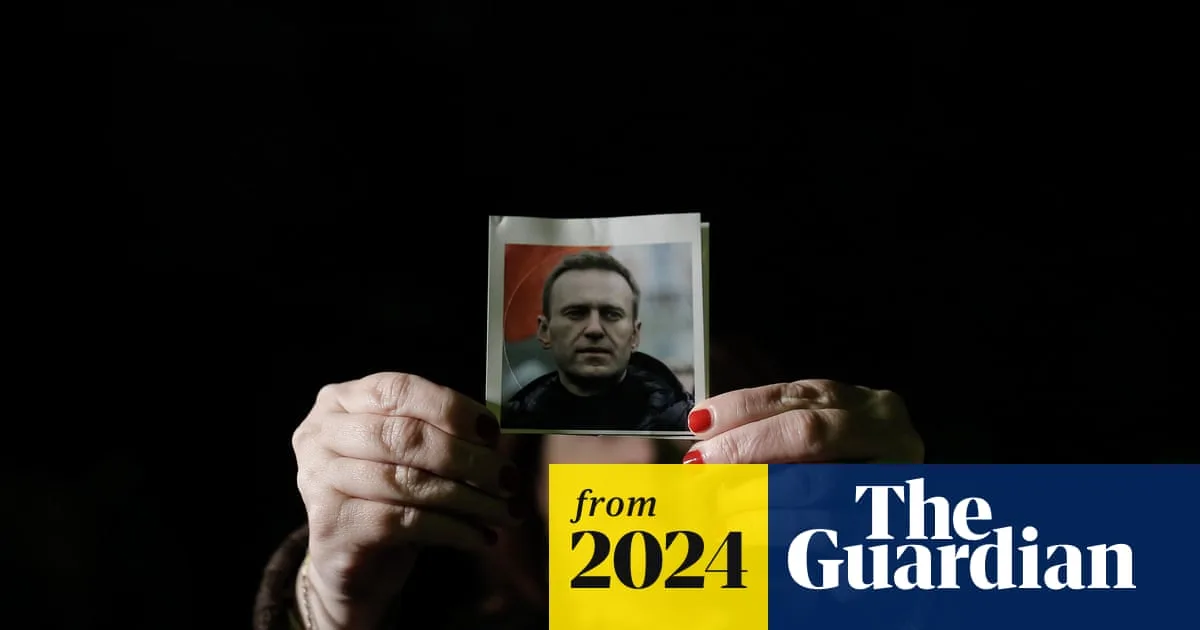
Alexei Navalny, the Russian opposition leader and anti-corruption campaigner, has died in a Siberian prison, shocking the world yet confirming what many saw as an inevitable fate. He was widely described as Vladimir Putin’s most formidable critic, having survived numerous attacks, including being blinded in one eye and poisoned with a nerve agent. At the time of his death, he was being held under brutal conditions in a penal colony.
Navalny appeared in court the day before his death, looking thinner but not, according to his supporters, on the verge of collapse. The Russian government attributed his death to “sudden death syndrome,” but his family and friends have pointed to one man as ultimately responsible. The Guardian’s Moscow correspondent, Andrew Roth, notes that Navalny’s decision to return to Russia after recovering from novichok poisoning made his death seem almost unavoidable.
Roth explains why Navalny chose to challenge Putin and how his message resonated with countless Russians, propelling him to the status of the country’s most significant opposition figure. His courage, particularly in returning home after a coma, became a defining part of his legacy. Russian journalist Yevgenia Albats, a friend of Navalny, described the rationale behind his stance, highlighting his enduring message: “Don’t be afraid. Resist.”
Navalny’s death has reignited questions about the state of Russia under Putin, where dissent is met with harsh punishment, and about the risks faced by those who speak out. While the official cause of death remains disputed, the broader context of his imprisonment and the attacks he survived paint a grim picture of the country’s political landscape.




