Swinney Sets Bold Timeline for Scottish Independence and Leadership
First Minister John Swinney has declared his confidence in winning a Scottish independence referendum in 2028, with ambitions to then run as the inaugural leader of an independent Scotland in the 2031 elections. The SNP leader envisions Scotland completing its separation from the United Kingdom by the close of 2030, marking a transformative period for the nation.
Strategic Vision for Independence
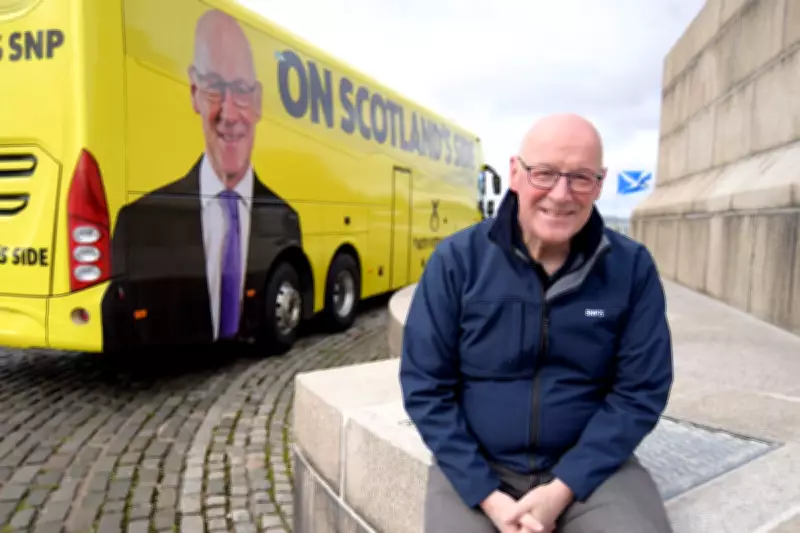
Speaking from the SNP's election battlebus, Swinney outlined his persuasive approach to securing independence. "I think we are very close to winning Scottish independence. I just have to make it happen," he asserted. Reflecting on his political career, he highlighted his ability to sway opinions and build consensus, stating that success will come "by being persuasive." When directly questioned about his chances in a 2028 referendum, Swinney responded with a firm "Yes."
Post-Brexit Dynamics and Political Landscape
Swinney argues that the post-Brexit environment has shifted the independence debate. He believes Scottish voters are now "less susceptible to the arguments made by the No side," referencing claims during the 2014 referendum that rejecting independence was necessary to remain in the EU. With the UK outside the European Union, he sees an opportunity to reframe the discussion around sovereignty and self-determination.

He also criticised pro-UK parties, labelling the current Labour government as a "total and utter shambles" and dismissing the Conservatives as "eaten alive by Reform," which he called "repugnant," while deeming the Liberal Democrats "irrelevant." Swinney emphasised that the credibility of these parties has "diminished," bolstering his case for independence.
Electoral Context and Personal Commitment
The upcoming Holyrood election on May 7 sees Swinney campaigning for a record fifth consecutive term for the SNP. He notes this is the "first Scottish Parliament election in which I am standing for re-election as First Minister," having assumed the role nearly two years ago after Humza Yousaf's departure. Swinney portrays himself as a "reliable character" dedicated to Scotland's interests, a quality he hopes will resonate with voters.
Balancing campaign demands with personal life, Swinney juggles responsibilities to his wife Elizabeth, who has multiple sclerosis, and his 15-year-old son Matthew, who is preparing for school exams. "It is all a juggle. But lots of people have lots of juggles in their life, I am no different," he remarked, adding that he manages to return home most nights, which he finds beneficial.
Broader Implications for the UK
Swinney highlighted the potential for "seismic change" across the UK, with nationalist movements gaining ground in Wales and Northern Ireland. A Plaid Cymru victory in Wales, he suggested, would represent a "massive change in the fortunes and perspective of the Labour Party," with "enormous implications for the United Kingdom." This context, he argues, underscores the growing momentum for self-governance and could reshape British politics.
In summary, Swinney's roadmap involves a decisive 2028 referendum, an 18-month transition to independence by 2030, and a bid for leadership in 2031. His campaign blends optimism with strategic criticism of unionist parties, aiming to capitalise on post-Brexit sentiments and a shifting political landscape to achieve Scottish sovereignty.