From Stateswoman to Laughing Stock: The Sturgeon Legacy
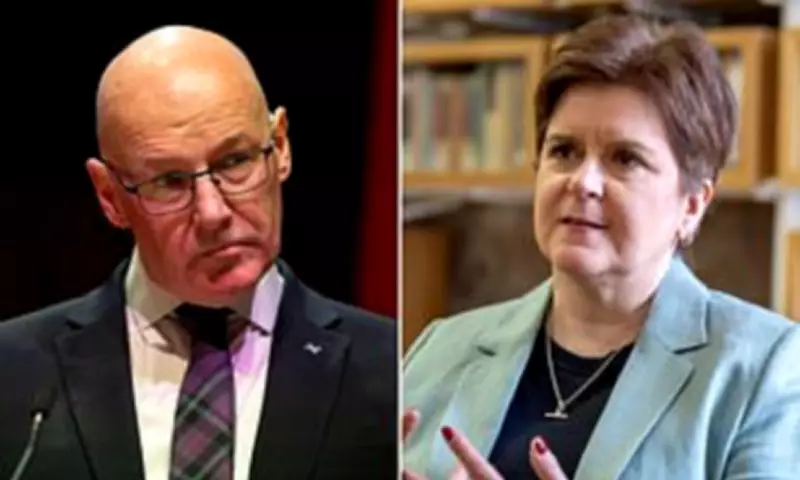
Nicola Sturgeon's political journey from respected stateswoman to national laughing stock unfolded gradually over her tenure. Upon succeeding Alex Salmond as First Minister in 2014, she positioned herself as a unifying force, aiming to mend divisions from the intense independence referendum campaign. However, after eight and a half years in office, Ms Sturgeon emerged as the most polarising figure in the history of Scottish devolution.
The Independence Obsession
Her decline in popularity was inextricably linked to her relentless fixation on staging a second independence referendum. Despite lacking the constitutional authority to call Indyref2, Ms Sturgeon repeatedly assured her supporters that preparations were underway for another vote. During both Westminster and Holyrood elections, she urged voters to back the SNP to secure a referendum, a promise she was ultimately powerless to fulfil.
Countless times, the former First Minister led Scottish Nationalists up the hill only to march them back down again. By the time she announced her resignation three years ago, Ms Sturgeon had exhausted all avenues on the independence question. Years of overpromising and failing to deliver left once-loyal supporters feeling profoundly betrayed.

A Poisonous Political Cocktail
Compounding this fixation was Ms Sturgeon's second major obsession: gender ideology. Together, these issues formed a perfect poison for her political career, a cyanide pill that destroyed her credibility. Given this disastrous legacy, it is astonishing that current First Minister John Swinney appears to be modelling his political strategy on his predecessor's failed approach.
Swinney's Fantasy Timeline
The SNP's manifesto for the upcoming Holyrood election explicitly tells voters that supporting the party equates to endorsing another independence referendum. The document claims that if Nationalists secure a majority, as they did fifteen years ago, there would be a 'mandate for the transfer of powers to the Scottish parliament to enable an independence referendum to be held', based on the 2011 precedent.
During an interview on his campaign battle bus, Mr Swinney elaborated on this assertion. He declared the SNP was 'very close to winning Scottish independence' and outlined a specific timeline: if a referendum followed the same schedule as before and resulted in a Nationalist victory, Scotland could achieve independence within eighteen months, potentially by 2030.
In this scenario, Mr Swinney—who had planned to retire from politics until Humza Yousaf's brief tenure ended in 2024—would position himself to become Prime Minister of a newly independent Scotland. This entire narrative represents pure political fantasy.
The Inconvenient Constitutional Reality
The fundamental truth, which Mr Swinney cannot alter no matter how hard he tries, is that the 2011 precedent holds no relevance today. There will be no independence referendum in 2028 or at any point during the next Scottish parliamentary session—a reality the First Minister knows perfectly well.
Just as Ms Sturgeon did repeatedly, Mr Swinney is promising supporters a referendum that will never materialise. The authority to stage constitutional votes rests exclusively with the UK Government, a fact confirmed by the Supreme Court in 2022 when it rejected Ms Sturgeon's legislation for Indyref2. Nothing has changed since that ruling, and no SNP majority next month will alter this constitutional reality.
A Desperate Electoral Strategy
The First Minister's confident rhetoric actually reveals his political weakness. His promise of an undeliverable referendum represents a pitiful plea to the SNP's core supporters—those 'blood and soil Nationalists' who remain untroubled by the party's failures across numerous policy areas.
Mr Swinney has placed the fantasy of a second independence referendum at the centre of his campaign because, having long abandoned any pretence of caring about pro-UK majority priorities, his focus now centres on appeasing remaining SNP voters. These supporters have not abandoned the party despite numerous triggers, including the SNP's failed stewardship of the NHS and conspiracy theories about plots against Alex Salmond.

Shrinking Support and Changing Demographics
While the SNP may still win next month's election, recent polling reveals significant erosion in their support. Across Scottish constituencies, backing for the party has fallen by seven percent since 2021. Over the same period, support in the regional vote has dropped by eight percentage points.
The era when the SNP could count on substantial Unionist support based on perceived competence has definitively ended. Mr Swinney, once a model of Nationalist gradualism, has transformed into an 'independence now!' fundamentalist.
This raises crucial questions about the First Minister's post-election strategy. Is this merely a desperate short-term attempt to bolster weakening SNP support? Or does he plan to spend the next five years obsessing over independence, repeatedly claiming mandates for referendums he cannot deliver?
The Cynicism of Empty Promises
The most troubling aspect of this situation is that John Swinney and his advisers know the SNP's manifesto claims about referendums following electoral majorities are 'absolute bunk'. The cynicism required to publish such knowingly false promises is, in its own way, impressive.
The same pollsters predicting SNP victory next month also reveal that a second independence referendum ranks low among Scottish priorities. Most Scots believe the government should focus instead on the cost-of-living crisis, NHS improvements, and educational standards.
An Inevitable Reckoning
The minority of Scots likely to return Mr Swinney to power remain energised by referendum prospects. How will the First Minister explain his inability to deliver on this promise regardless of the election outcome? Will he acknowledge reality to his supporters and shift focus to majority concerns? Or will he continue agitating for a referendum demanded only by a minority?
These questions speak to John Swinney's fundamental leadership qualities. Is he a statesman capable of governing for all Scots, or merely a less charismatic version of his predecessor? Is he performing a Nicola Sturgeon tribute act for a diminishing audience?
Once Ms Sturgeon convinced supporters she could deliver a second referendum, she became trapped in that deception. Eventually, reality caught up with her and brought her political career crashing down. If John Swinney maintains the pretence that he can provide another independence referendum, he faces precisely the same fate—and will thoroughly deserve it.