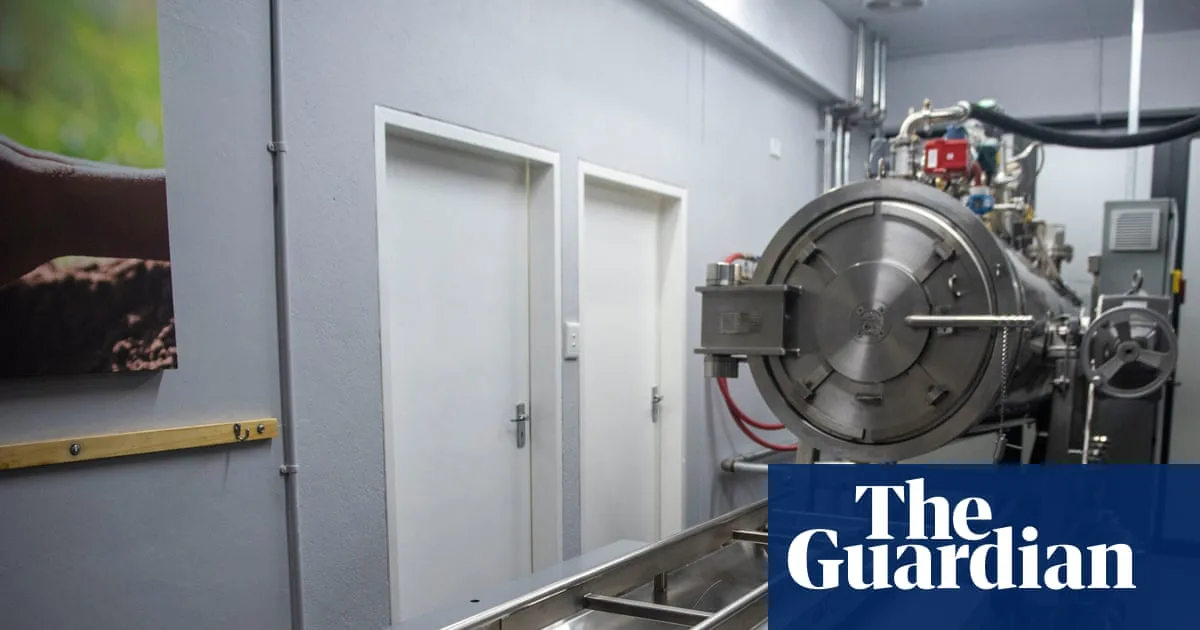
Scotland has become the first part of the UK to legalise hydrolysis, an environmentally friendly alternative to cremation or burial. The regulations, approved by the Scottish parliament on Monday, mark the most significant change to funeral law since cremation was introduced in 1902.
Also known as water cremation or aquamation, the process uses a strong alkaline solution to break down the body in three to four hours. The body is immersed in water and 5% potassium hydroxide in a pressurised metal cylinder heated to about 150C, dissolving tissue and leaving only bones, which are then dried and pulverised into white dust.
Scottish public health minister Jenni Minto said: 'Hydrolysis offers a new, environmentally friendly alternative to burial or cremation, responding to significant public support for greater choice.' She stressed the new process would be subject to the same regulatory requirements as existing methods.

Kindly Earth, which holds exclusive UK rights to manufacture hydrolysis equipment, said it could take up to nine months before the first Scottish facility is operational. The company's general manager, Helen Chandler, described it as a historic moment, adding: 'It's about giving families more choice.'
Hydrolysis is already legal in 28 US states, Canada, Ireland, South Africa, Australia and New Zealand. Archbishop Desmond Tutu chose water cremation for his funeral in 2022. The process produces no direct toxic emissions and reduces the need for single-use coffins.
Elsewhere in the UK, the Law Commission in England and Wales is considering a regulatory framework for new funerary methods including hydrolysis and human composting. Andrew Purves of William Purves Funeral Directors said families are increasingly interested in sustainability, predicting hydrolysis will become as accepted as cremation, which now accounts for almost 80% of UK funerals.