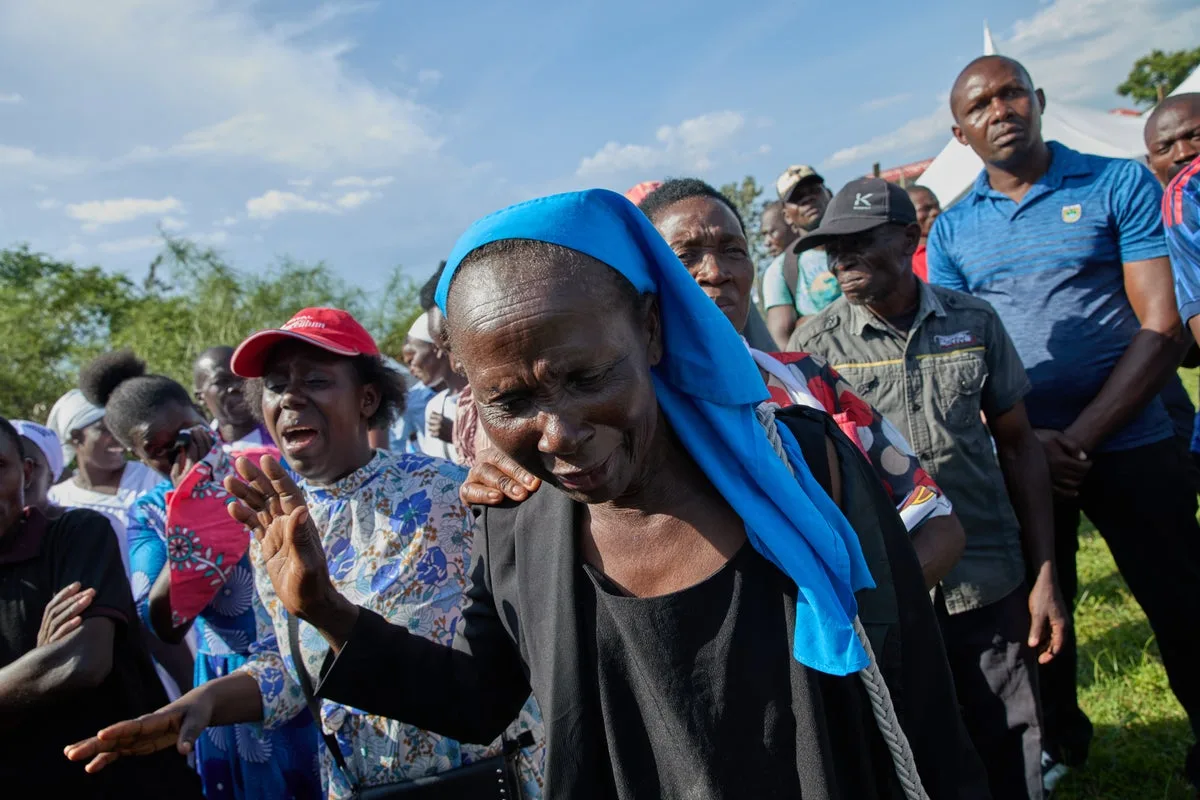
At a funeral in western Kenya, wails pierce the air as a group of mourners wave leafy branches and beat them rhythmically against the ground. But these men and women never knew the deceased, Tom Ochieng Mima. They are professional mourners, hired to express grief in line with local Luo cultural norms.
The role provides a relatively steady income in Kenya's poorer western regions, where traditional beliefs mix with widespread Christianity. Francis Oyoo, a professional mourner for two years, said: 'It is a job anyone can do, as long as you are in touch with your emotions and can show empathy.' He earns around $80 per funeral, enough to keep him afloat.
Professional mourners draw on their own experiences of grief. James Ajowi, a veteran of more than 20 years, said his daughter's death deepened his commitment. 'It's as if she was preparing me,' he said. Lawrence Ouma Angira, who was raised by the deceased, said the mourners 'support us, show us love, and help fill the emptiness.'

Among the Luo people, mourning is not only about grief but also protection, according to anthropologist Charles Owour Olunga. Death is seen as a transition, with crying, singing, and movement helping to drive away evil spirits. The professionalisation of mourning is recent, linked to urbanisation and commercialisation.
The blend of Christian beliefs with older spiritual traditions is notable. The region has many African-initiated churches, a phenomenon linked to pushback against strict Christianity's prohibition of indigenous rituals. For mourners, the nuances matter less than the emotional understanding and comfort that grief builds community.