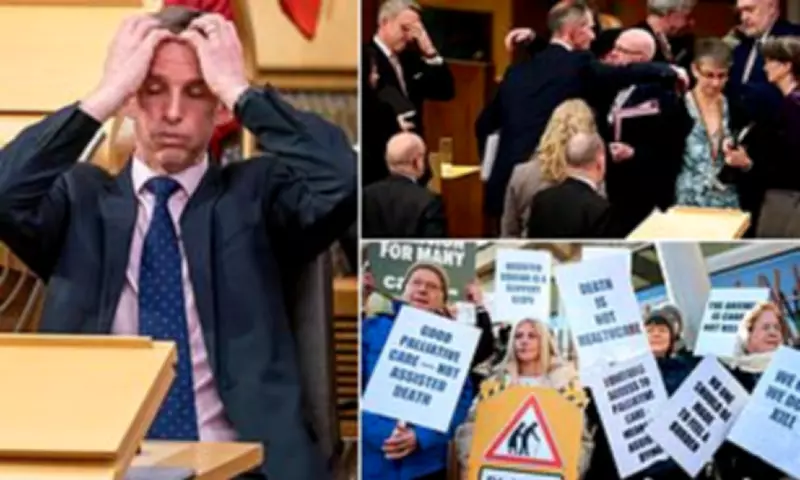
Holyrood Rejects Groundbreaking Assisted Dying Legislation
In a landmark decision, Members of the Scottish Parliament have voted against a Bill that would have made Scotland the first nation within the United Kingdom to legalise assisted dying for terminally ill adults. The controversial legislation, introduced by Liberal Democrat MSP Liam McArthur, was defeated by a vote of 57 to 69, with one recorded abstention.
Emotional Debate Precedes Final Vote
The vote followed an intense and deeply emotional debate at Holyrood, where proponents and opponents of the Bill presented starkly contrasting views on end-of-life care. Liam McArthur, the architect of the proposed legislation, expressed profound disappointment at the outcome. He warned that many MSPs who voted against the Bill would come to "regret deeply" their decision, though he acknowledged this regret would not compare to the suffering of terminally ill Scots and their families who urgently sought legislative change.
McArthur had championed the Assisted Dying for Terminally Ill Adults (Scotland) Bill as potentially the most heavily safeguarded assisted dying law in the world. The proposed framework required two independent doctors to certify that an individual had a terminal illness and possessed the mental capacity to request assistance in dying. A recent amendment further restricted eligibility to those reasonably expected to die within six months.

Opponents Hail Victory for Vulnerable Citizens
Campaign groups opposed to the legislation celebrated the result as a decisive victory for society's most vulnerable members. Dr Gordon Macdonald, chief executive of the Care Not Killing campaign, stated his relief that MSPs had chosen not to back what he described as a dangerously flawed proposal. "We believe the Bill posed serious risks to the most vulnerable in society – including disabled people and those suffering from domestic abuse," he remarked.
Dr Macdonald emphasised that the focus should now shift to improving palliative care provision across Scotland, highlighting that one in four people who could benefit from such care currently do not receive it. This sentiment was echoed by Dr Stewart Weir of the Christian charity Care for Scotland, who labelled the rejected Bill "irredeemably flawed" and expressed delight at its defeat. "This Bill would have opened a Pandora's box which would have fundamentally changed healthcare across Scotland," he argued, praising MSPs for making what he considered a compassionate decision.
Concerns Over Safeguards and Medical Professional Protections
Throughout the legislative process, significant concerns were raised regarding the potential impact on vulnerable groups and the adequacy of safeguards against coercion. Medical professional bodies, including the Royal College of Psychiatrists and the Royal Pharmaceutical Society, voiced strong opposition to the Bill. Critics pointed to a perceived lack of protections for healthcare professionals, compounded by the fact that employment issues remain reserved to Westminster, limiting Holyrood's ability to incorporate certain safeguards.
Historical Context and Wider Implications
This vote represents the third attempt by the Scottish Parliament to pass assisted dying legislation, though McArthur's Bill was the first to progress beyond an initial vote. Despite this early success, several MSPs subsequently withdrew their support, citing growing concerns about the proposal's implications. Had the legislation passed, Scotland would have become the pioneer in the UK on this issue, potentially influencing debates at Westminster where a similar Bill now faces time constraints in the House of Lords.
The decision comes against a backdrop of changing laws in other British Isles jurisdictions. Jersey passed its draft assisted dying law in February, awaiting royal assent, while the Isle of Man's Tynwald became the first parliament in the British Isles to agree a framework for assisted dying in March 2025.

Scottish Government's Neutral Stance and Future Commitments
A Scottish Government spokesperson confirmed that the administration had maintained a neutral position throughout the process, as it was a Member's Bill. The government provided detailed technical, legal, and financial analysis to ensure the proposal would be workable if enacted and collaborated with the UK Government on matters of legislative competency. The spokesperson reiterated the government's ongoing commitment to ensuring all Scots have access to well-coordinated, compassionate, and high-quality palliative and end-of-life care.
The rejection of this Bill concludes a significant chapter in Scotland's healthcare policy debate, leaving the UK without a jurisdiction that permits assisted dying, while the wider British Isles sees a gradual shift in legislative approaches to end-of-life choices.