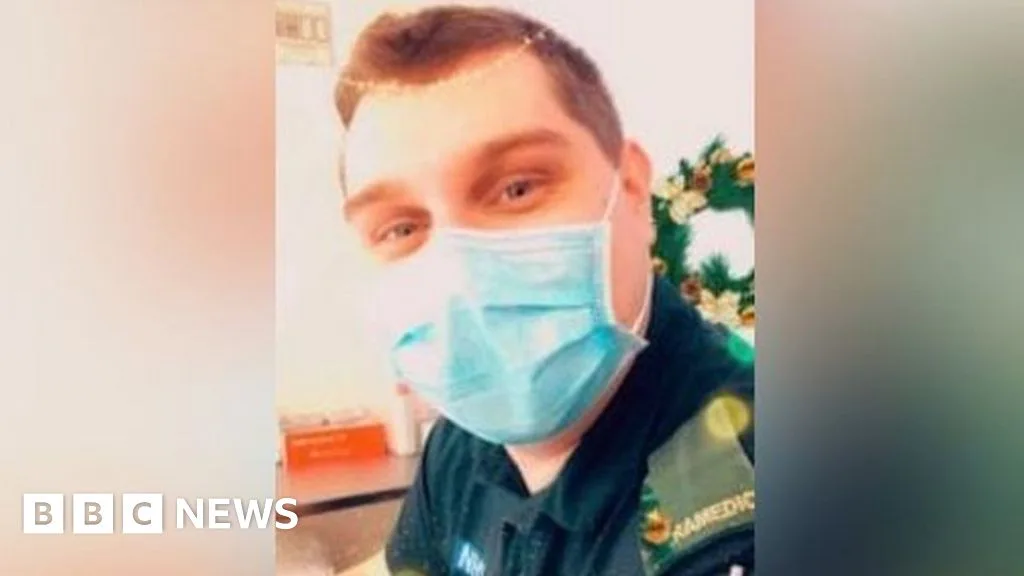
An inquest has heard that a stressed paramedic who died in May had feared losing his job after a disagreement over patient care and a potential breach of confidentiality. David Cullum, from Redditch, Worcestershire, had previously received a written warning from his employer, West Midlands Ambulance Service (WMAS).
The day before his death, Mr Cullum had a disagreement about patient care with a manager. That night he posted two pages of a care plan on a closed staff Facebook page and swiftly removed it, fearing he would be disciplined for breaching confidentiality. The BBC was told the disagreement related to the call-out of a second crew to assist with moving a patient, with a colleague insisting the crew leave and the patient make their own way down some stairs.
According to a WMAS report used in the inquest, Mr Cullum spoke to a supervisor at 12:42 BST on 14 May, and a second call at 13:31 was missed but returned. Two minutes later he phoned 999 and the call was categorised as level three. When he phoned again at 13:43, his slurred voice should have meant the call was upgraded to the more serious level two, the court heard. WMAS said paramedics arrived four to six minutes later than they should have; the trust's investigation found resuscitation should have been attempted, although the crew on scene judged that Mr Cullum was already dead.
Assistant Coroner Nicholas Lane returned a narrative verdict, saying Mr Cullum's death was self-inflicted but he could not be sure the paramedic intended to take his own life. The court, which sat without witnesses, heard Mr Cullum had conveyed details of his medical emergency to call handlers. Mr Lane said his "distressed" actions were a potential cry for help, with what happened at work a possible factor, and there was no evidence about what would have been the outcome had further care been given. He also found no professional wrongdoing on the part of the operations manager or in the assessment of the patient.
A BBC Freedom of Information request revealed eight WMAS staff had taken their own lives in the past four years. WMAS said any death was one too many and there had been fewer suicides since the pandemic, which had arguably been far more stressful. The trust said mental health awareness training and additional support services had been embedded as a result of learning from staff deaths, and that the incorrect call classification had been addressed. It added that, after reflection, the crew accepted resuscitation should have been attempted. Mr Cullum's mother, Pippa Cullum, who did not attend the inquest, said she hoped his legacy would highlight the pressures of the job and promote better welfare, support and understanding for "these amazing people".