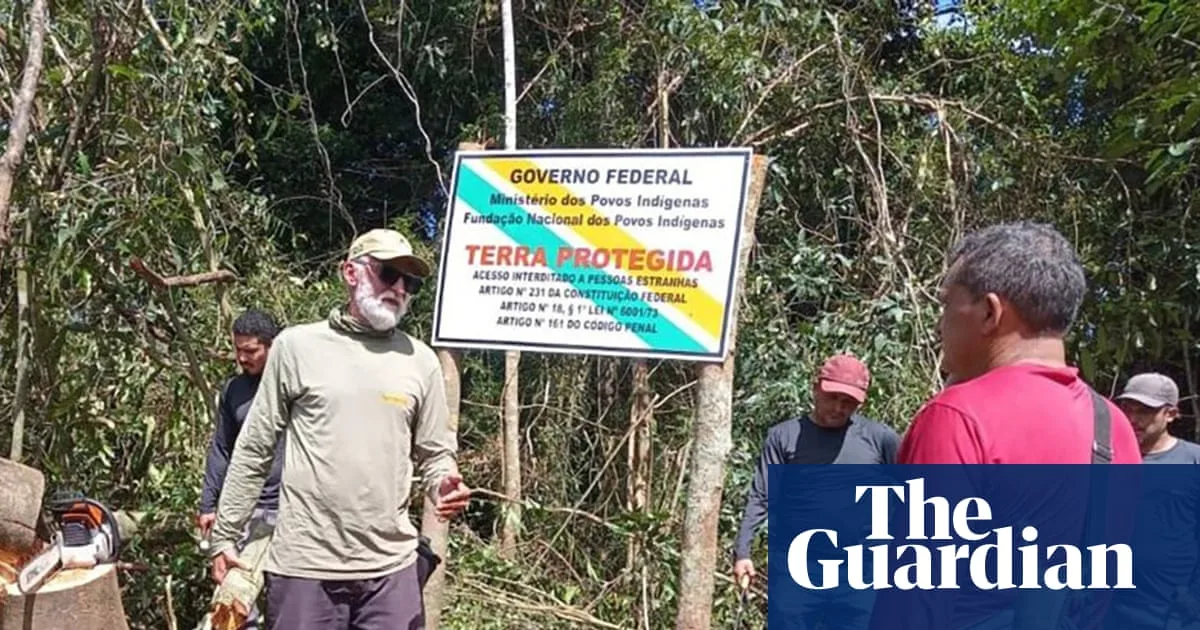
After a 27-year wait, the Brazilian government has started demarcating the 410,000-hectare Pardo River Kawahiva Indigenous territory in the Amazon. The move, confirmed by the National Indigenous Peoples' Foundation (Funai), aims to protect the uncontacted Kawahiva people from farming, illegal mining, and logging that threaten their hunter-gatherer way of life.
Demarcation has faced repeated legal challenges from groups linked to agribusiness, and the process remains fragile ahead of October’s presidential election. Anthropologists stress the Kawahiva’s survival depends on clear physical marking of the land to create safe sanctuaries far from economic exploitation.
Funai agents like Jair Candor have been critical in identifying and protecting the Kawahiva. Indigenous leader Beto Marubo highlighted that Indigenous lands have the lowest deforestation rates in the Amazon, noting that the Kawahiva territory has seen no deforestation for two years despite high rural violence.

However, obstacles persist. Federal public defender Renan Sotto Mayor warned of strong economic pressure to expand the agricultural frontier into the region. Former Funai coordinator Elias Bigui recalled a massacre of landless workers within the territory linked to land disputes, urging reinforcement of Funai’s workforce.
Funai plans buffer zones to prevent environmental degradation, while campaigners call for accelerated demarcation of other isolated peoples' lands. Survival International’s Priscilla Oliveira noted that of 115 suspected isolated groups, only 29 are confirmed, stressing the need for formal safeguards.