
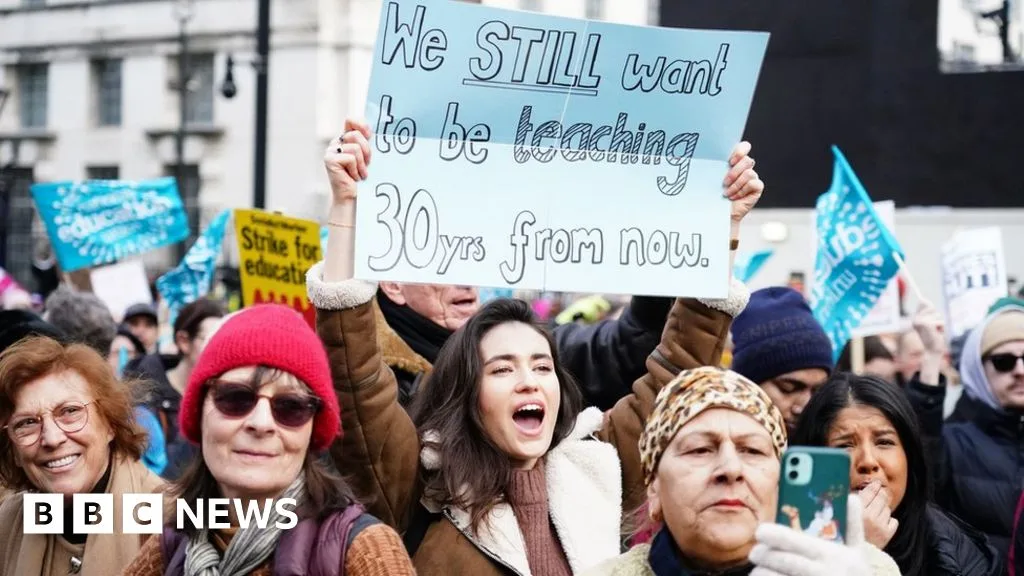
Teachers in England will stage further strikes on Thursday 27 April and Tuesday 2 May after members of the National Education Union (NEU) overwhelmingly rejected a government pay offer. In a ballot, 98% of members voted against the deal, which included a £1,000 one-off payment for this year and a 4.3% rise next year, as well as an increase in starting salaries to £30,000 from September.
NEU joint general secretaries Mary Bousted and Kevin Courtney described the offer as “insulting” and said it had “united the profession in its outrage”. Speaking at the union’s annual conference in Harrogate, they argued the proposal was not fully funded and failed to address the teacher shortage crisis. The ballot saw a 66% turnout, with 191,319 members voting to reject the deal.
Education Secretary Gillian Keegan expressed disappointment, stating the decision “will simply result in more disruption for children and less money for teachers today”. She emphasised that the offer was funded through over half a billion pounds of new investment, in addition to record school budgets. Prime Minister Rishi Sunak also called the news “extremely disappointing”, describing the offer as “very reasonable”.
The NEU confirmed it would support GCSE and A-level students during the strike days, with head teachers ensuring pupils attend exam preparation classes. Bousted called on ministers to reopen negotiations. Meanwhile, delegates at the conference will vote on three potential additional strike days at the end of June and beginning of July, subject to approval by the union’s executive.
Teacher salaries have fallen by an average of 11% between 2010 and 2022, after accounting for inflation, according to the Institute for Fiscal Studies. The government has announced an extra £2.3bn for schools over the next two years, but experts warn that budgets may only just cover the pay offer. The Education Policy Institute noted there is “only just enough headroom” to meet current costs, with schools already facing pressures from supporting vulnerable pupils.
Teachers at the conference voiced frustration, with Sanj Beri, a secondary school science teacher from Nottingham, saying schools need “proper funding” and that recruitment is suffering due to stress and workload. However, some members, like Katie Cooke from Stoke-on-Trent, said they cannot afford to strike further due to lost pay, while parents expressed concerns about balancing work and childcare during industrial action.




