
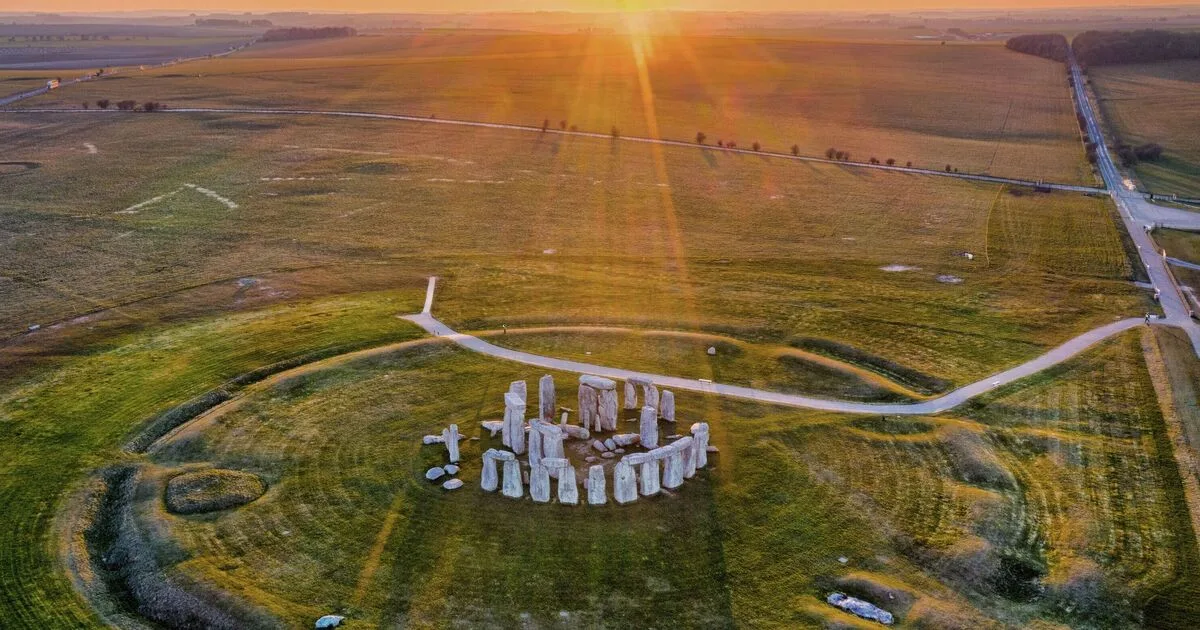
Stonehenge may have been Britain's first sports venue, hosting Stone Age athletic contests not unlike the ancient Olympic Games, according to a new theory from the monument's own curator, Win Scutt. Scutt, who oversees Stonehenge for English Heritage, believes the great prehistoric gatherings that took place at the site some 4,500 years ago were not purely religious or ceremonial, but also featured competitive events testing speed, strength and skill.
Drawing a comparison with the Panhellenic Games of ancient Greece, which included foot races, javelin throwing and unarmed combat, Scutt said: "I think there were probably games, just like the Panhellenic Games." He also suggested the very act of building Stonehenge may have had a competitive dimension, with teams of people competing to transport raw materials from as far afield as southwest Wales and northeast Scotland.
Scutt pointed to the Stonehenge Cursus, a colossal earthwork stretching nearly two miles across the landscape to the north of the monument, as potential evidence. Scholars in the 1600s believed it was a Roman racetrack, and Scutt thinks they may not have been wrong about the racing. "With the Stonehenge Cursus, I think we should at least consider that this was not simply a route or a boundary," he said. "It may have been a place of gathering, display, movement and performance, perhaps even competition."
Compelling physical evidence includes vast deposits of pig bones from the area, whose chemical signatures betray origins spanning the length of Britain, from southwest Wales to Scotland and northeast England. Scholars believe these represent the first known pan-Britain events, drawing people together from across the island. The monument's construction involved moving stone across almost unimaginable distances, with the Altar Stone now believed to have originated in northeast Scotland, over 430 miles away.
The theory emerged as English Heritage unveiled what it described as the UK's most sophisticated replica of a prehistoric building: a seven-metre-tall neolithic hall, now part of the Stonehenge visitor centre. A team of retired volunteers constructed it entirely with period-appropriate tools and materials, including flint axes and thatch. Neolithic pilgrims and workers who travelled to Stonehenge from across Britain may have sheltered in similar structures, Scutt suggested.




