Schools Pocket Up to £700,000 for Pupils with English as Additional Language
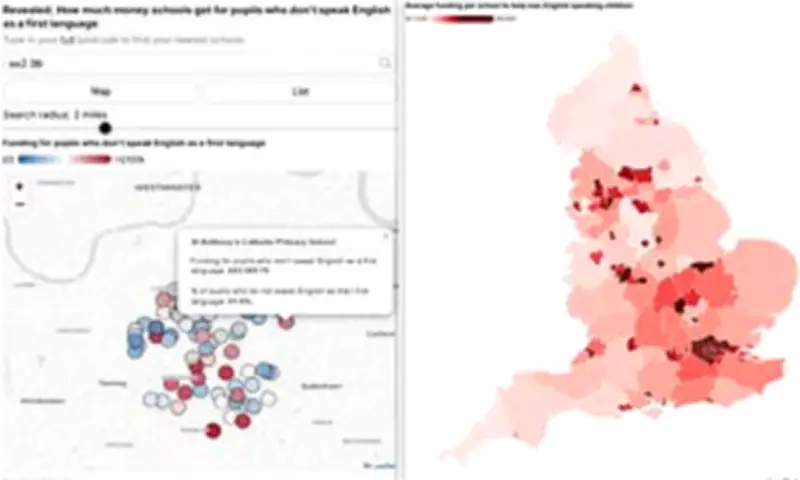
Schools across England are receiving substantial sums of up to £700,000 each to educate pupils who do not speak English as their first language, according to newly revealed Department for Education figures. The funding, which is not ring-fenced and can be spent on "almost anything" according to councils, has sparked debate over educational priorities and taxpayer costs.
Record Funding Allocation for EAL Pupils
Nationally, schools received a record £539 million this academic year to cater for pupils classified as having English "as an additional language" (EAL). This represents a significant increase from previous years, with projections showing the figure will rise to £572 million for the 2026-27 academic year. Since modern records began in 2020, costs have soared by approximately £157 million.
The funding is distributed through the national funding formula, which allocates additional resources to schools based on the number of EAL pupils, alongside other factors such as special educational needs and deprivation levels. Local authorities then distribute these funds within their boundaries.

Top Receiving Schools and Regional Variations
Two schools have emerged as particularly high recipients of EAL funding. Manchester Academy, located in the Moss Side suburb, received over £670,000 for the 2025-26 academic year – the highest amount recorded nationwide. Northampton International Academy followed with £517,287, while St Claudine's Catholic School for Girls in Brent, north London, received £459,659.
On average, schools across England received £27,418 in EAL funding, equating to approximately £320 per pupil who does not speak English as a first language. However, around 2,000 schools did not show funding figures in the audit, with about 1,700 receiving no EAL funding from their local authorities.
Changing Demographics and Educational Challenges
Separate Department for Education statistics reveal that English is no longer the mother tongue for most pupils in certain parts of the country. In Newham, east London, two-thirds of children speak another primary language at home. Nationwide, English isn't the first language for 1.8 million pupils, representing one in five students according to the 2024-25 school census. This marks a substantial increase from 1.2 million a decade ago.
The EAL classification applies to pupils who have "been exposed to a language other than English during early development and continues to be exposed to this language in the home or in the community." Importantly, this includes children born in Britain who may still have English as an additional language, and some classified as EAL may actually be proficient in English.
Criticism and Calls for Different Priorities
Chris McGovern of the right-wing pressure group Campaign for Real Education has voiced strong criticism of current funding priorities. "Stop pitying them, we obsess about it far too much and we don't need to fret about them – we need to worry about the white working-class kids," he told the Daily Mail.
McGovern argued that while children without requisite English language skills need support, "that should come before they enter the school system." He proposed establishing special centres or target schools within each local authority to provide pre-education English courses to struggling children.
Other campaigners have called for funding to be explicitly diverted to white working-class children, citing statistics showing just one in five white working-class pupils achieve a good pass in English and maths, compared to 45.4 percent across all demographics.
How Schools Use EAL Funding
Most EAL expenditure goes toward specialized teachers who focus on teaching English to foreign children, bilingual teaching assistants, and interpreters for parents' evenings. Job advertisements frequently seek translators fluent in languages including Romanian, Arabic, and Polish. Support materials for language acquisition also represent a significant portion of spending.
The provision for EAL pupils now features in Ofsted's new ranking system, adding further pressure on schools to demonstrate effective use of these resources.

Government Response and Future Plans
A Department for Education spokesman stated: "Every child deserves a high-quality education, including children who speak English as an additional language. We trust schools, who know their pupils best, to make decisions about how to invest their funding to support every child while getting the best value for money from overall resources."
The spokesman added that the government's mission is "to break the link between background and success, halving the disadvantage gap for this generation, so that every child can achieve and thrive." This includes initiatives such as Mission North East and Mission Coastal aimed at improving outcomes for white working-class children and disadvantaged communities.
The findings follow previous Daily Mail investigations showing English is not the first language for the majority of pupils at more than 2,000 schools across the country, with two schools having no children who spoke English as their mother tongue. Teachers have previously expressed concerns about the disruptive impact of multiple languages in classrooms and called for proper funding to cope with the challenges posed by mass immigration.