Mars College: The Off-Grid Desert 'Campus' Redefining Education
Nestled in the barren expanse of the California desert, roughly 200 miles from Los Angeles, Mars College stands as a stark contrast to traditional higher education. This off-grid community, born from Burning Man roots, offers an unorthodox learning experience with no tuition, grades, or power grid, attracting a growing number of seekers disillusioned with conventional academia.
A Writers' Workshop in the Wilderness
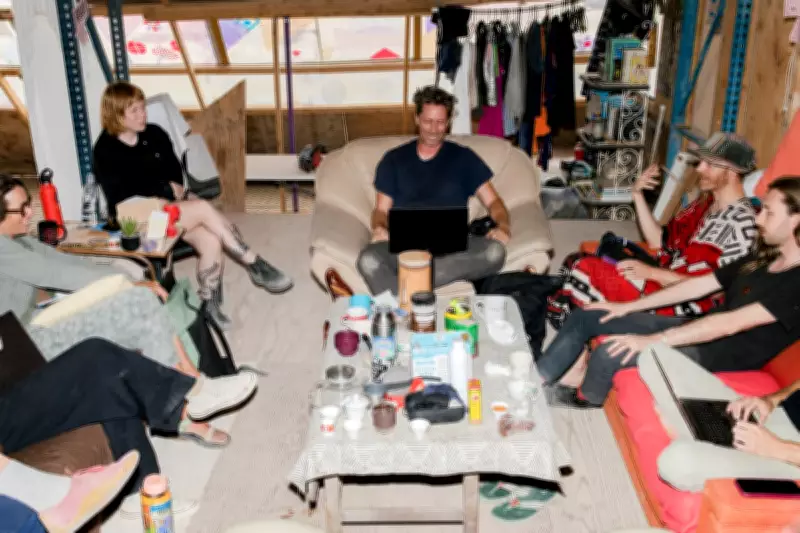
On a windswept plot near Bombay Beach, a dozen writing students gather around weather-beaten couches, laptops balanced on knees, ready to share their work. Ira Birch, a poet in black boots and a shag haircut, hesitates before reading, but workshop leader Amy Brown Carver steps in, reciting lines that echo the isolation: "It's been a long time since this land has seen people." The scene, with its porcelain teacups and supportive critiques, mirrors any creative writing class—until one zooms out to reveal the plywood-and-metal structure perched on sand, surrounded by the pesticide-laden Salton Sea and endless desert.
Co-founder Gene Kogan, a programmer and artist, explains the name: "It's unclear who gave it that nickname, but it kind of looks like Mars out here." At Mars College, there are no degrees, mandatory attendance, or trained professors. Power comes from solar panels, and classes range from writing workshops to AI art, all held in temporary structures built each January and dismantled by April. Students live in trailers and tents, paying a few hundred dollars for communal wifi, meals, and portable toilets.

An Alternative to Soaring Tuition Costs
As college tuition skyrockets and long-term unemployment among graduates rises, Mars College presents itself as a low-cost experimental community. Kogan argues it's not a traditional institution but a response to an unsustainable university system. "In a lot of ways it's an alternative to college," he says, envisioning a future where such models thrive. The desert setting fosters skills in off-grid living and modern tech, creating what some call a "college for the end of the world."
However, life at Mars isn't for the faint-hearted. Sandstorms coat the camp in dust, drinking water must be trucked in, and spring temperatures soar into triple digits. "Here, you can't take anything for granted," Kogan notes, highlighting the rugged daily conditions that challenge students.
Origins from Burning Man to Desert Campus
The seed for Mars College was planted at Burning Man, where Freeman, a former Silicon Valley engineer, built temporary structures from pallet racks. After the festival, leftover materials led him to purchase a $20,000, 20-acre plot near Bombay Beach in 2019. Kogan, with a background in mathematics from Columbia and a Fulbright scholarship, brought people through an open Twitter call, touting a "free and highly unconventional experiment in living and learning."
Initially, the cohort consisted of Kogan's friends, but it has since grown to about 60 students aged 25 to 60, from diverse backgrounds including Brazil, India, and Europe. Admission is self-selective, requiring resilience for three months of desert living. Students include a former English major fascinated by solar power, a 45-year-old microbiologist compiling an AI-written journal, and a Balinese Hindu priest who once worked in tech.
Grappling with AI and Environmental Realities
AI plays a central role at Mars, with classes on "vibe coding" and AI agents managing lights and kitchen organization. While environmental concerns over AI data centers near the Salton Sea arise, Kogan focuses on the technology's possibilities. Freeman adds, "It's nice being around other people using it extensively to see what it's capable of."
The microbiologist's journal reflects this blend, mixing AI-enhanced articles with human-written notes pondering the ethics of "bot-penned prose." As April approaches, the temporary campus will be torn down, returning the land to desert until next year's rebuild. This cyclical nature underscores Mars College's transient yet persistent challenge to educational norms, offering a glimpse into a future where learning transcends traditional boundaries.