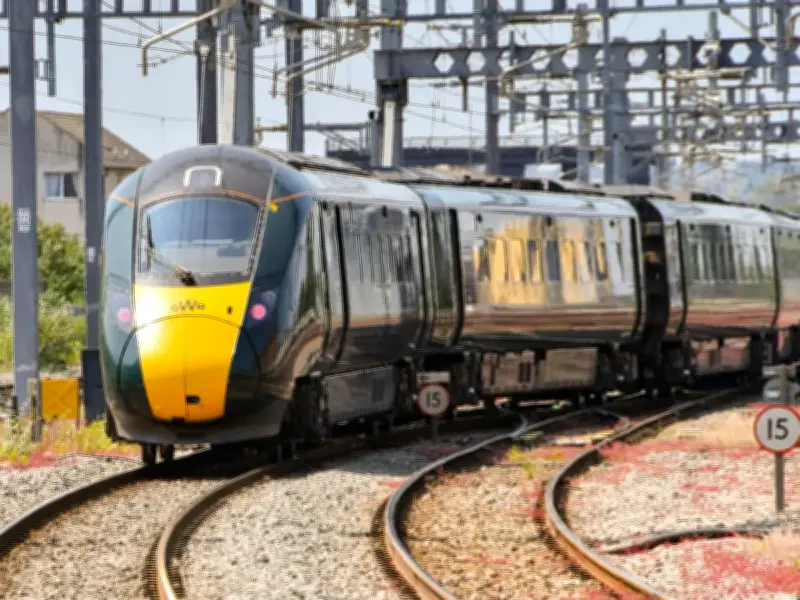
Tensions between the UK and Welsh governments over rail funding have been brought to a head by the announcement of £30m towards the Cardiff Parkway rail project in Chancellor John Healey's Budget. The Plaid Cymru administration argues that the UK Government, which holds responsibility for rail infrastructure in Wales, should commit substantial funding for new stations as a first step towards addressing decades of underinvestment.
Funding dispute over Burns stations
The Welsh Government is seeking an initial £1bn, hoped to form part of a longer-term £14bn commitment made by former Prime Minister Sir Keir Starmer to support new stations, upgrades to existing lines and new track. However, the Budget provided no new money for these projects. The £30m announced by the Chancellor was an allocation from the existing rail investment settlement for Wales, set out in last year's spending review.
The Department for Transport is now arguing that the Welsh Government should contribute funding towards station projects on the south Wales mainline, a responsibility the Welsh Government disputes. Deputy Minister for Transport Mark Hooper said: "Rail infrastructure is not devolved, so it is for them to resource these stations. We would love it if it was all devolved to us, but ultimately it is their responsibility to do it. They are referencing an agreement that is not there. There is no agreement between the parties on this."
Disagreement over project readiness
The two administrations also differ on whether the five original "Burns stations" are ready for development. Welsh Secretary Stephen Kinnock told reporters that funding had been allocated to Cardiff Parkway because it is the only "shovel-ready" project, but the Welsh Government says the other five stations are also ready to progress.
Cardiff Parkway, supported by Lord Burns, was not among the original five stations, which are Newport Road in Cardiff (Cardiff East), Newport West, Llanwern and Somerton in Newport, and Magor and Undy. All six stations, including necessary work to surrounding rail corridors, have an indicative price tag of around £800m, according to the Welsh Government.
Mr Hooper rejected the suggestion that the stations were not ready, saying: "The UK Government committed to deliver this money in February and, since then, we've agreed with Network Rail that Transport for Wales will deliver the stations. Transport for Wales is ready to start work. We just need the UK Government to deliver on its commitment."
Funding disparity and potential solutions
The UK Government's commitment to rail enhancements in Wales during the current comprehensive spending review period, running to 2030, is £350m, compared with approximately £34bn committed to rail enhancements in England over the same period. A Department for Transport spokesperson said: "Our £30m investment in Cardiff Parkway will transform East Cardiff, unlocking jobs, investment, and improved connectivity across the region – and it's just one part of £445m we've committed to upgrade Wales' railways. We now expect the Welsh Government to confirm its share of funding, and we hope to be able to deliver benefits for passengers as quickly as possible."
The £14bn announcement was made by a former Prime Minister who is no longer an MP, flanked by a former First Minister, Eluned Morgan, who is no longer an MS. It was a political commitment that does not tie the Treasury or future governments to investing that amount in Wales.
One possible solution would be to uncouple English rail projects from Welsh ones, potentially improving consequential funding for Wales under the Barnett Formula. Another option is a specific funding guarantee ensuring Wales receives at least 5% of UK rail enhancement spending. A third route, supported by Plaid Cymru with cross-party support in the Senedd, is to devolve rail fully to Wales with a funding settlement that recognises decades of underinvestment.
Mr Hooper noted that the supply chain built up through previous projects, including the £1.1bn electrification of the South Wales rail network, could ebb away without a funding commitment. He said: "The supply chain we have built up is, to a large extent, Welsh-based, and the value of that work stays in Wales to a greater extent than if it was elsewhere."
The immediate priority must be for the UK Government to accept responsibility for funding the Burns stations, with the Welsh Government maintaining that expecting it to contribute towards non-devolved projects perpetuates unfairness.