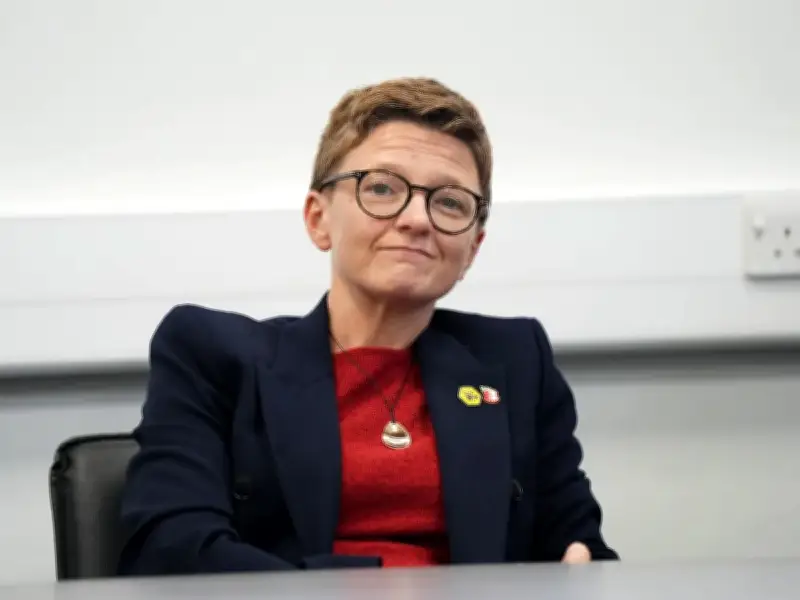
Mayor of Greater Manchester Bev Craig will appoint a new deputy mayor to tackle the city-region's youth unemployment crisis, with the announcement expected on Tuesday.
The move forms part of a wider push to give young people better routes from education into work. The mayor is calling on the government to hand Greater Manchester greater control over skills funding and apprenticeships.
The new deputy mayor will also act as the city-region's skills commissioner.
Milburn report due on Tuesday
The announcement comes as the Milburn report on young people and employment is also published on Tuesday. There are an estimated 981,000 young people aged 16 to 24 who are not in education, employment, or training (NEET) in the UK, which is 13 per cent of those in that age group.
Alan Milburn's year-long review is expected to recommend radical changes, including an overhaul to the welfare system, as well as calling for young people to have a "legal guarantee" of work, training or employment support.
The former health secretary has warned it could take 10 years to get to a "reasonable level" of youth unemployment in the UK.
Devolution of skills funding
Ms Craig is expected to say there is no time to waste, arguing that too many young people are being let down by a system which does not always give them the skills, experience or opportunities they need to find work.
She will call for full devolution of the skills and apprenticeship levy, giving Greater Manchester greater freedom to decide how the money is spent and how training is delivered.
The Greater Manchester Combined Authority (GMCA) will also set out plans to expand work experience and work placements for those aged 16 to 18.
New apprenticeship service
Another proposal is a new service which would bring apprenticeship opportunities from across Greater Manchester together in one place, making it easier for young people to see what is available.
The appointment of a dedicated skills commissioner is being presented as a signal that Greater Manchester is prepared to take the lead and do things differently.
It builds on the Greater Manchester Baccalaureate, known as the MBacc, which aims to give young people a clearer route into local jobs through technical and vocational education.
Building on the MBacc
Former mayor Andy Burnham launched the MBacc two years ago, arguing that the education system placed too much emphasis on traditional academic routes.
While young people had a well-established path from GCSEs to A-levels and university, Mr Burnham said technical and vocational qualifications were often fragmented, with no equally clear route into employment.
It was Mr Burnham's answer to the English Baccalaureate, or EBacc, a set of GCSE subjects created by the Conservative government that set students up for a place at university. The then government wanted 90 per cent of all pupils across England to be studying the EBacc, which includes English, maths, three sciences, a language and history or geography, by 2025.
The MBacc was designed to give vocational education greater recognition and help connect what young people learn in the classroom with the jobs available in Greater Manchester.
Bev Craig's latest plans are intended to build on that work, with the mayor wanting to put skills, training and employment opportunities at the heart of the region's approach to tackling youth unemployment.
She is expected to argue that Greater Manchester has the ambition to make changes, but needs the powers and funding from the government to make them happen.
In her manifesto for the Greater Manchester mayoral by-election, Ms Craig said the school system was "too fragmented". She said every 16 to 24-year-old should have a clear pathway into education, training, apprenticeship or employment.