UK Conservative leader Kemi Badenoch has publicly stated she would not trust First Minister John Swinney with Scotland's energy policy, directly challenging his pledge to seek control over these powers immediately if re-elected in May. The political clash centres on the future of Scotland's substantial energy resources and the constitutional battle over who should govern them.
Badenoch's Firm Stance During Aberdeen Visit
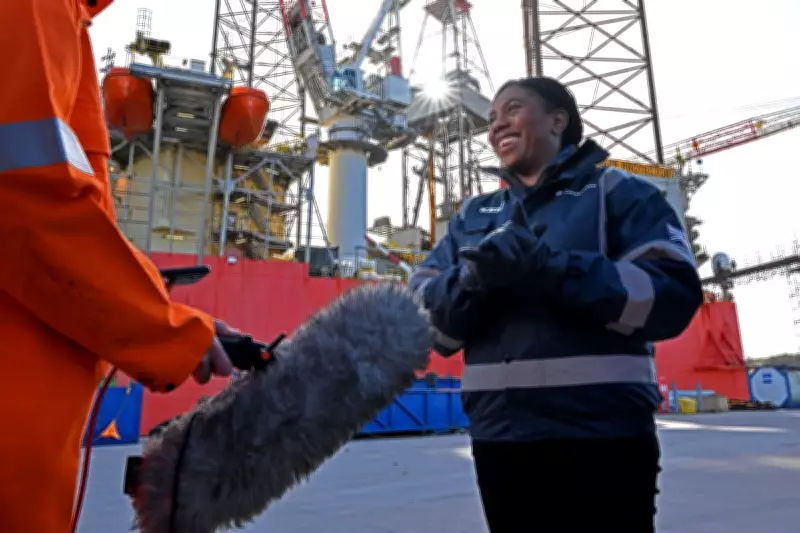
Speaking to the Press Association during a visit to an oil rig in Aberdeen on Monday, Badenoch was unequivocal in her opposition. "I do not trust John Swinney with Scotland's energy," she declared. The Tory leader criticised the SNP's approach as "pretty non-committal," arguing that even with devolved powers, "we will still not be drilling."
Badenoch emphasised her party's contrasting position, advocating for new oil and gas licences to enhance energy security. "What we need to do right now is allow new licences, make sure that we can drill our own oil and gas and use those revenues to help the people of Scotland," she explained. During her tour of north-east Scotland, she promoted the Conservative campaign to "get Britain drilling," positioning it as a solution to current energy challenges.

Swinney's Constitutional Gambit
First Minister John Swinney revealed earlier on Monday that, if re-elected, he would draft a Section 30 order on the first day of the new parliamentary term to request the transfer of energy responsibilities from Westminster to Holyrood. Such an order would require approval from the UK Government, which political analysts consider highly unlikely given the current constitutional tensions.
Swinney framed this move as an urgent response to what he described as Westminster's failures. "Scotland is one of the most energy rich countries in the world – but we pay some of the highest bills in Europe," he stated. "That is because for decades, Scotland's energy wealth has flowed south to the Treasury rather than working for the people of Scotland."
The First Minister argued that UK control has led to soaring bills, job losses, and blocked investment projects. "Westminster control is not working for energy security, it is not working for jobs and it is not working for people's bills. By every measure Westminster has failed," he asserted.
Independence Context and Political Reactions
Swinney connected the energy powers request to his broader independence agenda, noting that a majority for the SNP in May would secure a mandate for a second independence referendum. However, he emphasised immediate action: "The process of a referendum will take time, so I want to begin the journey to independence on day one with the immediate transfer of powers over our energy."
He positioned this as a practical measure to address current hardships: "Because Westminster's abject failures are really hurting people now – costing jobs and seeing bills soar. So I want to be able to take action now. If Westminster will not act to bring down bills, they should get out of the way for a government that will."
The First Minister concluded with a stark warning: "And if the UK Government refuse, it will only confirm that if we want to make Scotland's energy wealth work for Scotland and bring down bills, that is only available through the fresh start of independence that I am offering at this election."
Criticism from Scottish Labour
Scottish Labour finance spokesman Michael Marra offered scathing criticism of Swinney's proposal, dismissing it as unserious. "The First Minister has no energy – let alone a serious plan for Scotland's," Marra remarked. He accused the SNP of squandering opportunities: "The SNP has squandered Scotland's clean energy potential for years – ditching its plans for a publicly-owned energy company, selling off Scotland's seabeds on the cheap and breaking its green jobs pledge."
Marra further questioned the SNP's competence and trustworthiness: "They can't build a ferry, they can't run our NHS and they can't be trusted to keep their promises. John Swinney is not remotely serious about this half-baked plan – he just wants to avoid talking about his own record which has left Scots paying more and getting less."

Background: The Unfinalised Energy Strategy
Complicating the debate is the Scottish Government's lack of a finalised energy strategy. The document was published in draft form under former First Minister Nicola Sturgeon, featuring a presumption against new oil and gas exploration, but was never completed. A spokesman for Swinney recently attributed this delay to "volatility in the global sector," while SNP Westminster leader Stephen Flynn pointed to "confusion caused by the UK Government" as an obstacle to finalising the plan.
This means that if the SNP were to request new powers on the first day of the new term, they would do so without a fully developed, government-approved energy strategy in place, a point likely to be emphasised by their political opponents in the coming weeks.