
The second crew member of a downed US F-15E fighter jet has been rescued from an Iranian mountain by American commandos, ending a two-day search. The officer, a colonel and weapons systems officer, was wounded but successfully extracted from a mountain hideout, according to President Donald Trump, who called it “one of the most daring search-and-rescue operations in US history”. Trump claimed no American had been killed or wounded in the operation.
Trump announced the rescue on social media and said he would hold a press conference at the White House with the military to provide more details. In subsequent posts, he threatened Iran with bombing its power plants and bridges if Tehran did not reopen the Strait of Hormuz to merchant shipping. He wrote: “Open the Fuckin’ Strait, you crazy bastards, or you’ll be living in Hell.” In an interview with the Wall Street Journal, he said all of Iran’s power plants would be destroyed, adding that Iranian civilians wanted that to happen because they were “living in hell”.
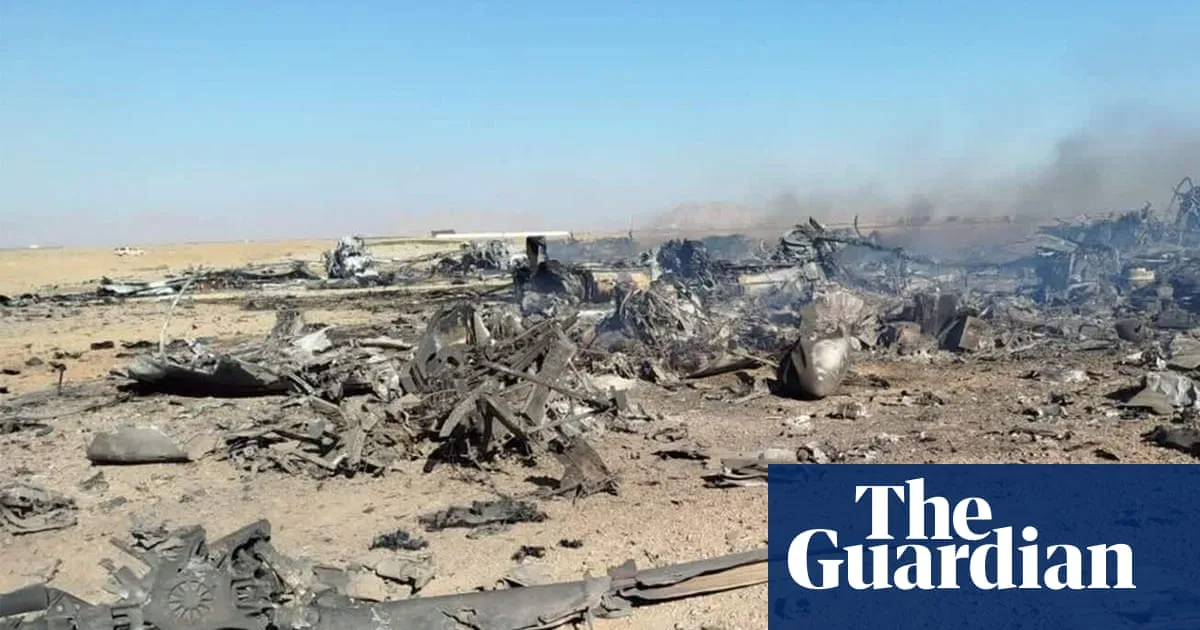
The rescue involved a 200-strong special forces team under heavy covering fire. According to Iranian sources, three Revolutionary Guards were killed. The colonel had climbed a 7,000ft (2,135-metre) ridge while hiding. Iran claimed to have destroyed four US aircraft involved in the search, including two modified Hercules transport planes, two Black Hawk helicopters, a Reaper drone, and a Hermes-900 drone. State media showed images of charred wreckage.
The pilot of the F-15E was rescued earlier on Friday after the aircraft became the first US plane downed over Iran during the five-week-long conflict. The pilot had spent seven hours on the ground before being rescued in broad daylight. The US air force used low-flying Pave Hawk helicopters and C-130 Hercules transport planes in the search. The CIA located the second crew member after more than a day, employing a disinformation campaign to mislead Iranian forces.
Israeli Prime Minister Benjamin Netanyahu congratulated Trump, saying: “As a nation that repeatedly carried out daring rescue operations, and as someone who was wounded in such a mission and lost a brother in the Entebbe rescue, Israelis and I, we know what a bold decision you took.” Footage emerged of night-time clashes in Iran’s Kohgiluyeh and Boyer-Ahmad province, near the city of Dehdasht, where the searches had been taking place.




