US Special Forces Race Against Iranian Tribes to Rescue Downed Airman
The frantic search for a missing American airman escalated dramatically on Saturday night, with US special forces engaged in a high-stakes race against armed Iranian nomads to locate the crewman. The weapons systems operator ejected from his F-15E Strike Eagle just moments before the jet was destroyed by a surface-to-air missile over southern Iran on Friday.
Bounty and Bargaining Chip Fears
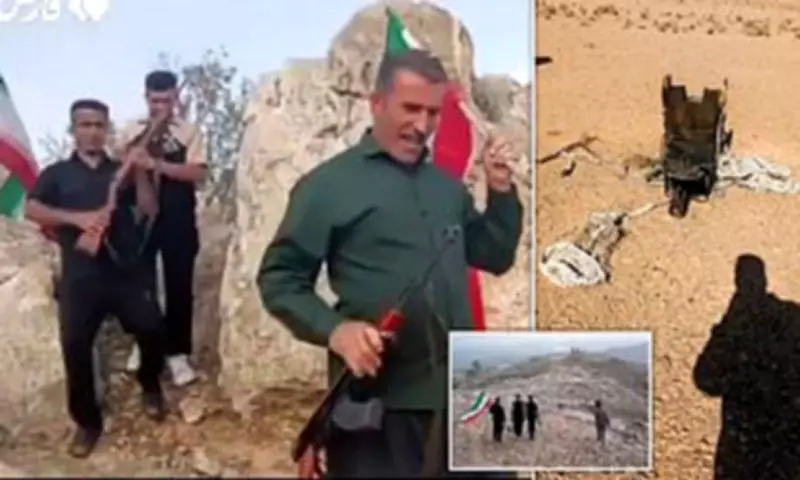
Tehran has placed a substantial bounty of £50,000 on the head of the missing airman, prompting local goat herders and farmers to take up makeshift weapons and join the hunt. Iranian media has repeatedly broadcast the reward while showing images of US aircraft searching the treacherous mountain terrain. US officials express grave concerns that the crewman could be captured and used as a human bargaining chip in the ongoing conflict.
A source close to former President Donald Trump revealed: 'Everything is being thrown at finding the missing airman. We have special forces in the area and the might of the entire US military is in this hunt. The fear is he will be captured and used as a pawn. We need to find him before the Iranians and bring him home.'

Intense Search and Rescue Operation
The pilot of the downed aircraft was successfully rescued within 45 minutes of the crash, but the search for the second crewman has proven far more challenging. The missing officer is trained in SERE (survival, evasion, resistance, and escape) protocols and may have been injured during ejection. Experts suggest he will likely hide during daylight hours and only move at night to avoid detection.
Marina Miron from King's College London's defence studies department explained: 'He will be trying to blend with the terrain and survive until he is found. The problem here is, the better he hides, the more difficult it will be to locate him for those conducting the rescue.'
International Implications and Historical Echoes
The hunt marks a pivotal moment in Operation Epic Fury, which began on February 28. If captured, the airman could become a significant bargaining tool for Iran. Laurel Rapp of Chatham House noted that capturing the airman would represent a 'huge prize' for Tehran, offering them a 'very powerful bargaining chip.' This situation raises concerns about a potential repeat of the 1979 Iran hostage crisis, where 52 Americans were held captive for 444 days.
Israel has reportedly suspended attacks in the area where the jet was shot down, with Israeli Special Forces allegedly assisting US Navy Seals and Army Green Berets on the ground. Meanwhile, a US Black Hawk helicopter involved in the search was hit by ground fire but managed to land safely.
Political Tensions and Military Context
Donald Trump has been receiving continuous briefings about the search-and-rescue mission, choosing to remain at the White House over the weekend to stay 'at the heart of things.' He has warned Iran to reopen the Strait of Hormuz, stating: 'Time is running out – 48 hours before all hell will reign down on them.'
Despite claims of military successes, Iran has launched at least 50 ballistic missiles and over 150 drones at US targets in the past 72 hours. The conflict has resulted in 13 US service member fatalities to date – seven from hostile fire and six in a plane crash. Trump has criticized European allies for their reluctance to help secure the Strait of Hormuz, with NATO Secretary General Mark Rutte scheduled to visit the White House next week.
Iranian leaders have encouraged citizens to participate in the hunt for the American airman but cautioned against mistreatment. Parliament speaker Mohammad-Bagher Ghalibaf mocked Trump on social media, highlighting the shift from regime change objectives to a desperate search for missing personnel. The downed jet was previously based at RAF Lakenheath in Suffolk before being relocated to Jordan as hostilities escalated.