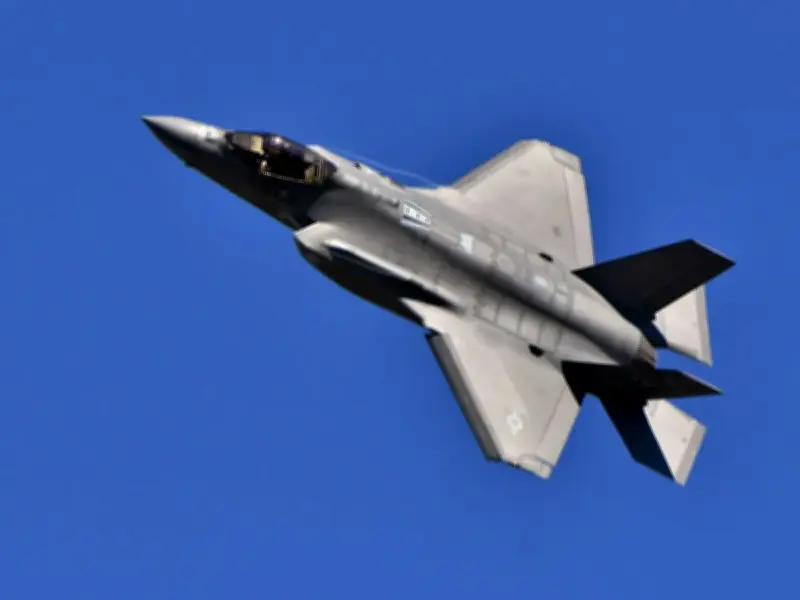
A US Air Force F-35A fighter jet has vanished from flight radars over the Middle East after issuing an emergency squawk code above the United Arab Emirates, according to aviation tracking information. The disappearance comes amid speculation that US President Donald Trump could authorise fresh strikes against Iran.
The combat aircraft was last detected travelling south of Abu Dhabi, based on a screenshot from aviation monitoring platform Flightradar24 circulated on social media. The jet transmitted a squawk 7700 code, signalling an emergency situation, while flying over the UAE. US Central Command, which oversees American military deployments across the region, has yet to respond to requests for comment.
Fifth-generation stealth fighter
The F-35 is a fifth-generation stealth fighter jet, widely regarded as the world's most sophisticated military aircraft. Pricing data from 2022 valued each jet at $82.5 million, approximately £70 million.
The incident unfolds as President Trump has indicated his willingness to resume military strikes against Iran in the coming year should diplomatic efforts between Washington and Tehran fail to produce an agreement. While acknowledging that indirect negotiations continue, he criticised Iranian officials as "professional tap dancers".
Trump's warning to Iran
Charging Iran with deliberately delaying discussions, Trump told Fox News: "They talk all the time. All they do is talk, but it's all b*******."
During the broadcast, he expressed hope that Iran would challenge America's naval blockade of the nation's ports, warning that should they do so, they would "all be at the bottom of the sea like the rest of the navy". The remarks follow reports from last week suggesting Trump was considering a fresh wave of strikes against Iran.
Iran's response
On Sunday, Trump insisted Tehran has "launched more drones and missiles in the last week than at any time for over a year". Writing on his Truth Social platform, he stated: "Don't worry, they've all been knocked down, and done no damage."
Data examined by ABC News shows that reported attacks in the Strait of Hormuz during October and November have exceeded those of any previous months since the conflict started. On Monday, Tehran declared it would deploy "all available means" to resist the US naval blockade. Iranian Foreign Minister Abbas Araghchi dismissed the notion of a land blockade of Iran as "impossible", stating it is the "duty of the entire country and its people" to oppose US sanctions.
"The best way to counter this pressure is to make those imposing sanctions lose hope of achieving their goals, so they know this tool is ineffective and will remain so," he said, according to state media.