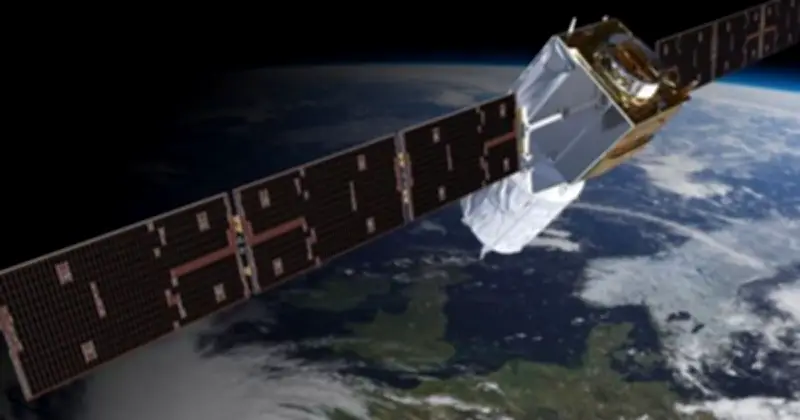
Britain is dangerously exposed to a potential Russian nuclear satellite attack, experts have warned, after reports that Moscow could launch an armed spacecraft into orbit within weeks. NATO intelligence services reportedly believe Russia plans to launch a satellite carrying a nuclear weapon into space before the end of this year.
No Defence Against Space Attack
Mike Martin, chairman of the All-Party Parliamentary Group (APPG) for Rearmament, said Britain had virtually no ability to defend itself against an attack in space. Mr Martin, the Liberal Democrat MP for Tunbridge Wells and a former British Army officer, warned: "If Russia wants to take out our entire military communication satellite network or launch its own armed satellites, then there is absolutely nothing Britain can do to stop them. Without British satellites, our navy, army and air force would be flying blind."
The latest reports, published by German broadcasters NDR and WDR and newspaper Süddeutsche Zeitung, suggest the satellite is called Sputnik-S and was assembled several years ago. Western intelligence services, including Germany's BND and armed forces, are understood to have exchanged information indicating that the satellite is stationed in the Moscow region.
NATO Response and UK Weaknesses
The BBC has reported that German media believe NATO countries have received intelligence suggesting Russia could launch the satellite within 60 days. The reports have prompted a response from NATO Secretary General Mark Rutte, who insisted the alliance would defend itself against threats in space. He insisted: "We will always make sure that we defend every inch of NATO territory, and that includes making sure that we are safe when it comes to the space domain."
However, Mr Martin warned that Britain's own capabilities were dangerously limited, leaving the country exposed if Russia were to attack its satellites. The APPG recently heard from defence experts that Britain had no sovereign capability to fight in space or protect its satellites from attack. It was also told that there was no one at Cabinet level responsible for the domain, with experts warning that the country's response to an attack had never been tested.
Russian Ambitions and Potential Consequences
Britain also lacks the ability to launch its own satellites and rapidly replace losses, partly because the military relies heavily on commercial providers for its space-based assets. Mr Martin said: "The space domain is Britain's weak flank. We simply don't have the ability to fight our adversaries in space, defend our satellites from attack and replace any satellites that we lose."
A recent study by the Royal United Services Institute (RUSI), published in October, warned that Moscow was likely to prioritise offensive capabilities and early-strike options as it modernises its nuclear arsenal. The research by Dr Sidharth Kaushal also highlighted the potential for greater Russian investment in counter-space operations, including directed-energy weapons and space-based electronic warfare designed to degrade enemy surveillance and missile defence systems.
A separate RUSI analysis by Juliana Suess examined the potential consequences of a nuclear explosion in space, warning that its effects could be indiscriminate and long-lasting. Unlike a conventional anti-satellite missile designed to destroy an individual spacecraft, a nuclear detonation could affect large numbers of satellites operating in the affected orbital region. The resulting electromagnetic pulse and radiation could disable satellites or accelerate their deterioration, potentially affecting military and civilian systems alike. Navigation, banking and emergency services could all be disrupted, depending on the orbit affected and the protection built into individual satellites.
Such an attack could also destroy Russian spacecraft, while placing a nuclear weapon in orbit would violate the 1967 Outer Space Treaty, which Moscow signed. The United States has previously accused Russia of developing a nuclear weapon capable of destroying entire satellite networks, including SpaceX's Starlink system, which Ukrainian forces have been using. Moscow denied US allegations in 2024 that it was developing a weapon capable of destroying enemy satellites through a nuclear explosion in space.
The latest reports have also been rejected by the Russian Embassy in Berlin, which described the allegations as unfounded and part of a propaganda campaign. Kremlin spokesman Dmitry Peskov said he had not seen the latest reports and dismissed claims attributed to unidentified sources as unworthy of serious consideration.
The APPG for Rearmament held its evidence session on Britain's military readiness in the space domain on November 4. It is due to publish its wider inquiry into Britain's military capability and readiness to fight a war on December 14.