
Hundreds of British sailors aboard the RFA Lyme Bay, moored off Gibraltar, are on standby for a mine-clearing operation in the Strait of Hormuz, pending a peace settlement between the US and Iran. US President Donald Trump has criticised allies for not contributing enough to America's military campaign, and in March instructed NATO partners to safeguard the strait independently.
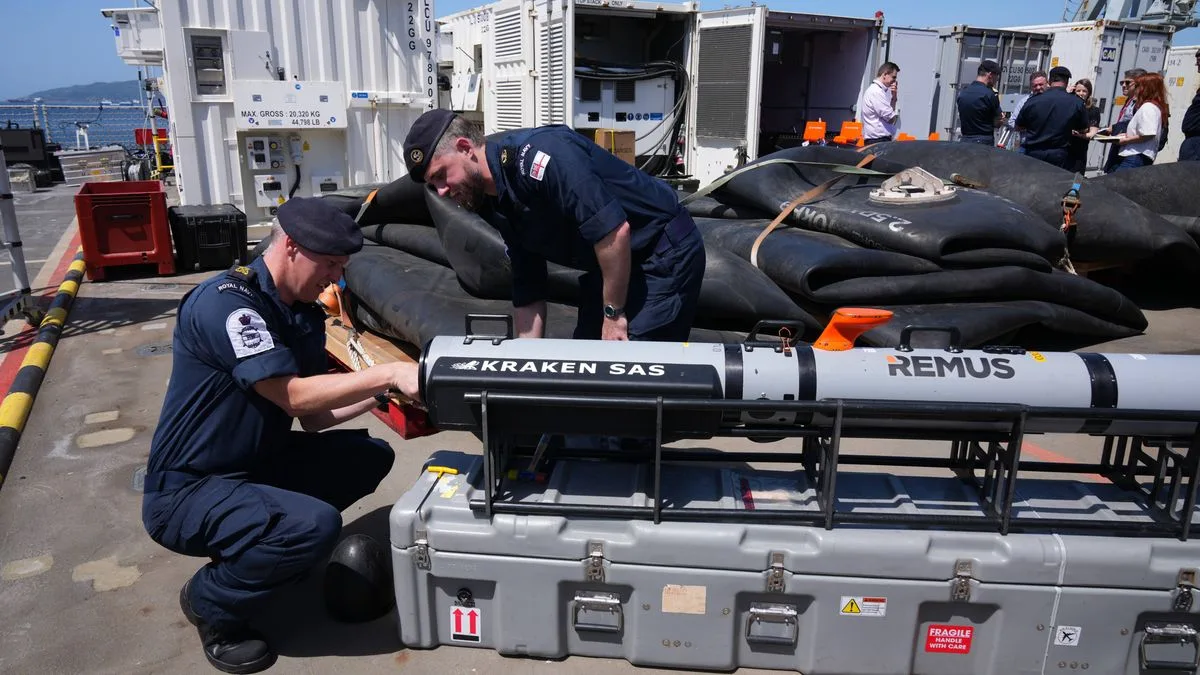
Britain's Armed Forces Minister Al Carns brought journalists to tour the amphibious landing craft as it prepared for a potential multinational mission led by the UK and France. The vessel was being stocked with munitions and mine-detecting underwater drones fitted with sonar technology. The RFA Lyme Bay will soon leave Gibraltar to rendezvous with HMS Dragon and partner vessels before sailing through the Suez Canal towards the Persian Gulf.
Iran retaliated after US-Israeli military action on February 28 by effectively shutting the strait, a crucial route for oil, natural gas and fertiliser, causing global economic disruption. More than 6,000 vessels have been prevented from transiting. Cmdr. Gemma Britton, who leads the Royal Navy's Mine and Threat Exploitation Group, said Iran could have deployed a 'huge' array of mines, which could be rocket-propelled, tethered or seabed-mounted and activated by sound, movement or light.
The Royal Navy is using autonomous systems that scan the seabed with sonar in about half the time of crewed vessels. Unmanned sea drones generate imagery to identify mines, which are then examined with acoustic systems and cameras. Some systems can be transferred to smaller autonomous vessels launched from the mother ship, reducing personnel exposure. Once identified, a remotely operated vehicle can place a charge next to a mine and detonate it, replacing the need for a diver.
The primary aim is to clear a transit lane through the strait to allow approximately 700 ships to depart, followed by a lane for incoming vessels. Britton cautioned that clearing the entire area is a lengthy process, but the operation is ready to proceed once a peace deal is finalised.




