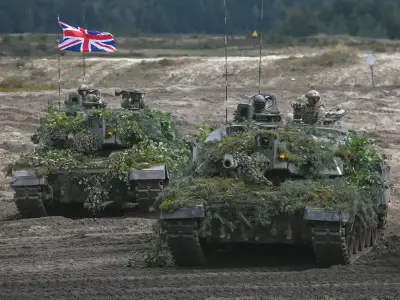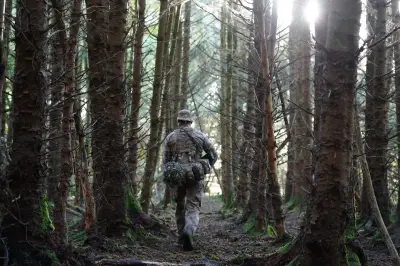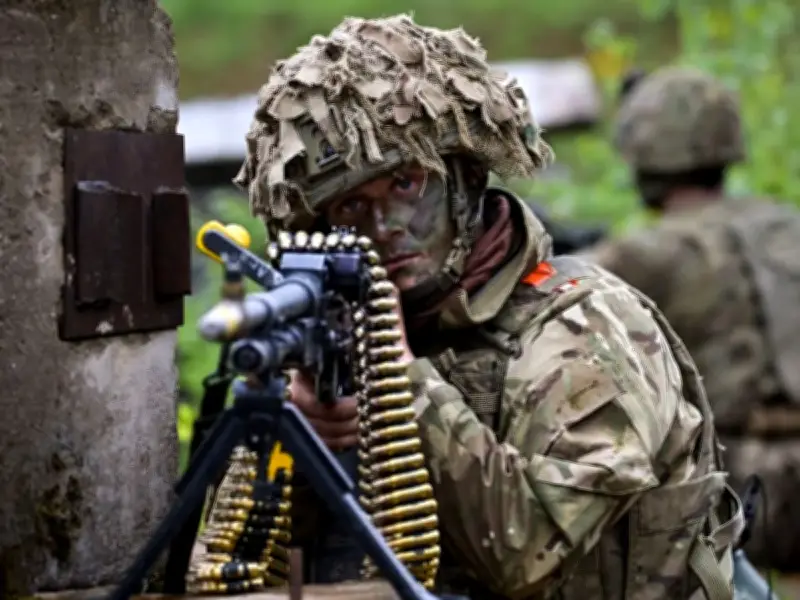
Military leaders have questioned whether Britain should bring back national service amid rising global tensions, war in Europe and fracturing alliances. The debate follows a stark warning from General Sir Roly Walker, Chief of General Staff, to 700 troops gathered at Catterick Garrison in North Yorkshire from across 1st Division, the army's Global Response Division.
Sir Roly warned that Britain was "going to need you" and that soldiers would need to "consent to sacrifices" amid the fracturing global situation. He added that political leaders would need to prepare civilians with a "frank conversation" about what could happen in the future.
Warning to troops
Sir Roly told the soldiers: "You didn’t know this, but our nation is going to need you. There was a time that our nation didn’t want to think of a time when it would need its soldiers to fight in a war."
The concerns over the fragile geopolitical situation come as Britain's army faces an increasingly tense situation in Europe, with concerns that Russia could launch an attack on a NATO nation, effectively dragging the UK into a conflict against Moscow.
Global threats
Across the Atlantic, Donald Trump appears to cool on the defensive alliance and repeatedly threatens to annex territories. Argentina's Javier Milei has also renewed threats against the Falkland Islands, vowing to bring the UK Overseas Territory under the South American nation's control.
There are fears the armed forces might not be able to meet the challenge of an increasingly fragile period. Following major cuts to the MoD that began in 2010, just over 74,000 regular forces personnel are currently serving in the British Army - the lowest number since the Napoleonic Wars.
History of national service
Peacetime national service in the UK spanned between 1949 and ended in 1960, with the final discharge recorded in May 1963. Over 2.3 million young British men aged between 17 and 30 served about a year during the national service. Unlike World War 2, national service did not apply to women.
National service became a brief topic in the 2024 General Election, with then-Prime Minister Rishi Sunak being interested in bringing it back. The question of whether national service should return remains open for public debate.