
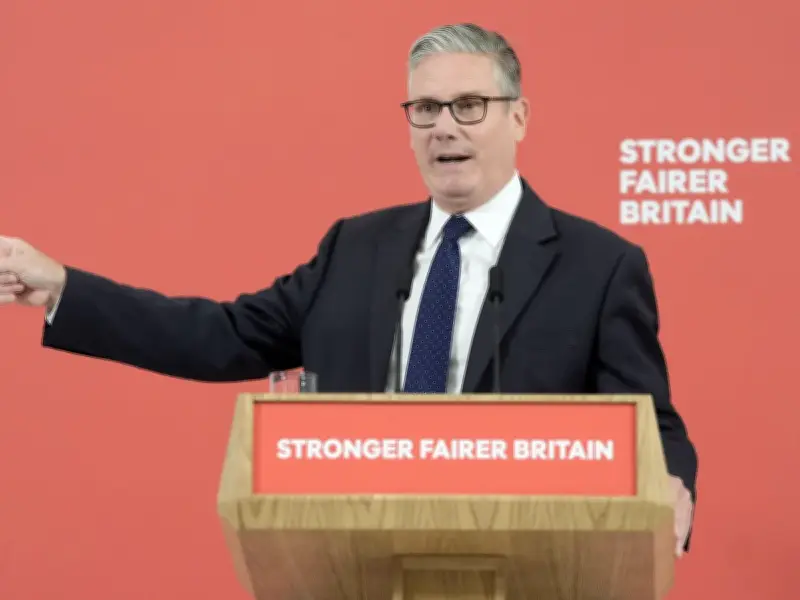
Sir Keir Starmer has unveiled a sweeping £15 billion Defence Investment Plan (DIP), warning that the UK must actively prepare for war to effectively deter rising global aggression. The plan, described as 'once-in-a-generation,' includes a £50bn defence export facility and a total annual defence spending rise to £80bn by 2029, up from £54 billion.
Huge Jobs and Infrastructure Boost
A cornerstone of the new plan is the £50bn defence export facility designed to supercharge British defence businesses and create jobs across the UK. This investment aims to bolster the domestic defence industry and support economic growth.
Funds Reallocated from Other Areas
The £15bn cash injection is secured by redirecting funds away from non-essential capital road and energy projects. The Prime Minister emphasized that this reallocation is necessary to meet the growing threats without increasing national debt.
No Defence Bonds
Sir Keir explicitly ruled out using 'defence bonds' to fund the military build-up, dismissing them as 'borrowing by another name' that would dangerously push national interest rates higher. He insisted on fiscal responsibility while prioritizing defence.
More Drones and Fighter Jets
Over £5bn is earmarked for autonomous technology, including land combat drones to increase Army lethality tenfold, a 'hybrid' Royal Navy utilising autonomous vessels, and an £8bn investment in a next-generation stealth fighter jet. This marks a significant shift towards modern, tech-driven warfare.
Nuclear Deterrent Upgrade
The plan allocates £64bn toward upgrading Britain's nuclear deterrent, which includes building new Dreadnought submarines, a new sovereign warhead, purchasing 12 nuclear-capable F35-A jets, and executing a £26 billion naval base overhaul. This follows recent threats from Russian naval ships in the English Channel.
Plan Made with Successor in Mind
Sir Keir said the DIP provided a 'platform on which whoever comes after me can build' amid speculation Andy Burnham could seek to rewrite part of the plan. The outgoing PM added the DIP was 'something which any Labour prime minister would want to stand behind, it’s a platform any Labour prime minister would want to stand on.' He did not answer when asked whether Mr Burnham had seen or signed off on the plan.




