
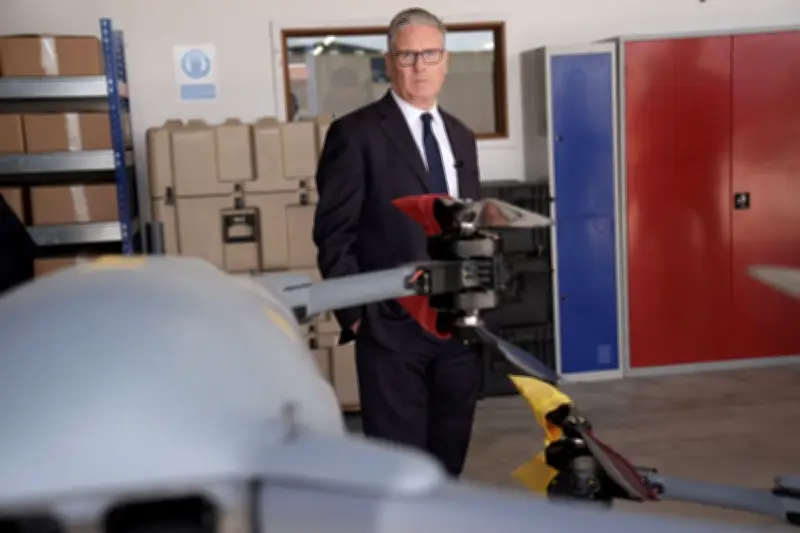
Prime Minister Sir Keir Starmer has declared that an additional £15 billion investment in defence will ensure the United Kingdom is prepared to confront Russia if President Vladimir Putin launches an attack by 2030. The long-awaited Defence Investment Plan (Dip), announced on Tuesday, includes billions for next-generation stealth jets, the largest ever investment in drone warfare, and confirmation that the UK will acquire F-35A aircraft capable of carrying nuclear bombs.
Funding sources and trade-offs
The investment package is partly financed by cuts to capital budgets from other government departments, including road and energy projects. Sir Keir acknowledged the trade-offs, stating: “It is funded by reallocating spending from across Government departments, reallocating capital budgets by one penny in every pound, while still maintaining public investment at the highest sustained levels since the 1970s. Therefore, some capital projects, for example on roads and energy, which are important but not immediately vital, will no longer go ahead as planned.”
The Treasury confirmed that £10.3 billion of the funding has been identified, but £4.7 billion—almost a third of the promised increase over four years—will only be outlined at the next budget. The Dip was originally due last year but was delayed due to Whitehall disputes over funding. Former Defence Secretary John Healey resigned earlier this month, claiming he was offered only £13.5 billion.
Military capabilities and equipment
The plan reverses what Sir Keir described as the “corrosive hollowing out” of the armed forces. Key measures include £64 billion for renewing the UK’s nuclear deterrent, including new submarines, a sovereign warhead, and F-35A fighters; over £8 billion for the Global Combat Air Programme (GCAP) with Japan and Italy; around £5 billion for a “drone transformation” of the armed forces; and £11 billion for munitions and weapons to replenish stockpiles. However, older equipment such as two Type 23 frigates and older Chinook and Wildcat helicopters will be retired.
Annual defence spending will rise from £54 billion when Labour came to power to £80 billion by 2029. The Dip brings total defence investment over four years to £298 billion, including the extra £15 billion. This falls short of the £28 billion reportedly requested by military chiefs, and spending will reach 2.7% of GDP from 2027/28, with a commitment to NATO’s 3.5% target by 2035.
Reactions and criticism
NATO Secretary General Mark Rutte welcomed the plan as a “good step” towards the 3.5% target, saying: “Stronger UK defence makes us all safer.” However, Labour MP Tan Dhesi, chairman of the Commons Defence Committee, called it “disappointing” that there was no clear path to 3.5%, adding: “Given the rising threat level, including warnings from the Prime Minister that NATO needs to be ready for an attack by Russia by 2030, the UK needs to properly invest in our defence and meet the moment.”
Former Defence Secretary John Healey stated that “Britain will still be spending just 2.7% of GDP in 2030” and called for a “clear, credible funding plan” to meet the 2035 target. Shadow Defence Secretary James Cartlidge described the plan as “too little, too late.” General Sir Richard Barrons, co-author of the government’s 2025 strategic defence review, told BBC Radio 4’s Today programme: “We’re not keeping up with our allies, we’re certainly not keeping up with our enemies, and we know that the US is no longer going to come and save European security in the face of a Russian threat.”
Foreign Office minister Hamish Falconer broke ranks to complain about uncertainty facing the A46 Newark bypass scheme near his constituency. Sir Keir, who may step down within weeks if Andy Burnham becomes the sole candidate to replace him, expressed confidence that his successor will build on the defence spending increases.




