South Korea's president has renewed his push to regain independent control of the military from the US in the event of war and urged faster progress in acquiring nuclear-powered submarines after Donald Trump's order to cut joint drills.
Trump orders reduction in joint exercises
On Sunday night, Trump instructed the Pentagon to “substantially reduce” this week’s joint military exercises with South Korea, saying the nuclear-armed North “has been unthreatening and respectful” and that the US president had a “very good relationship with Kim Jong-un”.
Lee Jae Myung said on Tuesday that Seoul should proceed without disruption with the planned transfer, during his term, of wartime operational control, or Opcon, of South Korean forces from the US – a goal he and the government have long held.

Lee's push for self-reliance
“A strong alliance makes the foundation of security stronger, and strengthening our own capabilities increases our value and necessity as an ally,” Lee said in a cabinet meeting, describing the US-South Korea alliance and independent defence as mutually reinforcing.
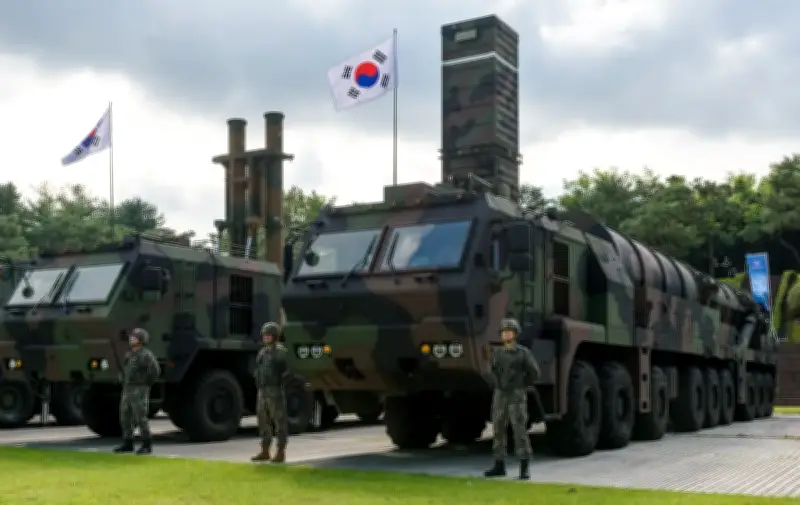
The issue dates back to the Korean war, which ended in an armistice rather than a formal peace treaty in 1953, meaning the two Koreas remain technically at war. US troops have been stationed in South Korea ever since, and the country now hosts Camp Humphreys, the largest American military base outside the US. The two militaries train and operate together closely, including through large-scale annual exercises such as this week’s.
Background and implications
Wartime Opcon, the authority to direct South Korean forces if fighting resumes, has rested with the US since the war began, exercised through the head of the allies’ Combined Forces Command, a position that has always been held by an American four-star general.
Seoul regained peacetime control of its own military in 1994, but the wartime authority has become a potent symbol of national sovereignty, and reclaiming it has been one of South Korea’s foremost security goals for more than two decades, repeatedly delayed under successive governments.
This week’s now-curtailed drills were meant to help certify South Korea’s readiness to finally take it over, a process Lee has pushed to accelerate since taking office.
Lee also called for faster progress on South Korea’s nuclear-powered submarine programme and on developing officers capable of integrated operations for future conflicts.
The renewed push follows Trump’s call to make cuts to the planned 10 days of drills that started on Monday under the name Ulchi Freedom Shield, one of two main annual exercises held by South Korea and the US.
They were expected to involve about 18,000 South Korean troops, alongside US forces and personnel from 11 of the 18 member states of the United Nations Command (UNC), the multinational body that oversees the 1953 armistice that halted hostilities of the Korean war.
During questioning in the Oval Office on Monday, Trump claimed North Korean leader Kim had responded to his order to the Pentagon but did not provide details. When asked what stage the conversations with Kim were at, Trump said “it’s very positive” but provided no further detail.
Trump doubled down on his praise for Kim, saying their ties had reduced tensions. “You see, I’m actually making it much safer. Kim Jong-un has always treated me with great respect,” he said. “I understand him. He understands me.”
Trump has previously suspended major US-South Korean military exercises in pursuit of diplomacy with Kim. After his first summit with the North Korean leader in 2018, that year’s Ulchi Freedom Guardian exercise was cancelled, while other drills were suspended or scaled back. The exercises were redesigned and resumed in modified form with changed names.
The US president acted despite warnings from US and South Korean military officials that Kim’s regime is learning new battlefield tactics from sending North Korean troops to the Ukraine war. Last week, South Korean and US military officials said Ulchi Freedom Shield drills would incorporate aspects such as the North Koreans’ experience with drones on the battlefield.

North Korea has deepened military ties with Russia since they signed a comprehensive strategic partnership pact in June 2024. Pyongyang is providing troops, artillery ammunition and ballistic missiles to support Moscow’s war against Ukraine.
“They’ve taken those lessons they learned there and brought them back to North Korea, that changes the DPRK capability,” said Col Ryan Donald, the public affairs director for the US-led commands in South Korea.
“Our training accounts for that threat, that is why the exercise looks different [from previous exercises], and over the last five years it’s continually evolved.”
On Tuesday, Seoul’s presidential office said the drills did not reflect “any intention to attack North Korea or escalate tensions on the Korean peninsula”.
Lee’s office reiterated that their fundamental purpose was “not to treat a specific entity as an adversary, but to safeguard the safe and peaceful daily lives of the people”.