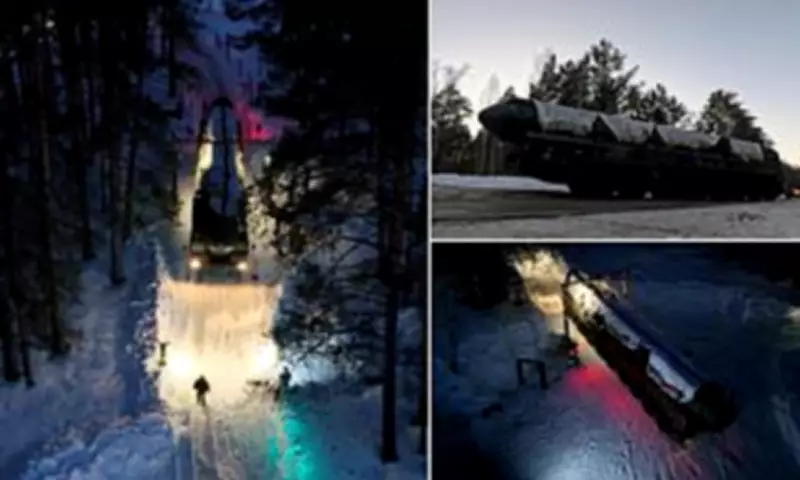
Russia has conducted a chilling display of military might, deploying intercontinental ballistic missiles in nuclear readiness drills across Siberia. The exercises come as President Vladimir Putin continues to exploit geopolitical instability, particularly within NATO alliances.
Nuclear Drills in the Siberian Wilderness
Eerie images released by the Russian defence ministry show Yars intercontinental ballistic missiles being transported through snow-covered forests under the cover of darkness. The launchers loom ominously from the shadows during these strategic manoeuvres.
Crews practiced a comprehensive range of activities during the drills, including camouflaged movements of the nuclear-capable Yars systems. They also rehearsed responses to simulated enemy attacks and air strike defences. Notably, the Defence Ministry confirmed no actual missile launches occurred during these exercises.

Regular Tests of Strategic Readiness
Russia maintains a regular schedule of strategic nuclear force exercises designed to test combat preparedness and send deliberate warning signals to Western nations. These drills occur against a backdrop of heightened tensions with NATO adversaries, primarily stemming from the ongoing conflict in Ukraine.
Putin's Dismissal of Easter Ceasefire
Simultaneously, President Putin has rejected Ukrainian President Volodymyr Zelensky's proposal for an Easter ceasefire. The Russian leader dismissed the peace initiative as too vague to establish lasting stability in the region.
Putin has escalated pressure on Zelensky, demanding Ukraine withdraw from remaining controlled areas of Donetsk in exchange for ending what Moscow terms the 'hot phase' of the war. Kremlin spokesman Dmitry Peskov publicly insisted on Ukrainian capitulation, stating Zelensky 'should have made this decision yesterday' to save lives.
Trump's NATO Threats Add to Western Discord
The geopolitical landscape grows increasingly complex as former US President Donald Trump warns he is strongly considering withdrawing America from NATO. In recent comments, Trump branded the 77-year-old alliance a 'paper tiger' and claimed his consideration of withdrawal is now 'beyond reconsideration.'
British Conservative leader Kemi Badenoch has condemned Trump's threats as a 'gift' to Russia, warning that internal 'squabbling' within NATO only benefits Putin's strategic objectives.
Regional Conflicts Compound Global Tensions
These developments occur alongside mounting concerns about Middle Eastern instability, where Iran has effectively blocked the Strait of Hormuz for over a month. This critical maritime passage normally facilitates approximately one-fifth of global oil supplies.
Meanwhile, Russia claims to have established full control over Ukraine's Luhansk region in the east. This territory represents one of four Ukrainian regions Moscow illegally annexed in 2022, a move consistently rejected by Kyiv and Western allies as an unlawful land grab.
The convergence of nuclear posturing, ceasefire rejections, alliance instability, and regional conflicts creates a dangerously volatile international environment with significant implications for global security and diplomatic relations.