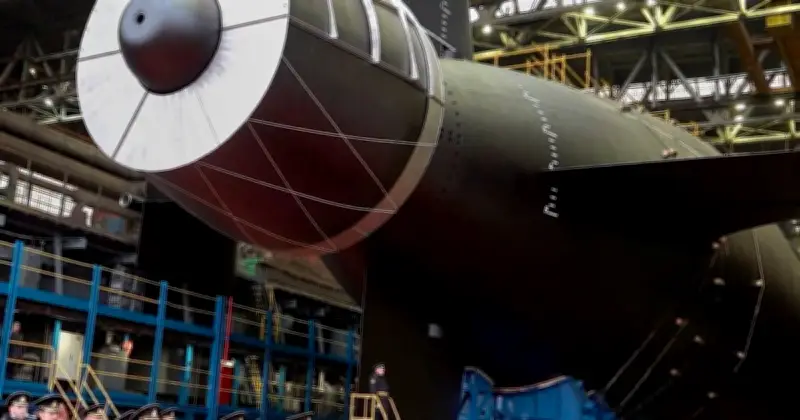
Russia's new Khabarovsk submarine, a 10,000-tonne vessel built to carry the Poseidon nuclear torpedo, has left port for trials in the White Sea. The submarine is designed to deploy weapons that could reportedly trigger tsunamis on enemy coastlines.
Submarine's capabilities and deployment
Russian media reports indicate the Poseidon torpedoes, powered by their own nuclear reactors, can be launched at sea before silently travelling towards a target and detonating their warhead beneath the waves. The Telegraph has reported that the Poseidon torpedo possesses the capability to generate a tsunami along an enemy's coastline.
Russia has already announced its intention to acquire at least 30 Poseidon torpedoes and four submarines to transport them. Only the Khabarovsk is believed to have been started so far, with the most likely targets being US, British or French submarine bases.

Threats against Britain
Britain may now find itself in the crosshairs after Russian President Vladimir Putin was reportedly urged to deploy the Poseidon against the nation following its decision to supply drones to Ukraine. "Give the British three days to learn to breathe underwater, then hit them with Poseidon," said Vladimir Solovyov, a state TV presenter.
British-supplied drones were utilised by Ukraine to strike deep within Russian territory, prompting Moscow to warn Britain it would pay a "price" following reports of the attacks. Russia's London embassy accused Britain of becoming "an accomplice and co-perpetrator" of the strikes and of "deliberately opting for an escalation" in the conflict.
Response and expert analysis
The UK's Ministry of Defence responded: "Britain stands shoulder to shoulder with Ukraine and we are committed to providing the equipment Ukraine needs to defend itself against Putin's illegal invasion." However, experts suggest there is minimal likelihood of Moscow deploying Poseidon in a hostile manner.
Russia is not producing it in substantial quantities and it has been developed for worst-case scenarios, according to Dr Richard Connolly, an authority on Russian defence policy and an associate fellow at the Royal United Services Institute (Rusi) military think tank. "If they were to do what the Russian TV presenters are proposing, they'd face retaliation from Britain's Trident nuclear deterrent," he said. "So they wouldn't do it, because they know they'd pay a price."