
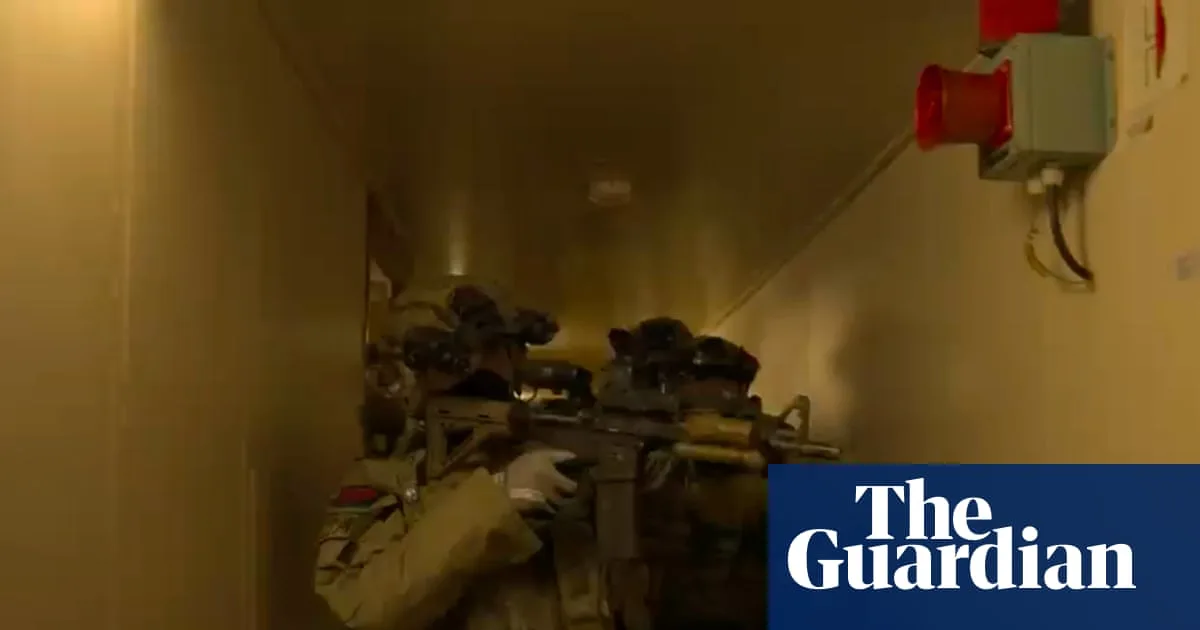
British armed forces intercepted a Russian shadow fleet oil tanker in the English Channel early on Sunday, in what Prime Minister Keir Starmer described as 'yet another blow' to Russia and President Vladimir Putin. The operation, involving Royal Marine commandos and the National Crime Agency, marked the first time the UK has led a naval capture since the start of the war in Ukraine.
The tanker, named Smyrtos, was carrying over 100,000 tonnes of Russian crude oil and was sailing under a Cameroon flag, though it had been expelled from the African country's registry, leaving it legally stateless. The vessel was en route from Russia to India when it was boarded south of the Isle of Wight. No resistance was offered by the 25 crew members of various nationalities, according to Lieutenant Colonel Tom Quinn, the commanding officer of the operation.
Starmer released a video on TikTok showing heavily armed commandos boarding the tanker, stating: 'Another bad day to be Vladimir Putin. In the early hours of this morning, I directed our armed forces to intercept a shadow fleet oil tanker attempting to pass through the English Channel.' The Ministry of Defence said the six-hour operation had been months in the planning.
The seizure comes amid heightened tensions over defence spending, following the resignation of Defence Secretary John Healey, who accused Starmer of risking UK safety by refusing to increase defence budgets significantly. However, Downing Street had announced in March that Starmer had authorised the boarding of shadow fleet tankers under sanction.
Ukrainian President Volodymyr Zelenskyy expressed gratitude for the detention, urging Europe to take legislative steps to enable confiscation of oil carried by such vessels. The shadow fleet, comprising around 700 vessels, carries 75% of Russia's oil exports, providing critical revenue for its war effort. Tracking data showed other shadow vessels turning around to avoid the Dover strait on Sunday.
The Smyrtos is now anchored off the coast of Dorset near Weymouth, where authorities will monitor it for environmental or safety concerns. The operation was supported by aircraft from the Maritime Air Group, an RAF P-8 aircraft, and navy vessels HMS Sutherland and HMS Ledbury.




