
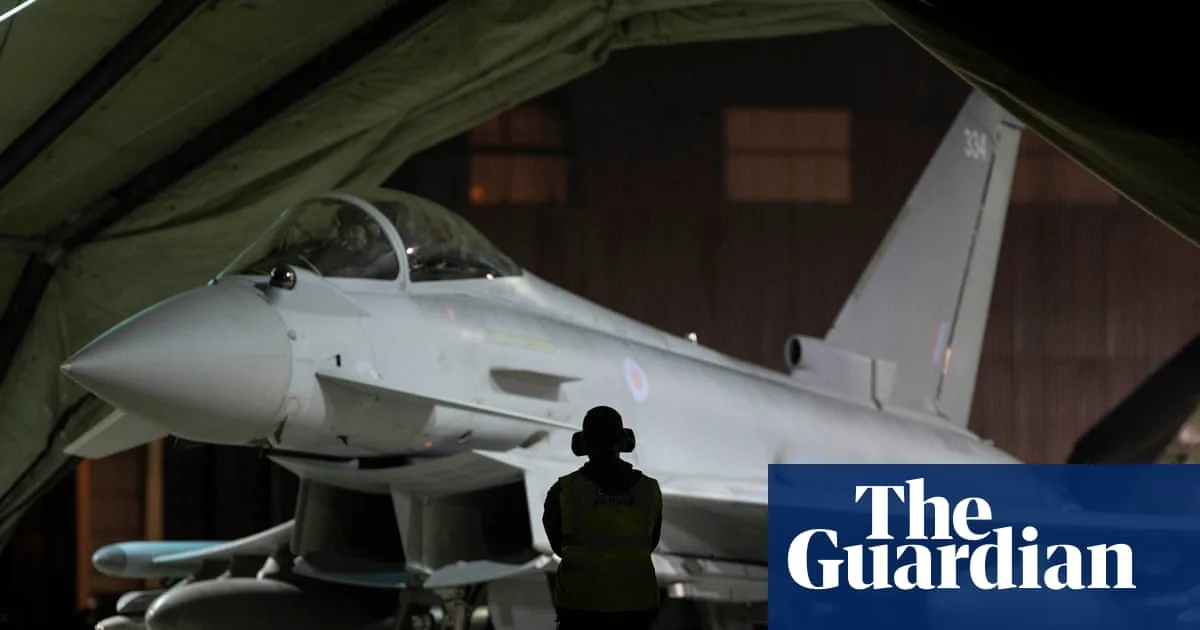
Britain is prepared to deploy a squadron of RAF Typhoons based in Qatar to patrol over the Strait of Hormuz as part of a multinational mission to keep the strategic waterway open once the Iran war ends, according to sources. The UK military also offered to deploy mine-hunting drones and specialist divers to help clear the strait mined by Iran, but no decision has been made on whether HMS Dragon or another warship would be deployed.
The Typhoon proposal was central to the offer made by British military planners during a 30-country two-day meeting held at the UK’s Northwood headquarters and organised jointly with France. Eight of the fast jets are currently based in Qatar and were active in shooting down Shahed drones in defence of allied countries during the 38-day war in the Middle East that followed the US-Israel attack on Iran.
Germany, Norway, South Korea and Australia were among the countries that sent representatives to the meeting, which ended on Thursday. British sources would not confirm if the US participated, though they insisted the Americans were “kept abreast”. Defence Secretary John Healey dropped into the meeting and told planners their task was to develop “practical military options” and “a coordinated joint plan to safeguard freedom of navigation in the strait”, in a joint statement with his French counterpart, Catherine Vautrin.
The status of the multinational mission remains unclear. At times, Donald Trump demanded that other countries help open the strait; at others, he suggested the US did not need any help. The UK and other countries have said they will not participate in forcing open the strait with military action against Iran, but the UK and France are willing to act if there is a peace deal or sustainable ceasefire, to protect oil tankers and other merchant shipping from what is hoped would be a low level of threat.
The Royal Navy has faced criticism for having a limited number of warships available, after the British Akrotiri airbase in Cyprus was hit by a drone in early March. HMS Dragon arrived three weeks later after being hauled out of dry dock, raising questions about readiness. Last month, Trump described Britain’s two aircraft carriers as “toys” and said the UK was only willing to send them “when the war is over”, though Britain has not indicated it will send either flagship to the Middle East.
The UK armed forces have been led by Richard Knighton, previously chief of air staff, since the autumn, and during the Iran crisis there has been a shift in emphasis from the navy to the air force. When fighting broke out, the UK military considered it did not need a warship present in or near the Middle East, because Cyprus airbases provided the same function as an aircraft carrier. Instead, the focus was on deploying RAF jets to Qatar and Akrotiri as well as counter-drone crews to help defend allies if needed.




