Poland has announced plans to introduce a restricted airspace buffer along its eastern border, stretching from roughly seven miles (12km) to several dozen miles inside Polish territory, by the end of December or early January. The defensive measure responds to a series of airspace violations by Russian missiles and drones spilling over from the war in Ukraine.
Urgent Defensive Measure
Poland's Deputy Minister of National Defence, Cezary Tomczyk, said securing NATO's eastern flank has become a critical priority. "A no-fly zone is needed in the east of the country, extending a dozen to several dozen kilometres from the border," Mr Tomczyk said. "We want the relevant decree to enter into force at the end of December or the beginning of January."
He added that Warsaw's military buildup, including the heavily fortified East Shield border project and constant fighter-jet patrols, remains essential to ensuring national security.
Recent Airspace Violations
Tensions along the frontier escalated last week when three Russian Kh-101 cruise missiles breached Polish airspace during a bombardment of Ukraine on November 20. Debris from the missiles was later recovered by military investigators at three locations in eastern Poland: Nowy Lipowiec in the Lublin Voivodeship and Rudnik nad Sanem and Mołodycz in the Subcarpathian Voivodeship.
Just days later, overnight between November 23 and 24, another Russian drone crossed into Polish skies. In response to the November 20 missile incursions, Poland's Foreign Ministry summoned the Russian ambassador in Warsaw to deliver a diplomatic protest. Moscow's envoy dismissed the accusations as groundless and accused Polish officials of "Russophobia".
Changed Rules of Engagement
To counter the growing danger, Poland has overhauled its rules of engagement in the skies. Two months ago, Polish fighter pilots abandoned standard peacetime NATO protocols, which require visual confirmation before engaging a foreign target, in favour of "positive identification".
"In pre-war conditions, in critical circumstances – which is precisely what we are living in now – this has lost its meaning," Mr Tomczyk explained. Under the new directive issued by Operational Commander General Nowak, pilots can now gather electronic and radar indicators to confirm a threat before shooting it down.
NATO Discussions and Border Context
Warsaw has also lobbied fellow NATO allies to intercept Russian missiles over Ukrainian territory before they reach the alliance's borders, a proposal NATO leadership has so far resisted over fears it could trigger a direct military confrontation with Moscow.
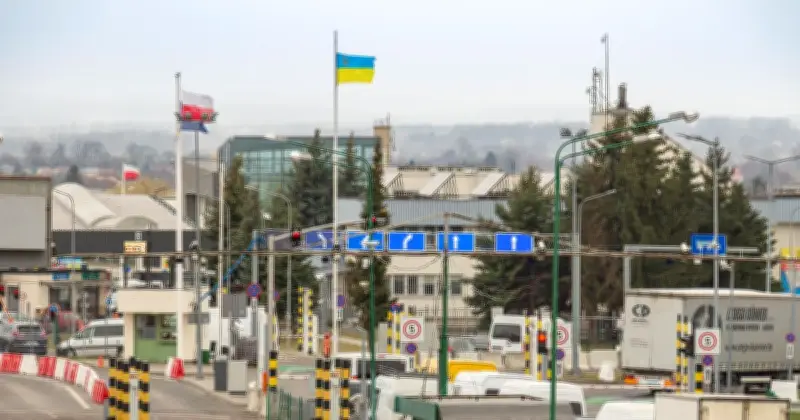
The 330-mile (530km) frontier between Poland and Ukraine is a hard external border. As Poland is in the EU and the passport-free Schengen Area while Ukraine is outside both, the boundary acts as a heavily policed eastern gateway into Europe. Every traveller and cargo truck must clear strict passport and customs checks, often resulting in long queues, with security tightened further by Warsaw's East Shield fortification project.