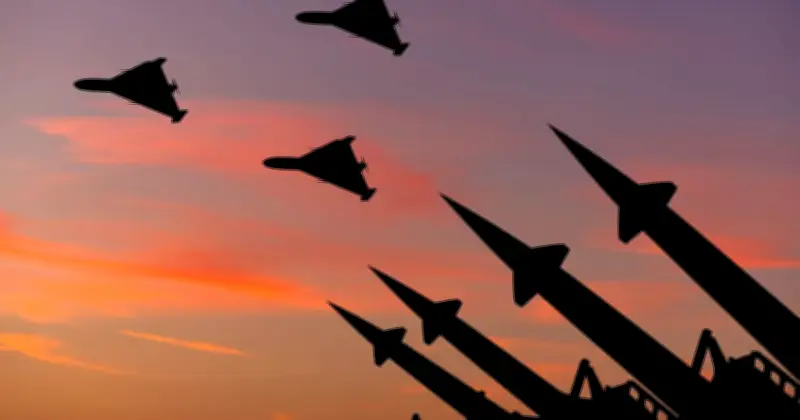
Nine countries across the world are believed to possess nuclear weapons, according to data compiled by the Stockholm International Peace Research Institute (SIPRI). The institute published the information in its SIPRI Yearbook 2026, warning that countries are once again placing greater importance on nuclear weapons as a key part of their defence and global influence.
According to the report, this marks a shift away from decades of efforts to reduce nuclear stockpiles and lessen the role of such weapons in international security. The report also highlights growing concerns that increasing geopolitical tensions are heightening the risk of mistakes, misjudgements and escalation between nuclear-armed states.
Russia and US dominate global nuclear landscape
Published in June this year, the report suggests that the vast majority of the world's nuclear warheads are held by the United States, Russia and China, meaning any agreement involving those three powers would represent a major step towards global nuclear disarmament.
According to the analysis, Russia and the United States continue to dominate the global nuclear landscape, together accounting for roughly 83% of the world's stockpiled nuclear warheads.
SIPRI estimates that China's nuclear arsenal has grown to around 620 warheads, with Beijing expanding its stockpile at a faster pace than any other nuclear-armed state. The country's military parade in 2025 also featured a number of newly developed nuclear-capable systems, highlighting the rapid pace of its strategic modernisation.
UK arsenal and warning over nuclear risks
Meanwhile, the UK is not believed to have increased the size of its nuclear arsenal during 2025. However, its operational stockpile is expected to rise in the years ahead following the 2021 Integrated Review, which set out plans to increase the upper limit on the number of nuclear warheads Britain can possess.
Speaking about the report, SIPRI Director Karim Haggag said: "Influential voices, including some world leaders, are advocating nuclear weapons as a guarantee against attack by a hostile state. But making national defence and security strategies dependent—or more dependent—on nuclear weapons could significantly increase nuclear risks.
"The dangers associated with nuclear weapons are growing due to advances in weapon technology, the breakdown of nuclear arms control and heightened geopolitical tensions, among a range of other factors.
"At the same time, world events—not least the outbreak of conflict between nuclear-armed India and Pakistan—are challenging nuclear deterrence logic."
Leaders pledge to reduce nuclear dangers
The data comes at a time when Chinese President Xi Jinping issued a horror 'end of humanity' warning over nuclear weapons. He warned that World War 3 must be avoided at all costs.
In a joint statement issued on November 19 after the Asia-Pacific summit, the leaders of China, Russia and the United States pledged to continue discussions aimed at reducing nuclear dangers and preventing the spread of nuclear weapons. According to Chinese state media, the subject was briefly raised at the start of their trilateral talks, where Chinese President Xi Jinping reportedly described nuclear weapons as a "Sword of Damocles hanging over humanity".
The phrase "Sword of Damocles" originates from an ancient Greek legend and is commonly used to symbolise a constant and ever-present threat, particularly one that accompanies great power or responsibility. The nine countries believed to possess nuclear weapons are Russia, the US, China, France, the UK, India, Pakistan, Israel and North Korea.