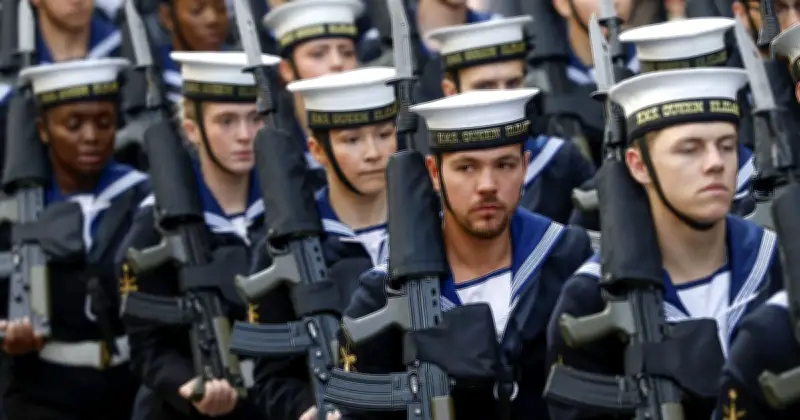
Training for Navy reservists has been slashed due to budget pressures, leaving Britain less ready for war, critics have warned. Part-time sailors will carry out fewer training days as the Ministry of Defence (MoD) scrambles to balance its books, the Express understands.
Tories accuse Labour of making Britain look weak
The Tories have accused Labour of making Britain appear “so weak” with the penny-pinching measures amid growing Russian aggression. Shadow Defence Secretary James Cartlidge warned: “It really does smack of the priority is the in-year saving. It is not making Britain ready for war. I think that’s now irrefutable.”
Training days have been capped at 24 per year for part-time sailors, it can be revealed. While that is the usual minimum requirement — including a 12-day continuous stint — one reservist described the new limit as a third of what they have done in previous years.
Bounty threshold lowered
Part-time sailors are paid a daily rate but can also qualify for an annual tax-free cash bonus, known as a bounty, should they hit the 24-day threshold. But with fewer training opportunities now on offer, Navy reserve chiefs have been forced to lower this to 20 days.
Drills are continuing but understood to have been stripped back to focus on core training and maintaining capability. Former senior Navy officers have slammed the cuts which come amid warnings Russia could attack NATO by 2030.
Former officers warn of long-term impact
Retired captain John Foreman warned the cost-saving measures could have lasting repercussions. He said: “Last year the Government said in its own Strategic Defence Review that it would ‘boost the reserves’. The latest cut to save short-term cash will have long-term impact on reserve capability, morale and recruitment.
“It also shows — if we needed any confirmation — that the Government’s rhetoric about being warfighting ready in 1,000 days is hollow.” Former commander Tom Sharpe said “now is not the time to be cutting reserves”, adding: “This is indicative of the budget annualisation issue.”
Army reserves also affected
British Army reserves have also been ordered to reduce training as part of plans to bring down costs. One reserve officer told the Express the extra 20 days they had initially been allocated at the start of the year had been halved, leaving them around £2,000 worse off.
They said: “The cost of living is going up and you are literally punishing the people who are trying to serve their country by telling them they can no longer do it.”
Responding to the cuts, Mr Cartlidge said it appears Labour is “deprioritising the reserves just at the time when we need them”. He added: “The whole point of defence policy should be to deter war far from happening. If we reduce our reserve at a time when the threats are growing, it makes us so weak and absolutely it will undermine the appeal of the reserve because it suggests the Government doesn’t take it seriously.”
A Royal Navy spokesperson said: “We are backing our Armed Forces with the largest sustained increase in defence spending since the Cold War. We have made choices to prioritise training which contributes most directly to readiness, deployability and operational effectiveness. Core training has been protected so that we continue to develop trained reservists for the future.”