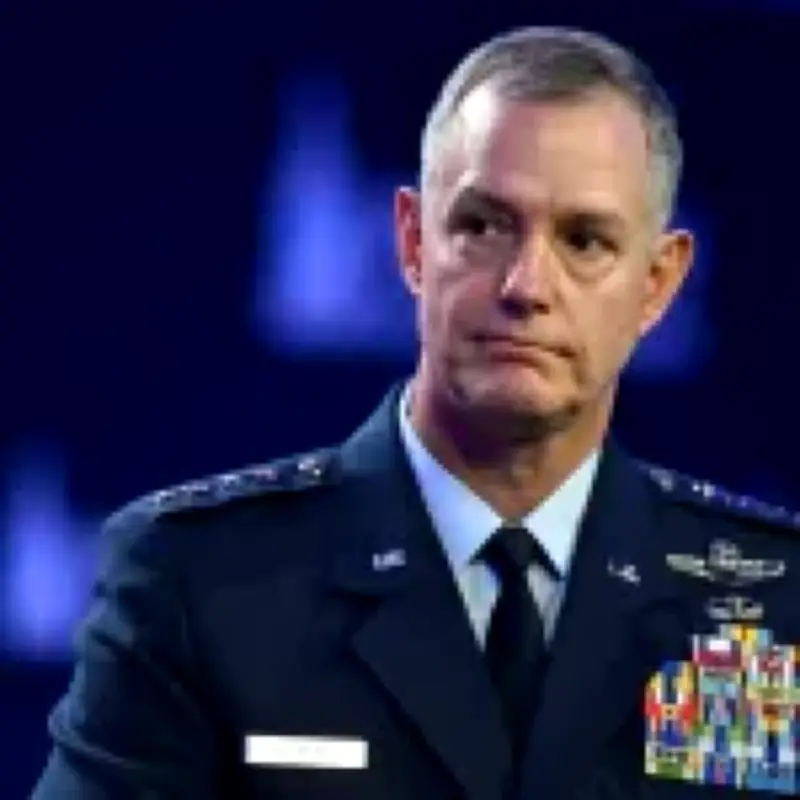
Nato's top commander has issued a blunt warning to Russia, declaring, 'We'd be ready to fight tonight.' Speaking after Volodymyr Zelenskyy at a security conference in Warsaw, US Air Force General Alexus Grynkewich asserted that he doesn't believe conflict is 'imminent or inevitable'.
Ready to fight
Outlining his 'theory of victory', he stated that his forces would destroy 'anything and everything' involved if Moscow were 'foolish enough' to launch an assault on alliance territory.
'Should the adversary choose to press the attack or commit his reserves, we will break the warfighting system engaged against us,' Grynkewich said. 'This includes not just the attacking force itself, but anything and everything that supports, sustains, and controls that force.'
Defensive alliance stance
While Nato is a defensive alliance, he added, it will block, blunt, and break any attack against any of its members to ensure the assault proves 'utterly futile'.
'If someone is foolish enough to attack us, we will fight,' he said. 'We will stop the attack and deny them the ability to achieve their objectives, whatever those might be. We will, in short, ensure any attack against any ally proves utterly futile.'
Escalation warning
Grynkewich continued: 'We should take comfort in our ability to deliver mass effects and the implicit warning that we could match any enemy move up the escalation ladder. These same factors should also give pause to any adversary seeing an alliance united, strong and ready; they should quickly realise the military calculus of escalation is too high.'
Nato's Supreme Allied Commander Europe did not name a country explicitly, but his remarks were clearly directed at Moscow. Russia is already described by Nato's 2022 Strategic Concept as the most significant threat to the alliance's security.
Rising tensions
Grynkewich's speech also comes at a time of rising tension between Russia and European nations. European governments have accused Moscow of stepping up a campaign of sabotage, drone incursions, and cyberattacks against them.
Last month, Vladimir Putin's Russia warned it would use nuclear weapons if Nato attempted to cut off its exclave of Kaliningrad. And in recent weeks, several countries in the alliance have reported drone attacks in their airspace, seemingly as threats for supporting Ukraine.
Consequently, there have been hybrid attacks, with leaders focusing on national resilience in the face of potential dangers. Defence Secretary Wes Streeting warned the public to stockpile food, water, and cash and create supply kits containing first aid items, batteries, power banks, and baby supplies in case of emergencies like a war.