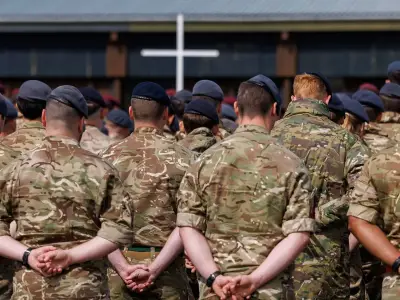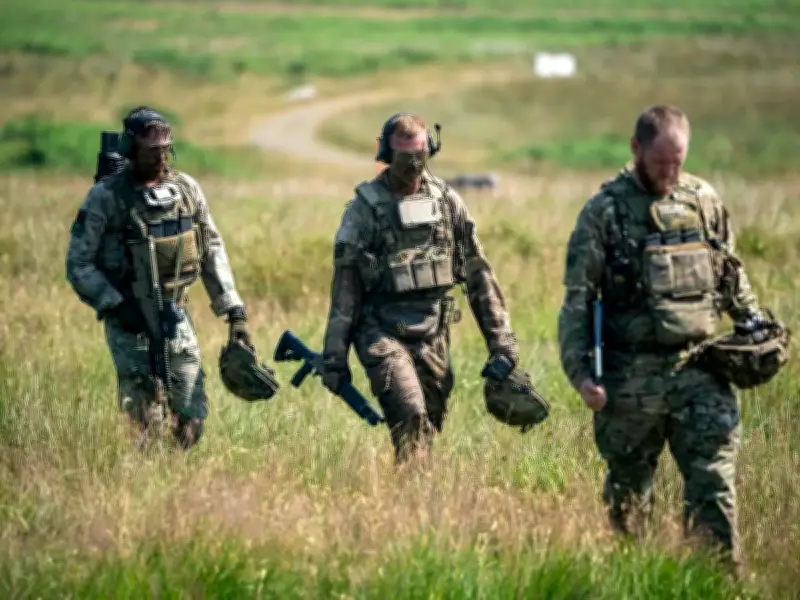
The Ministry of Defence cannot track down roughly half of the 100,000 veterans it may recall to serve, as military chiefs from all three services write to reservists asking them to prepare for a potential call-up. Around half of those who should receive a letter by post will not, because the MoD has lost their addresses.
Administrative failure follows warnings
The administrative blunder follows a warning from the head of the Armed Forces, Air Chief Marshal Sir Richard Knighton, that Britain did not have an "effective system of tracking and engaging" those who had recently left the military. Government advisor Lord Robertson of Port Ellen said earlier this year that officials were failing to maintain full records and contact details of recently retired soldiers entering the Strategic Reserves.
The Labour peer, a former Nato secretary-general who served as a defence secretary under Tony Blair, said: "The MoD at the present moment doesn't even know where most of them are. So we need to round up those who are available and fit and willing to be able to do it."
Letters set out recall threshold
The letters, shared on the government website, say the threshold for being recalled is "high," adding: "The Strategic Reserve would not be used to fill routine staffing shortages in peacetime - It may be considered for serious national emergencies, warlike operations, preparations for war or a major crisis that requires additional military capability."
Veterans being approached include those who have left the military but retain an obligation to be recalled in exceptional circumstances, not the 32,000-strong reserve forces who volunteer as regular civilians. About five per cent of Britain's veterans are covered by these arrangements, according to the MoD.
Defence Secretary defends precaution
Defence Secretary Wes Streeting described the move as a "sensible, necessary precaution" and said the public should be reassured by it. He said: "To some extent, what's happening today should be routine, but hasn't happened for some time. So we have written out to our strategic reserve.
"These are people who previously served in our armed forces. We've written to them to make sure their details are up to date, and also we have an understanding of the experience and the skills that they've developed since leaving the armed forces. This should be information that I think the government ought to hold as standard, whatever the threat environment.
"But there's no doubt - and I've talked about this, as have all of my counterparts across NATO in recent days, weeks, and months - we are operating in a heightened threat environment. And so this degree of readiness, I think, is a sensible, necessary precaution. People should find it reassuring rather than alarming at a time when, we are not imminently facing war in this country but we do face a threat environment in Europe."
Skills sought for future mobilisation
Veterans working in AI could be among the first reservists mobilised for the next war, and those who can code and hack will be considered invaluable. An Army source told The Telegraph: "Someone might go and work as a data scientist [after leaving the military], which means they will be well versed in machine learning, which will be useful in rapid decision making in a deployed headquarters. People may also go from a combat unit to go and work in a tech start-up. So they will learn the skills needed for rapid procurement, where things are made and bought quickly."
A knowledge of communications and satellite technology will also be highly desirable, while people with medical and engineering backgrounds are also being sought.