Kim Jong Un has called for the building of more nuclear weapons as he visited factories involved in the expansion of North Korea's nuclear programme.
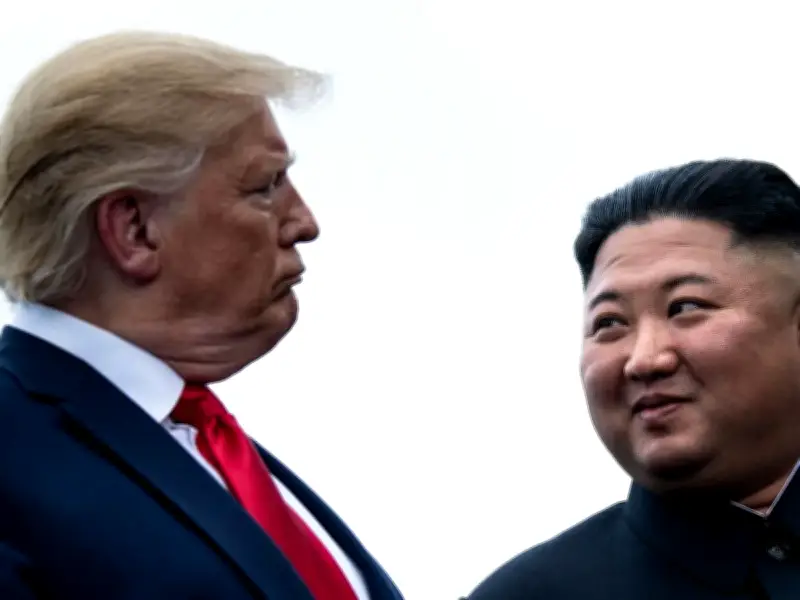
The North Korean dictator's comments come days after he appeared to snub US President Donald Trump's offer to meet during his recent visit to Asia. Pyongyang did not publicly respond to Trump's overture at all, but the President has dismissed suggestions he was ignored, saying "there'll be a time when we meet".
Kim's latest statement signals again that he won't give up his evolving nuclear program - the backbone of his authoritarian rule - and is eager to bolster his country's status as a nuclear power.
Inspection of Nuclear Facilities
The news comes days after the UN nuclear watchdog warned North Korea has been expanding an already-huge uranium enrichment facility in a "seriously concerning" move. Kim spoke as he inspected two nuclear materials production factories, one newly inaugurated and the other being expanded.
North Korea's official Korean Central News Agency (KCNA) photos show Kim and senior military officials walking between dense rows of what appeared to be centrifuges used to produce weapons-grade uranium and touring halls displaying what were believed to be warheads. Some of the images were blurred.
KCNA said Kim visited a nuclear-powered equipment production base and a nuclear research institute as well on Wednesday.
Kim's Statement on Nuclear Capability
Kim said his latest inspection visit was part of efforts to strengthen North Korea's defence capabilities in response to "variable nuclear threats approaching the Korean Peninsula moment by moment," KCNA said. He accused the US of inciting its regional allies to possess nuclear-powered submarines and committing to sharing its nuclear weapons with them, KCNA said.
"The validity and substantiality of our possession of nuclear weapons and the trend of bolstering up its nuclear capability in quality and quantity are an irreversible reality," Kim said, according to KCNA.
Kim also said the deployment of low-yield battlefield nuclear weapons across multiple domains for various missions is crucial and urgent given North Korea's "inevitable reality facing the border with the most dangerous enemy state," a reference to South Korea.
Regional Reactions and Context
South Korea's Defense Ministry said it takes Kim's comments on battlefield nuclear weapons seriously and added that Seoul maintains a firm military readiness against Pyongyang's nuclear threats under an alliance with the US. South Korea's Joint Chiefs of Staff declined to share an analysis of the North Korean nuclear facilities reported by KCNA, calling it confidential information for South Korea and the US.
Kim has accelerated the expansion of his military nuclear program since his earlier high-stakes diplomacy with Trump collapsed in 2019. He has also shifted his foreign policy focus toward strengthening ties with Cold War-era allies Moscow and Beijing, seeking to strengthen his regional footing while pushing to establish North Korea as a permanent nuclear power.
Trump reiterated his eagerness to restore diplomacy with Kim as he visited China last week for the Asia-Pacific Economic Cooperation summit. In an interview with the New York Post this week, Trump dismissed the suggestion that Kim had rebuffed his outreach, saying, "No, he didn't ignore it. You know, we had many leaders there - There'll be a time when we meet - It was just not really the right time. It was a very busy two-day period."
Trump also claimed he could revive diplomacy with Kim at any time by restarting the exchange of letters they maintained during his first term, although he acknowledged that the two leaders had not corresponded "recently."
Experts say Kim aims to win international recognition as a nuclear state so that he could demand the lifting of international sanctions. Last week, International Atomic Energy Agency Director General Rafael Grossi assessed North Korea has been expanding its original uranium enrichment facility at Yongbyon, calling the move "a cause for serious concern."
Nuclear weapons can be built using either highly enriched uranium or weapons-grade plutonium, and North Korea has facilities to produce both at Yongbyon. Last year, South Korea's Unification Minister Chung Dong-young said that North Korea was operating four uranium enrichment facilities and that they were running every day.