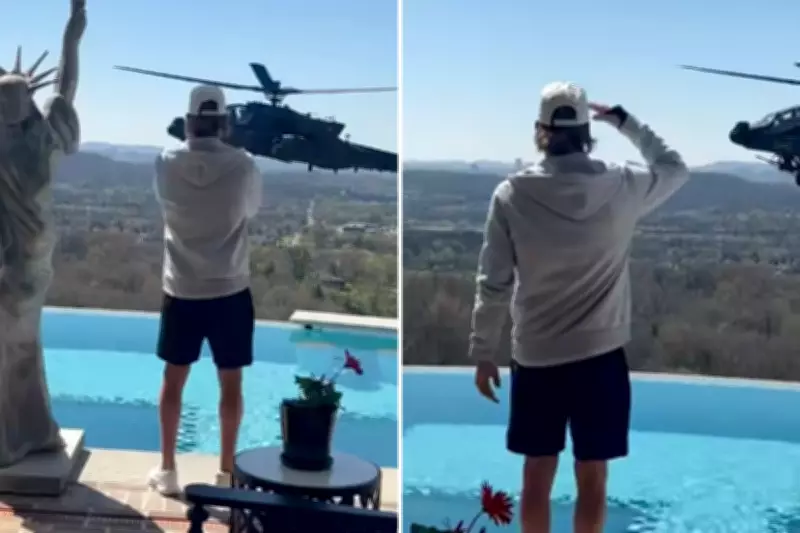
Kid Rock has robustly defended a recent flyover by two US Army helicopters at his Tennessee mansion, dismissing critics as suffering from what he termed "Trump Derangement Syndrome". The incident has sparked a heated debate over the appropriate use of military resources and taxpayer funds, with veterans' advocates and watchdog groups condemning the action as inappropriate.
Army Response and Political Intervention
Initially, the US Army suspended the crews involved in the flyover, citing concerns over protocol and propriety. However, Defence Secretary Pete Hegseth later intervened, lifting the suspensions and stating there would be no punishment or investigation into the matter. This reversal has drawn sharp criticism from groups like Citizens for Responsibility and Ethics in Washington (CREW), who have called for a formal investigation into both the flight itself and Secretary Hegseth's decision to overturn the disciplinary actions.
Critics Condemn Flyover as Wasteful and Politicised
Watchdog organisations and veterans' advocates have slammed the flyover as a blatant misuse of military assets and taxpayer money. They argue that such stunts politicise the armed forces and set a dangerous precedent for the military's involvement in personal or partisan displays. The controversy highlights ongoing tensions over the boundaries between military operations and political expression in the United States.

Trump Weighs In on the Controversy
Former President Donald Trump commented on the incident, offering a mixed perspective. He suggested that the pilots "probably shouldn’t have been doing it," acknowledging potential impropriety, but also expressed his fondness for Kid Rock, who has publicly referred to Trump as his "commander-in-chief". This endorsement adds a layer of political nuance to the debate, intertwining celebrity culture with national defence issues.
Kid Rock himself has downplayed the flyover as a "harmless" stunt, noting that it is not the first time such an event has occurred at his property. His defence centres on themes of patriotism and free expression, though critics remain unconvinced, viewing it as an example of privileged access and potential corruption. The incident continues to fuel discussions about accountability, military ethics, and the role of public funds in supporting high-profile personal events.