
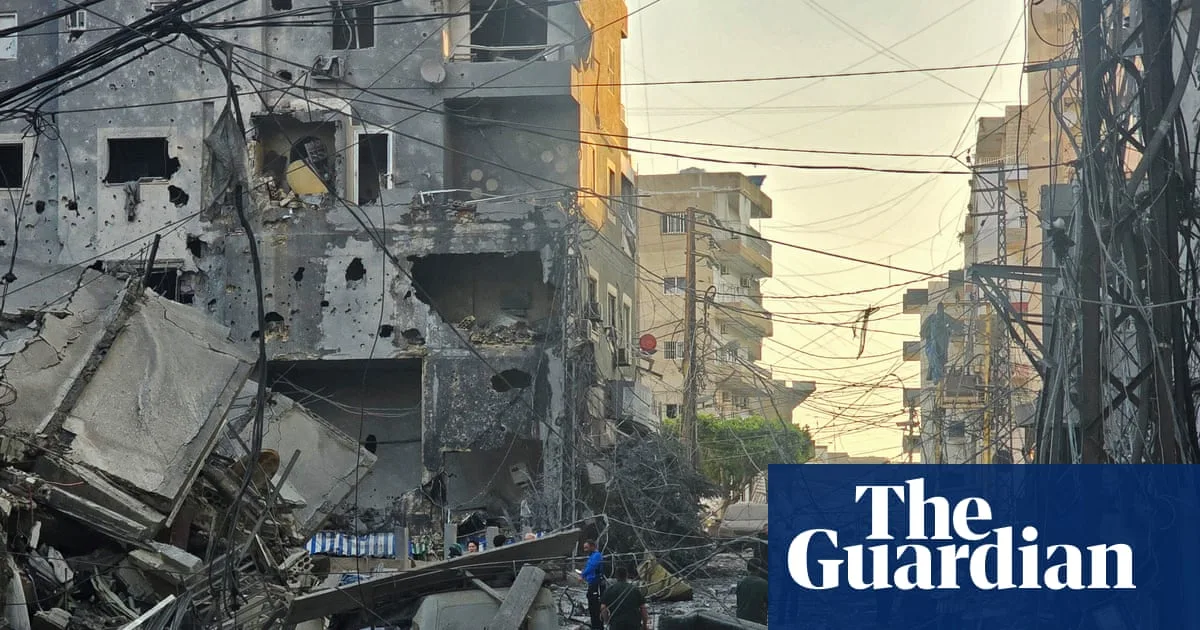
Israel carried out overnight strikes on Lebanon's Bekaa valley and Tyre province, killing at least four people and reducing buildings to craters, amid a continuing campaign that has seen a bloody escalation in recent days.
The strikes on southern Lebanon continued on Saturday morning, hitting close to Lebanese army barracks and killing a man on a motorcycle in Nabatieh, with further casualties reported in Chehabiyeh where the death toll remains unclear.
Friday's attacks were particularly devastating: 10 people were killed, including a child and six paramedics. In Deir Qanoun en-Nahr, a video released by the Lebanese health ministry shows civil defence workers in high-visibility vests assisting an injured person before an ambulance approaching the scene was bombed, killing two paramedics and a child. Among the dead was Ahmed Hariri, a photojournalist who also worked for the civil defence. A separate strike in Hannaouiyah killed four paramedics from the Islamic Health Association.
The Israeli military said it was examining claims that "several uninvolved individuals" were harmed, and stated it had taken steps to mitigate civilian harm, including ordering evacuations. However, 88% of Israeli military investigations into alleged war crimes are closed or left unresolved.
Since a US-brokered ceasefire in April, Israel has continued regular strikes both south and north of the Litani River. More than 3,111 people have been killed since fighting escalated on 2 March, with at least 817 deaths occurring after the ceasefire was established. Hezbollah has meanwhile persisted with attacks, increasingly using low-cost drones that have proved difficult for Israel to intercept.
Lebanese officials report that 123 medics have been killed by Israeli strikes since the ceasefire, and several hospitals in southern Lebanon have been damaged or put out of service. The Lebanese government is seeking a complete ceasefire and full Israeli withdrawal, while Israel demands the disarmament of Hezbollah.




