Satellite Evidence Reveals Scale of Iranian Drone Campaign Damage
Detailed analysis of satellite imagery has revealed the substantial destruction wrought by Iranian drone strikes against American military installations and regional energy infrastructure. The photographic evidence demonstrates a coordinated campaign that has successfully targeted some of the United States' most valuable defense systems and economic assets across the Middle East.
Strategic Military Targets Successfully Struck
Since the initial US and Israeli bombing campaign that reportedly killed Ayatollah Ali Khamenei on February 28, Iran has launched numerous drone attacks against key strategic locations. Analysis of satellite photographs shows that Al Muwaffaq Air Base in central Jordan, a crucial hub for American military operations in the region, sustained multiple hits during the conflict's opening days.
Before the hostilities began, more than sixty US aircraft were visible at the base, including advanced F-35 stealth fighter bombers, F-16 fighter bombers, and F-15 air superiority fighters. This formidable fleet represented America's primary offensive capability in the region, designed specifically to penetrate Iranian air defenses.

Despite being located over five hundred miles from Iran—placing it beyond the range of many Iranian weapons—the base was struck several times. One particularly significant attack destroyed a Terminal High Altitude Area Defense (THAAD) system, one of only eight such systems worldwide.
Vulnerabilities in Advanced Defense Systems Exposed
The destruction of the THAAD system reveals critical vulnerabilities in American air defense capabilities. THAAD systems are designed to protect high-value bases against high-altitude, long-range ballistic missiles—exactly the type of weapon Iran would need to employ against such distant targets.
However, these billion-dollar defense systems appear to have a significant blind spot when confronting slow-moving, low-flying threats. This weakness allowed Iranian Shahed kamikaze drones, estimated to cost approximately $35,000 each, to successfully destroy a THAAD battery including its $500 million radar component.
The loss of this anti-ballistic missile system creates substantial defensive gaps that must now be filled by Patriot missile systems operating at increased capacity, or by relocating other THAAD systems from strategic locations like the Pacific region where they help defend Taiwan.
Coordinated Attacks Across Multiple Fronts
Further analysis reveals similar successful strikes against Prince Sultan Air Base in Saudi Arabia, where American E-3 Sentry AWACS planes and KC-135 mid-air refuelers were stationed before hostilities commenced. Satellite photographs from March show smoke rising from air defense sites at this location, indicating additional destruction of valuable military assets.
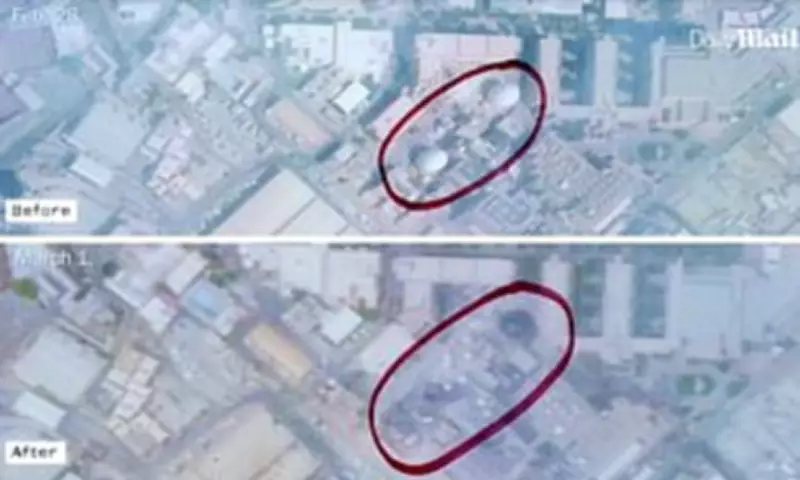
The Fifth Fleet headquarters in Bahrain was also targeted early in the conflict, with two radar domes (radomes) completely obliterated according to before-and-after satellite imagery. One structure appears to have been destroyed by a precise strike, while the second sustained multiple impacts that also damaged surrounding buildings.
Energy Infrastructure Targeted in Economic Warfare
Beyond military installations, Iran has implemented a third strategic approach targeting the energy infrastructure of neighboring countries. On March 2, 2026, Iranian drones struck the Ras Tanura oil refinery in Saudi Arabia, a facility capable of processing half a million barrels of oil daily.
Satellite images clearly show scorch marks in at least three separate sections of the refinery, likely caused by burning oil ignited by explosion sparks. Although Saudi air defenses reportedly shot down the attacking drones, the burning wreckage fell into the refinery complex, causing extensive fires.
This attack forced the Ras Tanura facility to suspend operations for nearly two weeks, resulting in an estimated loss of five and a half million barrels of oil to the global economy. Combined with the closure of the Strait of Hormuz to shipping, these energy infrastructure attacks drove Brent crude prices to $119 per barrel before settling below $100.

Sophisticated Intelligence and Tactical Execution
The precision and effectiveness of these strikes suggest Iran is employing sophisticated intelligence gathering to identify and target vulnerable points in American defenses. This level of targeting accuracy may indicate involvement or assistance from other nations, potentially including Russia, which has longstanding relations with Iran.
Iran appears to be implementing a strategy of suppressing enemy air defenses—the same approach the United States and Israel employed in their initial strikes against Iran. By systematically attacking radar systems and command posts, Iran is degrading America's ability to detect and respond to future attacks while simultaneously disrupting military coordination capabilities.
The drone campaign represents a significant tactical equalizer in the conflict. While Iran cannot match American aerial superiority with conventional aircraft, their inexpensive, easily manufactured drones have caused disproportionate damage across the region, demonstrating how asymmetric warfare can challenge even the most advanced military powers.