Iran's Military Capabilities Remain Substantial Despite Sustained Bombardment
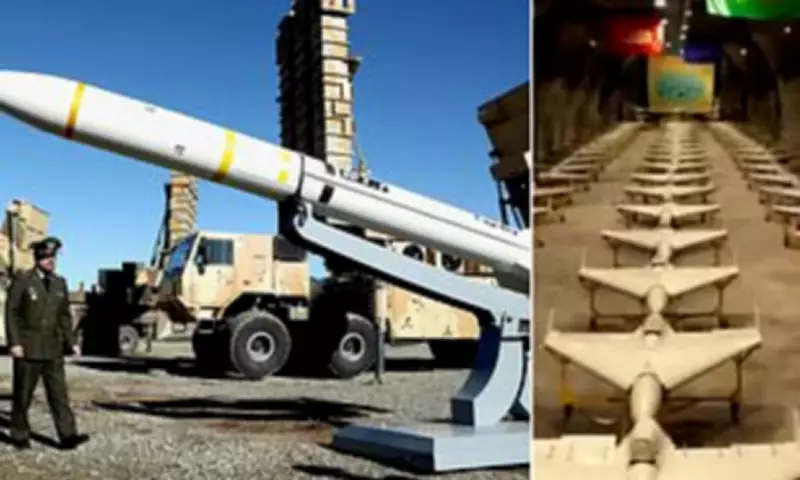
US intelligence assessments indicate that Iran still possesses approximately half of its original missile launchers and retains a stockpile of thousands of drones, according to three well-placed sources who spoke to CNN. These findings suggest the regime maintains the capacity to "wreak absolute havoc" across the Middle East, even after weeks of intensive US-Israeli airstrikes targeting its military assets.
Detailed Intelligence Estimates Paint a Complex Picture
The latest American intelligence reports provide a nuanced view of Iran's remaining firepower. While some launchers may be inaccessible due to being buried by strikes, they are not necessarily destroyed. Similarly, around half of Iran's drone arsenal is believed to be available, potentially stored in underground bunkers like those previously showcased by the regime. A significant portion of coastal defence cruise missiles, crucial for threatening maritime traffic in the strategic Strait of Hormuz, is also thought to remain intact.
This survival may be attributed to the US air campaign focusing its efforts on other targets. One source emphasized, "They [Iran] are still very much poised to wreak absolute havoc throughout the entire region." Initial Israeli estimates suggested Iran had about 470 ballistic missile launchers at the conflict's outset, with claims last month of destroying or disabling around 60 percent. However, recent Iranian missile attacks on Israel, including nine impact sites in central Israel and additional salvos, demonstrate ongoing capability.

Contrasting Assessments and Recent Developments
These intelligence reports contrast with more optimistic statements from US officials. The President recently asserted that Iran's ability to launch missiles and drones is "dramatically curtailed," with weapons factories and rocket launchers largely destroyed. US Defence Secretary Pete Hegseth noted a 90 percent reduction in ballistic missile and drone launches since the conflict's early days. As of Wednesday, US Central Command reported striking over 12,300 targets inside Iran, resulting in heavy losses for Iran's military leadership, including Supreme Leader Ali Khamenei and National Security Council head Ali Larijani.
White House spokesperson Anna Kelly responded to the leaked intelligence by defending the military's efforts, stating, "Iranian ballistic missile and drone attacks are down 90 percent, their navy is wiped out, two-thirds of their production facilities are damaged or destroyed, and the United States and Israel have overwhelming air dominance over Iran." Meanwhile, Iran claimed to have shot down a second American F-35 fighter jet, though US Central Command denied this, asserting all aircraft are accounted for.
Escalating Tensions and Global Implications
The conflict continues to escalate, with strikes increasingly targeting economic and industrial sites. An Iranian drone attack reportedly hit an oil refinery in Kuwait, causing fires, raising fears about disruptions to global energy supplies. Global markets remain volatile, with oil prices surging to around $110 a barrel after threats of further strikes. Experts warn of a looming food supply crisis as the conflict's impact extends beyond the battlefield.
Domestically, the administration faces growing criticism for its handling of the situation. Vowing to finish the job "very fast" within two to three weeks, threats have been made to bomb Iran "back to the Stone Ages" if it does not agree to a deal. Plans to target bridges and electric power plants were announced, prompting Iranian Foreign Minister Abbas Araghchi to respond that striking civilian structures will not force surrender.
In a sign of internal restlessness, Defence Secretary Hegseth has undertaken a purge of the armed forces, culminating in the firing of General Randy George, the Army's most senior uniformed officer, along with two other high-level members: General David Hodne and Major General William Green Jr. This reshuffling underscores the high-stakes nature of the ongoing military campaign and the pressure to achieve decisive results.