
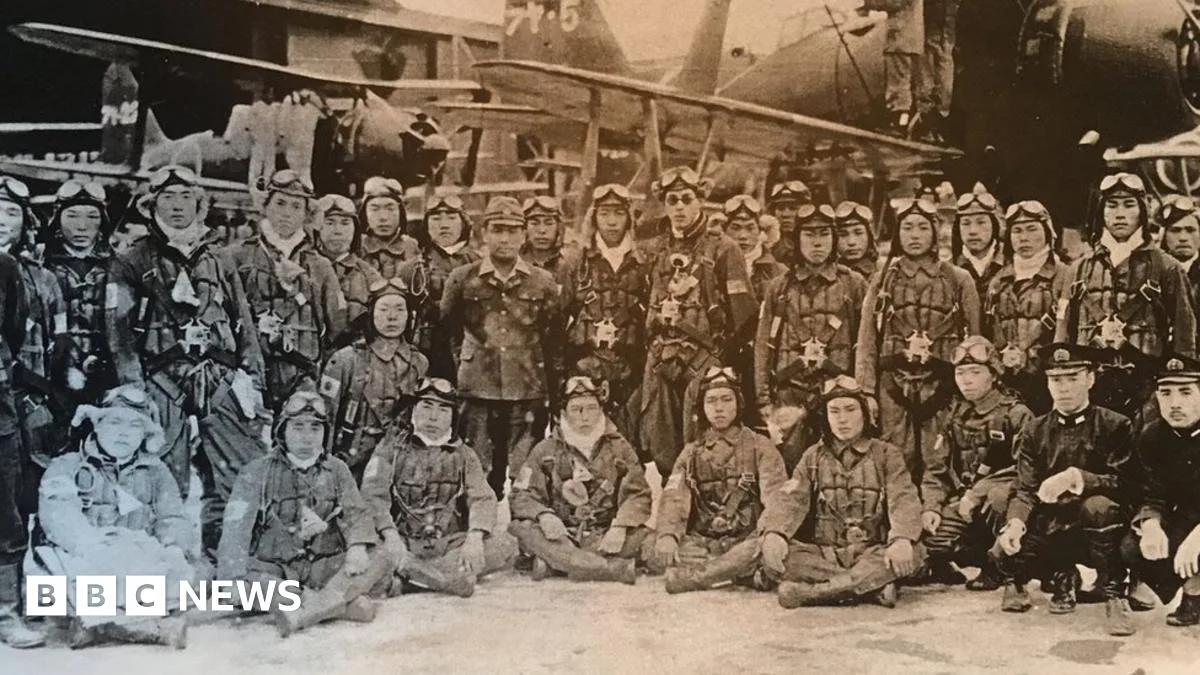
During World War Two, thousands of Japanese pilots volunteered to be kamikaze, crashing their planes suicidally in the name of their emperor. More than 70 years on, the BBC's Mariko Oi asked what these once revered men mean to Japan's youth.
Irrational, heroic and stupid: this was what three young people in Tokyo said when asked about their views on the kamikaze. 'Heroic?' queried Takumi, of his younger brother Shunpei's choice of word. 'I didn't realise you were so right wing?'
It is difficult to verify the figures but it is believed that 3-4,000 Japanese pilots crashed their planes into an enemy target on purpose. Only 10% of missions were believed to be successful but they sank some 50 Allied vessels.
Decades after the war, opinions on the kamikaze pilots remain divided, partly because their legacy has been used repeatedly as a political tool. 'During the seven years of the Allied occupation of Japan, the kamikaze reputation was one of the first things that they went after,' Prof MG Sheftall from Shizuoka University explained. 'But when the Allies left in 1952, the right wing nationalists came out strongly and they have carried out multi-generational efforts to seize back control of the narrative.'
'Even in the 1970s and 80s, the vast majority of Japanese people thought of the kamikaze as something shameful, a crime committed by the state against their family members. But in the 1990s, the nationalists started testing the water, seeing whether they could get away with calling the kamikaze pilots heroes. When they didn't get much push back, they got bolder and bolder,' he added.
In the 2000s, films such as For Those We Love and The Eternal Zero were released, portraying the kamikaze as heroes. But even Shunpei, the teenager who said they were heroic, admitted that his views had been affected by films and said that if Japan went to war tomorrow, he wouldn't be prepared to die for his country. 'It's because I cannot do it,' he said. 'I find them heroic and courageous.'




