
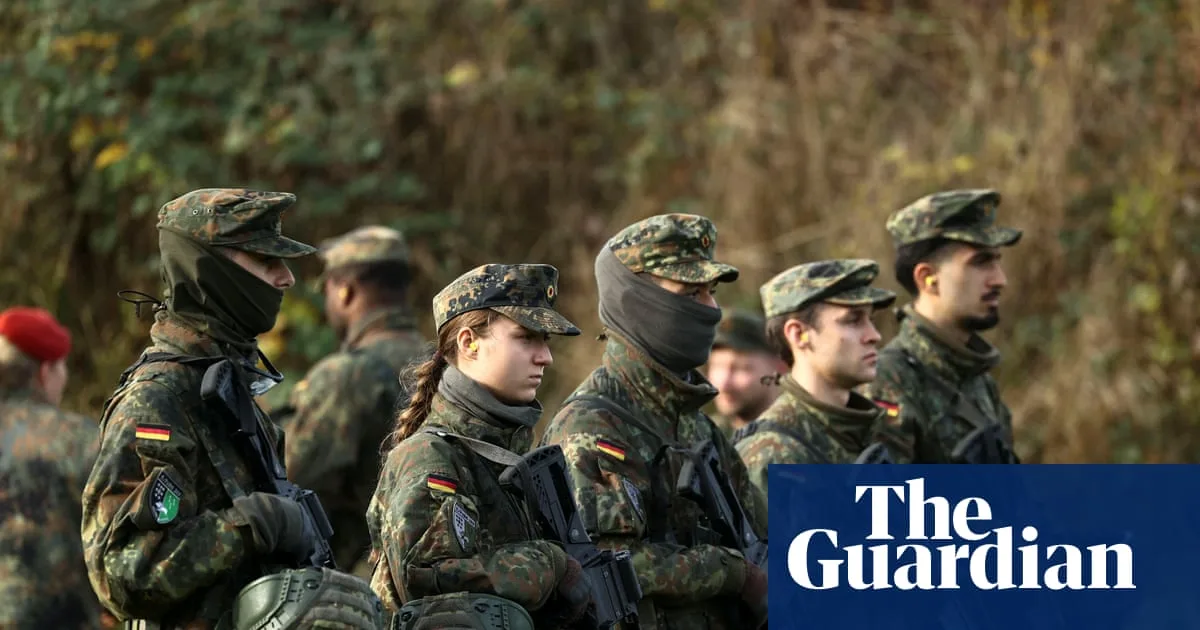
The German government has decided against reintroducing compulsory military service, instead opting for a voluntary model with incentives to attract young people to the armed forces. The plan, announced on Thursday, aims to address the country's depleted military in the face of growing Russian aggression.
Under the new system, from 2026 all 18-year-old men will be required to register, undergo medical screening, and indicate their willingness to serve. Financial incentives, including free driving licences and increased entry-level pay, are designed to boost voluntary recruitment. If numbers fall short, a compulsory call-up could be reconsidered, but this would require new legislation.
The decision follows months of debate between the Christian Democrats (CDU) and the Social Democrats (SPD). Jens Spahn, CDU parliamentary leader, described the model as 'needs-based recruitment', allowing the government to reintroduce conscription if necessary. The tabloid Bild headlined: 'One out of every 15 men will have to serve'.
Germany suspended conscription in 2011 under Angela Merkel, but the legal basis remains. The country now aims to increase its 180,000 troops to 270,000, plus 200,000 reservists, by 2029. Defence Minister Boris Pistorius has stressed the need for Germany to be 'war-ready' amid warnings that Russia could attack Europe within years.
The move also responds to US pressure for Germany to bolster its military and doubts over Washington's commitment to European security. Chancellor Friedrich Merz has pledged to make the Bundeswehr 'Europe's strongest conventional army'.




