Britain can lead NATO in the Arctic, according to former Army chief General the Lord Sanders, who urges quick action to secure the High North.
In 2022, as Chief of the General Staff, Lord Sanders warned of a 1937 moment and in 2024 that ours could be a pre-war generation. Two years on, he says few would claim the world has grown safer. He argues one of the most important contests for Europe's security is happening far from Ukraine and the Middle East: the High North.
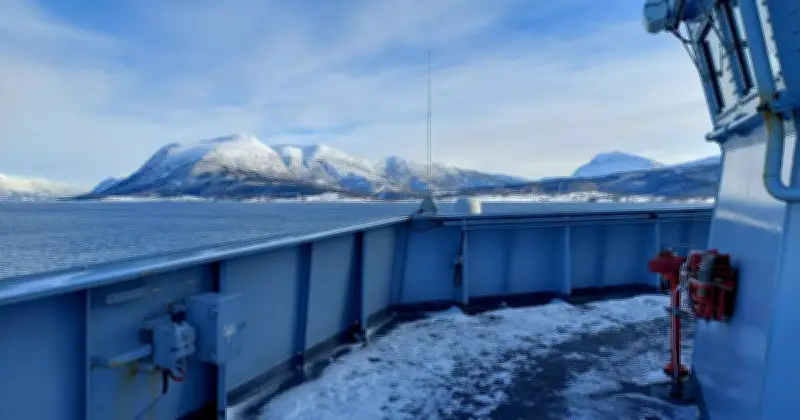
Every Russian submarine bound for the Atlantic must pass through these icy waters, which stretch from Greenland to Iceland and Norway to Russia's Barents Sea. Whoever controls them controls the approaches to Britain and the critical undersea cables beneath, he writes.
Threat to undersea cables
Earlier this year, Norwegian, British and American forces drove off Russian deep-sea submersibles near Svalbard practising to disable undersea cables, which carry 99% of Britain's data. Lord Sanders notes that this time they were caught, but next time they may not be.
This week, leaders from the Joint Expeditionary Force (JEF), made up of Britain and nine northern European nations including every Nordic and Baltic state, met in Oslo for the Atlantic Future Forum to discuss pooling resources and securing European deterrence.
Each of the last three Supreme Allied Commanders have been explicit about the priority placed on the British Army providing NATO's Strategic Reserve Corps, Lord Sanders says. But he identifies an equally pressing imperative in the maritime domain: the North Atlantic.
Britain's Arctic role
With Britain at its core, the JEF's combined Arctic forces are second only to the United States. In September, a British general took command of NATO's Atlantic and High North headquarters for the first time, built to act quickly when a crisis falls short of full NATO action.
No other European country has that combination of command, capability and coalition, Lord Sanders argues. Allies are naturally looking to Britain to lead.
At the same time, Russia's Arctic forces have been hollowed out in Ukraine and will take years to rebuild. Lord Sanders calls this a window of opportunity that is already closing.
Uncrewed vessels as strategic asset
A new frigate takes a decade to build, he notes. Ukraine, with barely any conventional naval power, used uncrewed boats to drive much of Russia's Black Sea Fleet from its home port. The same technology, built for northern waters, can change the balance in the High North at the speed required.
Uncrewed surface vessels can be built in months at a fraction of a warship's cost, so they can go to sea in numbers. They can stay on station for weeks in seas that would exhaust crews, listen for submarines, watch over cables and guard the gaps Russian boats must pass. They would work alongside frigates, destroyers and patrol aircraft, not replace them.
Across Britain and allied nations, a growing number of firms are designing uncrewed vessels for these northern waters. Lord Sanders says there is now a need for uncrewed vessels on patrol as soon as possible, learning together in the waters where they will be needed, and a long-term plan for how conventional naval forces and autonomous ones will operate together.
Lord Sanders concludes that the High North offers a way back to the front rank. The aim should not be to rebuild the land, air and sea services Britain had, but to build the one it has for the future: quickly, with allies and on its own soil.