The Royal Air Force's next-generation fighter jet, Tempest, may be the last built with a crew, as artificial intelligence is set to take on the most dangerous tasks currently carried out by humans. Uncrewed fighter jets are scheduled to fly in UK airspace next year, according to Air Chief Marshal Sir Harv Smyth, the head of the RAF.
AI to Handle Dangerous Tasks
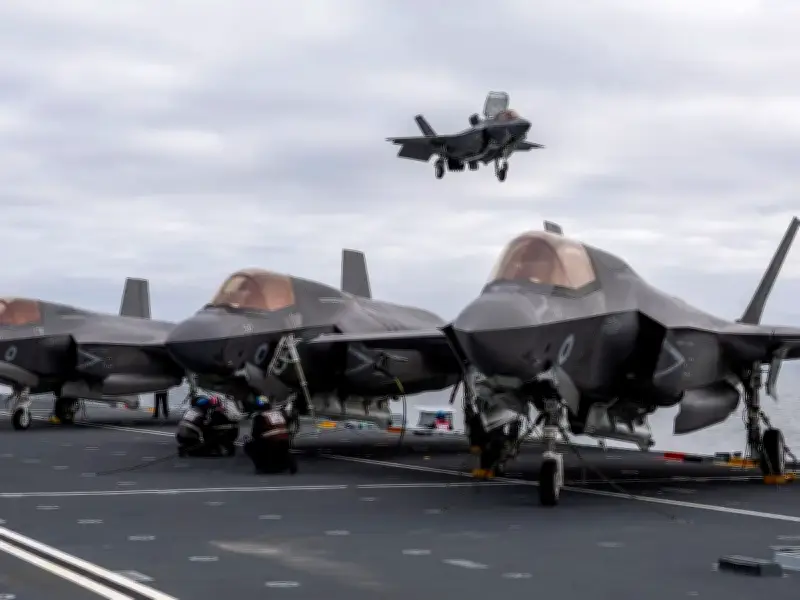
Sir Harv said the "future RAF will combine Typhoons and F-35s with autonomous systems." He stated: "Used properly, AI and machines will tackle the most dangerous tasks instead of humans, but technology must enhance human judgment, not replace accountability."
Speaking about Tempest, being developed under the Global Combat Air Programme (GCAP), he said: "The GCAP jet is perhaps the last crewed fighter we will ever build, not because people will become less important, quite the opposite."
Tempest Development and International Partnership
The new aircraft, Tempest, is being developed by Edgewing, a joint venture between the UK's BAE Systems, Italy's Leonardo and the Japan Aircraft Industrial Enhancement Company. In July, the UK signed a £4.6 billion contract for the GCAP jet's design as the three nations work together to maintain air superiority against threats from rival countries such as Russia and China.
The Global Combat Air Programme aims to produce a sixth-generation stealth fighter, combining a crewed cockpit with AI technology and advanced sensors.
Uncrewed Jets and Expanding Drone Use
Sir Harv added: "Uncrewed fighter jets will start flying in UK airspace next year. This is exciting and necessary in equal measure." He told the Telegraph: "I firmly believe that AI-enabled, uncrewed aircraft will transform military aviation as profoundly as the shift from propellers to jets."
Speaking at the Royal United Services Institute in October, Sir Harv claimed AI had accumulated the equivalent of 50 years of human air-combat training and experience during just 14 days in a simulation. The RAF is already expanding its use of drones. In October, it deployed a Protector drone for the first time to track Russian warships and other foreign vessels in the English Channel. The aircraft is one of 16 bought by the service. Typhoon fighter jets have also been equipped with laser-guided rockets to counter Iranian drones.
Humans Remain Central
Sir Harv stressed that humans would remain central to the RAF, even as machines take on more tasks. He revealed around 300 trainees are graduating each month as the service expands. He also highlighted the need for up-to-date aircraft and weapons, bases able to withstand disruption and close working relationships with Nato allies.
Alongside the changes in the skies, Sir Harv warned that space is becoming a new battleground, with satellites underpinning navigation, banking and national security.
The fighter jet programme could also bring more countries on board. Canada joined as an 'observer nation' in July, giving it privileged access to the project without a say in decisions. In October, Andy Burnham said the UK was 'open' to Germany joining the partnership developing the next generation of fighter jets.