

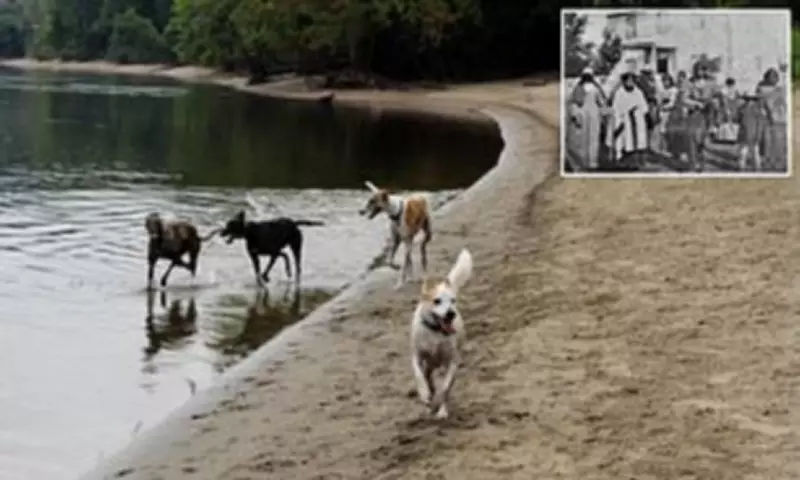
The future of a beloved dog park in Minneapolis will be decided at a public meeting next month, after advisors for a Native American tribe claimed the space sits on sacred land. Spanning over six acres, Minnehaha Dog Park features wooded trails and a dog-friendly beach along the Mississippi River. However, the beloved park sits on 'Mni Owe Sni,' a sacred site for the Dakota people, who believe it contains their ancestors' remains, the Star Tribune reported.
Dakota Burial Mounds Suspected
'We suspect that Dakota burial mounds exist at Mni Owe Sni, both from oral histories and archaeological discoveries,' Shakopee Mdewakanton Sioux Community Chairman Cole Miller told the outlet. 'We are discussing with other Dakota tribes and partners about the best way to approach this,' Miller added.
Public Meeting Scheduled
The Park Board plans to hold a public meeting in May to discuss whether the land at Mni Owe Sni is historically and culturally important. After the meeting, officials are expected to formally vote on a decision about the dog park's future. The Park Board previously held private meetings with Native American advisors about these concerns while also ordering an archaeological study of the dog park.

Four dogs running in and along the shore of a river, Minnehaha Dog Park features a dog-friendly beach along the Mississippi River. But the beloved park sits on Mni Owe Sni, a sacred site for the Dakota people, and they believe human remains lie beneath the soil. Representatives from various Native American tribes pictured.
The 2025 assessment found the land's cultural importance is 'much greater than first thought,' according to the outlet. But the Park Board has kept the $16,400 report from the public eye, citing a state law that protects burial site information to prevent looting, the outlet reported.
Activist Calls for Accountability
Indigenous activist Erica Crazy Hawk told the outlet all she wants is awareness of and access to the land. 'I just wanted accountability among these people that have been gatekeeping our lands and gatekeeping documents and gatekeeping by not telling the rest of the Dakota people what's going on over here,' Crazy Hawk said.
Former advisory council member Kate Beane said there are areas along the river that haven't been tested, raising concerns that dogs could dig up human remains. 'You wouldn't turn Lakewood Cemetery into a dog park,' she told the outlet. 'That's a really problematic thing to do.'
Fence Proposal Stopped
The Park Board approved building a fence in 2024 but stopped it after Native advisors said it's not enough to block dogs while still allowing them on a sacred site that may contain human bones. 'Staff became aware of the potential presence of surface and subsurface cultural and historic features,' the Park communications staff said, per the outlet.
Park Board's Native American advisory council member Maggie Lorenz said they don't want to close the beloved park, but the site still raises concerns. 'I'm a dog owner myself. It's nice to be able to bring your dog somewhere to not be leashed, and at the same time, this isn't the right place,' Lorenz told the outlet.
A dog walking on a trail in the woods, the dog park spans over six acres. A dog named Mochi plays on the sand at the bank of the Mississippi River at the Minnehaha off-leash dog park in Minneapolis. American physician and missionary Thomas Smith Williamson among Native American Dakota tribespeople. Mdewakanton Dakota chief Shakopee III.
Relocation Considered
'We don't want to take something away, an amenity that the community really values... so we've been working with the Park Board about considerations around relocating it,' Lorenz added.
Dakota people are comprised of four groups: The Bdewakantunwan (Mdewakanton), Wahpetunwan (Wahpeton), Wahpekute, and Sissitunwan (Sisseton) people form what is known as the Isanti (Santee), or eastern Dakota (a word that means ally), according to the Minnesota Historical Society. To the west, in present day South Dakota, are the Yanktonai and Yankton (who identify as both Dakota and Nakota) and the Teton (Lakota). These groups collectively have tribal lands that cover areas from present day Minnesota to South Dakota, North Dakota, Nebraska and into Canada.






