

Labour's Controversial County Council Reorganisation Plan Faces Storm of Opposition
The ancient rivalries that have long divided British politics - from the Wars of the Roses to the Miliband brothers - pale in comparison to the deep-seated animosity between Whitehall bureaucrats and England's historic counties. This enduring tension has erupted into open conflict following the Starmer government's latest proposal for local government reorganisation, which has sparked furious opposition from Conservative MPs representing the shires.
The Proposal That Ignited the Firestorm
Alison McGovern, the Minister for Local Government, presented what she described as a routine 'local government reorganisation' plan to Parliament. The deliberately bland terminology, officials understood, would help mask the proposal's true nature: the potential dismantling of England's famed historic county councils. Ms McGovern outlined plans to merge councils in Essex, Hampshire, Norfolk, Suffolk and several other counties, arguing this would 'help to expand key towns and cities,' deliver prosperity, and simplify services.
The minister spoke optimistically about new councils 'operating effectively from day one,' but her cheerful presentation immediately encountered what can only be described as parliamentary hurricane-force winds. The proposal bears striking resemblance to Edward Heath's controversial 1970s local government reforms, which similarly sought to redraw England's administrative boundaries.

Tory Knights of the Shires Mount Fierce Defence
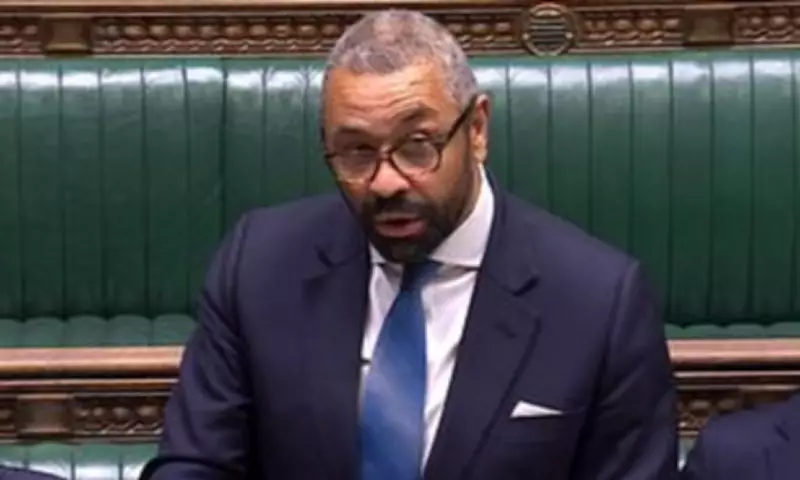
The Conservative response was immediate and thunderous. Sir James Cleverly, whose Braintree constituency sits within Essex, launched into what observers described as a 'mighty remonstrance,' accusing the government of 'gross incompetence and stupidity' and calling the plan 'a stitch-up.' Ms McGovern responded with characteristic diplomacy, saying she was glad the Right Honourable Gentleman had 'worked all that off his chest,' but this did little to calm the gathering storm.
Sir John Whittingdale, Conservative MP for Maldon, shook his head in vigorous denunciation, while Dame Priti Patel, representing Witham, bellowed her condemnation across the chamber. The most poetic protest came from Sir Bernard Jenkin, MP for Harwich and North Essex, who delivered what one observer described as a 'lyrical lament' for his historic Essex council, which predates the Norman Conquest and now faces what he called destruction by 'this wretched, gerrymandering Labour government.'
Ancient Counties Under Threat
The Conservative defence of England's historic counties took on almost mythic proportions. Sir Edward Leigh, MP for Gainsborough and a stalwart Brexiteer whose support for leaving the European Union some suggest was rooted in personal memories of Danelaw independence, expressed horror at the prospect of Lincolnshire becoming 'Greater Lincoln.'
Andrew Griffith, Conservative MP for Arundel and South Downs, roared his opposition to proposals that would 'cleave our ancient county of Sussex in two,' while Ben Obese-Jecty, MP for Huntingdon, voiced fears that Huntingdonshire could be 'eaten by Peterborough.' Even Sir Christopher Chope, MP for Christchurch, joined the chorus, noting that his constituency had never recovered from being merged with what he termed 'the improvident fleshpots of Bournemouth.'
Throughout this onslaught, Ms McGovern received notably sparse support from her own Labour backbenchers, suggesting the government may have underestimated the emotional and political attachment to England's historic county boundaries.
Parliamentary Business Amidst the Turmoil
The day's dramatic events began with Speaker Lindsay Hoyle paying tribute to former Labour MP David Winnick, who had died at age 92. Winnick, who represented Walsall North from 1979 to 2017, was remembered as 'a proper parliamentarian' who would sit day after day in his distinctive purple pullover, happily ignoring party whips while maintaining proudly left-wing principles.

The parliamentary drama continued with what observers described as a 'brutal bombing raid' by Sir David Davis, Conservative MP for Goole and Pocklington. During business questions, Sir David targeted Jonathan Lofthouse, former boss of a failing hospital in his constituency who had been placed on gardening leave with a £285,000 salary, only to later become the NHS's local 'director of turnaround and recovery.' Sir David accused Lofthouse of being 'in charge of fixing the very failing trusts he was the cause of' and suggested this represented a classic case of 'failing upwards' in public officialdom.
The Starmer government's local government reorganisation proposal has clearly touched a deep nerve in English politics, revealing the enduring power of county identities and the fierce resistance to what many perceive as Whitehall's relentless centralising tendencies. As the battle lines are drawn between urban officialdom and the shires, this controversy promises to become a defining political conflict of the current parliamentary session.





