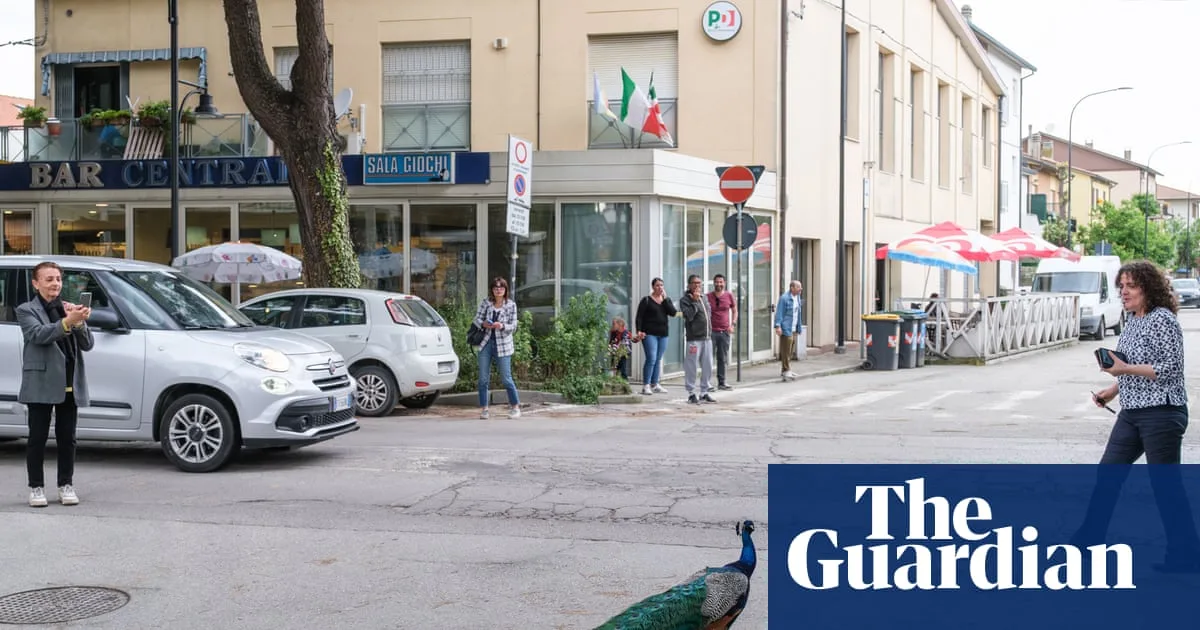
Punta Marina, a small seaside town on Italy's Adriatic coast, has seen its peacock population surge to an estimated 120 birds, causing a mix of delight and frustration among its 1,000 residents. The birds, which have colonised abandoned properties, gardens and rooftops, are now in peak mating season, leading to loud calls that some locals say keep them awake at night.
The peacocks' presence has become a talking point, with some residents like Federico Bruni viewing them as part of the town's fabric, while others complain about noise, droppings and unhygienic conditions. One resident, Francesco, said the birds jump onto his balcony and leave excrement, and the mating screams are disturbing sleep. His relative Marco added that stepping on peacock poo is a common nuisance.
The origin of the peacocks in Punta Marina remains unclear, but reports suggest a male peacock was kept as a pet by a resident who died over 20 years ago, and the bird later mated with a female in a disused military barracks. During the Covid-19 lockdown in 2020, the birds roamed freely and were fed by humans, encouraging them to stay. The population has grown from an estimated 10 in 2018 to 40 in 2023 and now around 120.
Ornithologist Rosario Balestrieri noted that the pine forest behind the town provides an ideal habitat, and supplementary feeding by locals has driven population growth. Ravenna city council has struggled to manage the situation; a 2022 attempt to relocate the birds was opposed. The voluntary animal rights association Clama has been enlisted to promote harmony, producing leaflets and signs urging people not to feed the peacocks.
Despite some media reports of an 'invasion' and public health threats, a local police officer said such claims are exaggerated. The peacocks, historically a symbol of immortality and featured in nearby Ravenna's Byzantine mosaics, continue to divide opinion in Punta Marina as they court and call during the mating season.