Cornwall Council's Glyphosate Plan Sparks Major Protest Over Health and Wildlife Fears
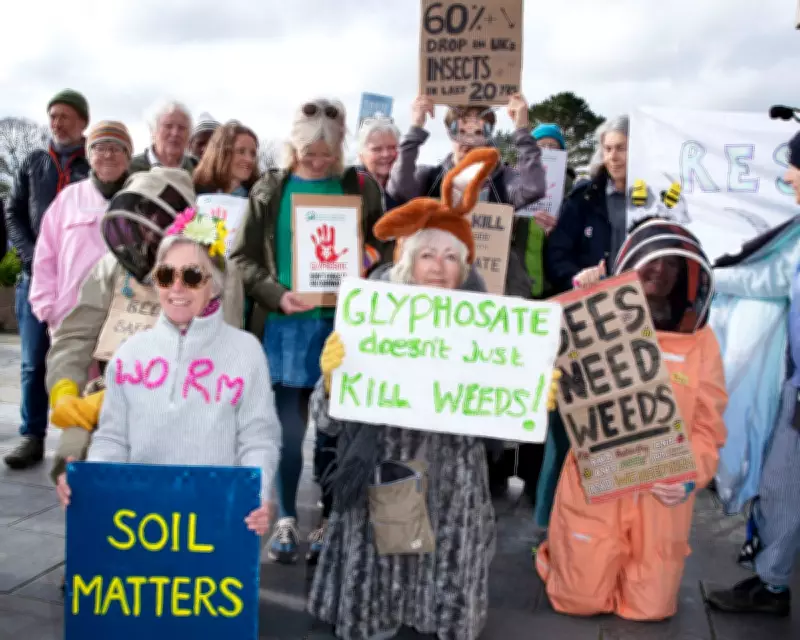
A contentious proposal by Cornwall Council to reintroduce the herbicide glyphosate for weed control on pavements and kerbsides has ignited a fierce public outcry, with dozens of protesters gathering at county hall in Truro ahead of a council meeting on Tuesday. The plan, aimed at tidying up roadside vegetation, has drawn sharp criticism over potential harm to human health and the region's rich ecosystems, leading to petitions with thousands of signatures and a heated debate among councillors.
Backlash from Beekeepers and Environmentalists
Protesters, including beekeepers and environmental advocates, voiced strong opposition to the scheme, arguing that glyphosate poses significant risks to people, animals, and beloved natural landscapes. Nichola Andersen, a beekeeper who attended the demonstration in her protective suit, expressed fury, stating, "It's a retrograde step. I'm furious," while holding a sign reading "Bees need weeds." Another beekeeper, Oliver Baines, highlighted the inconsistency with national trends, saying, "Other places across the country are moving away from glyphosate. We're going the opposite way. Anyway, they aren't weeds – they are wildflowers and the bees love them."
Lesley Fitt, wearing a gas mask to emphasise her concerns, pointed out the well-documented dangers of glyphosate, noting, "Nature needs weeds. They're an important part of the cycle of life." Marianne Daysh, sporting floppy ears to symbolise potential harm to mammals like rabbits and hedgehogs, raised alarms about children's exposure, asking, "My grandchildren pick wildflowers for me. What if they're covered in weedkiller?"

Council's Justification and Alternative Approaches
During the council meeting, Dan Rogerson, the portfolio holder for transport, defended the proposal as a "limited reintroduction" necessary due to years of neglected weeding. He assured that a diluted solution would be applied using "targeted droplets" rather than spray, and it would not be used on verges or green spaces, focusing solely on public safety and appearance. Council leader Leigh Frost cited complaints about pavement conditions and noted that other local authorities in England and Wales have tested a mixed method combining diluted glyphosate with mechanical and manual weeding.
Council officers supported this stance in a report, stating that non-chemical methods alone could not effectively maintain Cornwall's 1,000 miles of urban roads. They proposed a three-year "tightly controlled recovery phase" with negligible impact on pollinator habitats, emphasising that national regulators currently permit glyphosate use in the UK when applied carefully on hard surfaces, minimising public exposure and health risks.
Health Concerns and Political Response
Green councillor Drew Creek from Newquay called for a pause in the plan, labelling it a "significant policy reversal" and citing the World Health Organization's classification of glyphosate as a probable human carcinogen since 2015. He warned about surface water run-off contaminating watercourses and the sea, particularly in surfing areas like Newquay, stating, "I don't want my children splashing around in this." Additionally, over 200 health professionals signed a letter opposing herbicide use near schools and healthcare settings.
In response to the outcry, councillors voted in favour of Creek's motion to pause the scheme, though this decision is advisory. Loic Rich, the portfolio holder for environment and climate change, indicated the cabinet might reconsider, saying, "It's an advisory but it would be morally wrong of us to ignore such a clear message. Over the next day or two we'll be reflecting on what happened."

Community Initiatives and Broader Context
Amid the controversy, some smaller Cornish councils are pursuing alternative methods. For instance, Penryn Town Council plans to organise volunteer groups for manual weeding, while Redruth Town Council is exploring community efforts, including a suggestion to use a "community goat" for vegetation control. These initiatives reflect a growing trend away from chemical pesticides, as highlighted by the UK government's emphasis on reducing their use, with the Health and Safety Executive currently assessing glyphosate's authorisation in Great Britain.
The debate underscores broader tensions between urban maintenance and environmental protection, with protesters and councillors alike calling for a balanced approach that prioritises public health and Cornwall's natural heritage.