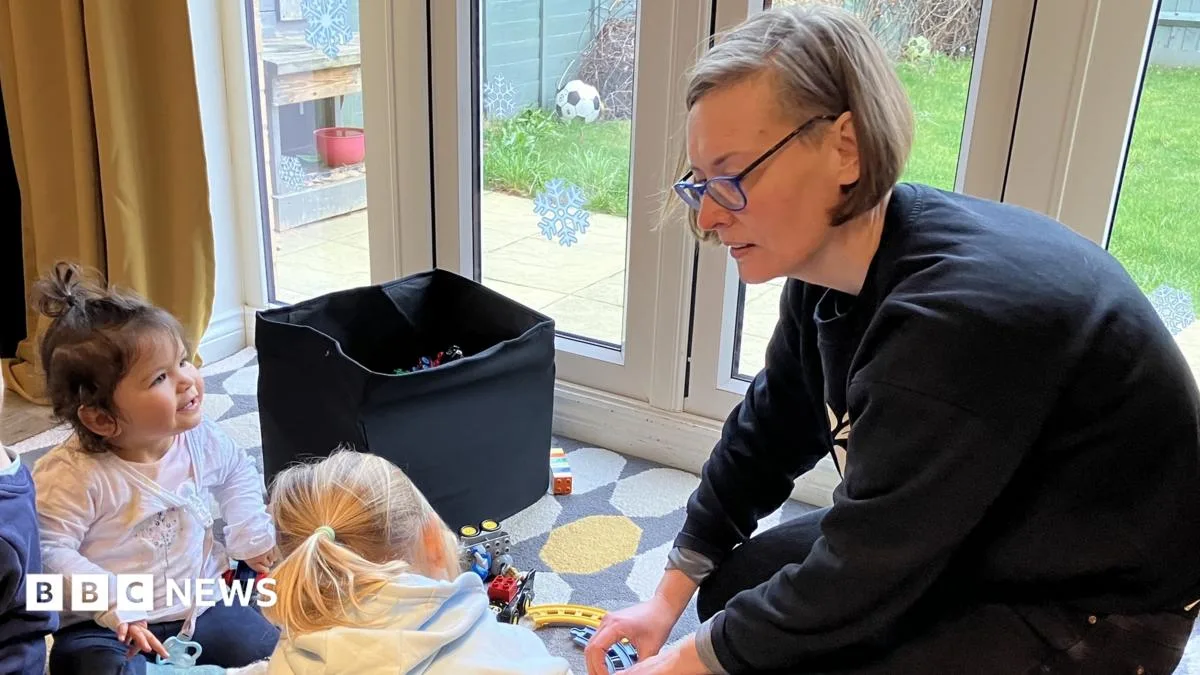
A childminder has warned that a sharp decline in the number of people entering the profession is creating a childcare shortage that could push families 'back to the 1950s'. Hana Foltynova, who works in Biggleswade, Bedfordshire, said women in particular could be forced to stay at home because they cannot find suitable childcare.
The number of registered childminders in England fell by 50% between 2013 and 2023. Ms Foltynova, who has been a childminder for seven years, attributed the decline to low pay, noting that dog walkers earn £10 an hour while childminders receive only £5 or £6.
From April, most working parents of two-year-olds in England will become eligible for 15 hours of funded childcare per week during term time. However, Ms Foltynova expressed nervousness about how much childminders would be paid for government-funded hours, as local authorities set the exact rates.

In contrast, Mandy Shaw, a childminder of 23 years from south Norfolk, described the funded-hours scheme as 'excellent', saying it has boosted her business and is a 'win-win' for both childminders and parents. Ioana Apostu, a paediatrician whose daughter is cared for by Ms Foltynova, said finding a place was 'tricky' as most providers were full six months before her required start date.
The Department for Education has offered start-up grants of £600 or £1,200 to new childminders. However, Richard Conway, founder of childcare.co.uk, said the money is quickly eaten up by resources and training. A DfE spokesperson said the government is taking action to increase the number of childminders, including removing unnecessary training costs and investing hundreds of millions to raise rates for free government hours.